One of the first questions homeowners ask after falling behind is simple: how long does the foreclosure process take, and how much time do I actually have? The honest answer is that it depends on your state, your loan and how quickly you act. Some foreclosures move in a few months. Others take well over a year.
Foreclosure is not instant. There are several stages before a lender can take a home, and many homeowners still have chances to negotiate, sell or stop the process along the way. This guide is general information, not legal advice. Foreclosure law varies by state, so confirm your own dates with your servicer and a local attorney.
The Basic Foreclosure Timeline
A lender cannot start foreclosure after one missed payment. Under federal servicing rules, a servicer generally cannot make the first foreclosure notice or filing until the loan is more than 120 days delinquent (12 CFR 1024.41, with limited exceptions). After that point, the timing is set mostly by state law and the lender’s own procedures, so no single schedule fits everyone. The stages usually run in this order:
| Stage | What happens | How long it takes |
|---|---|---|
| Missed payments | Late fees, calls and letters; delinquency can be reported to credit bureaus | Federal rules generally bar the first foreclosure notice or filing until more than 120 days delinquent |
| Notice of default or lawsuit | The lender starts the formal process, and it becomes public record | Set by your state and loan |
| Notice of sale | The date, time and place of the auction are announced | Set by your state; notice periods vary |
| Foreclosure auction | The property is sold to the highest bidder, or the lender takes it | The sale itself usually takes one day |
| After the sale | Possible redemption period, then eviction if the owner stays | Varies by state |
The consequences of mortgage default can be serious, which is why it helps to know where you are on this path. The 120 days is a minimum. Do not read it as a countdown to an auction date.
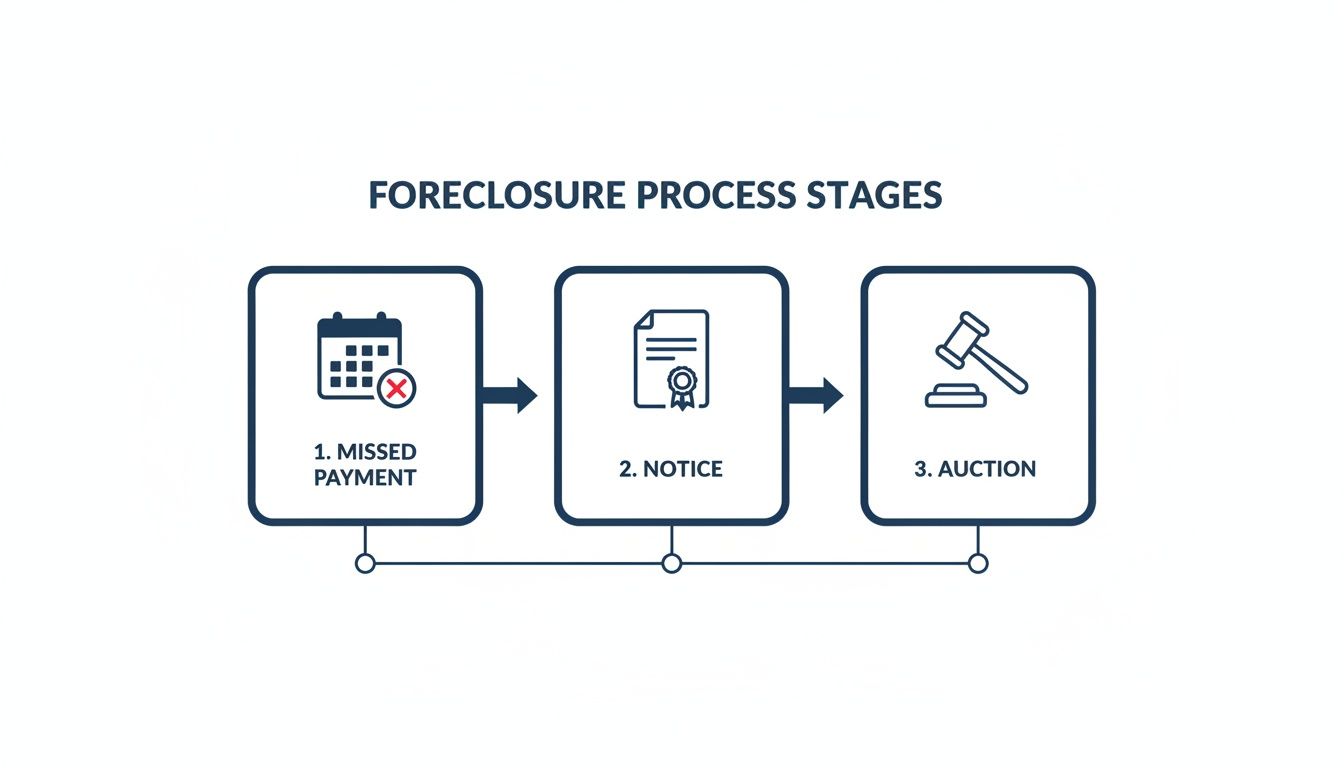
Step 1: Pre-Foreclosure Begins
Foreclosure begins to build once missed payments pile up. Servicers try to reach you by phone, email and letter. This early period is often called pre-foreclosure. Avoiding the calls is a common mistake. Talking to your servicer early usually opens up more options.
Step 2: The Notice of Default or Lawsuit
If the delinquency is not resolved, the lender starts the formal process. In states that allow foreclosure without court, this is often a notice of default. In court-supervised states, it is a lawsuit. Either way it becomes public record and states how much is owed. Many borrowers have a deadline to cure the default here, and it is one of the best windows to act. Our guide to seven ways to avoid foreclosure can help you pick a path.
Step 3: Notice of Sale
If the default remains unresolved, the lender schedules the auction. You then receive a notice of sale with the date, time, location and legal property details. Depending on your state, the sale can come weeks or months after this notice.
Step 4: The Foreclosure Auction
The property is sold at public auction to the highest bidder, who may be an investor, a cash buyer, an individual or the bank itself. If nobody bids enough, the lender usually becomes the owner and the property becomes REO, or Real Estate Owned. Our guide on how foreclosure auctions work covers what happens on the day.
Step 5: After the Sale
Foreclosure does not always end when the gavel falls. Some states allow a redemption period in which the former owner can reclaim the property by paying the debt plus costs. If the former owner stays in the home, the new owner usually has to go through a formal eviction process. Both steps vary by state.
Why State Laws Matter So Much
Foreclosure timelines differ because the systems differ. According to the CFPB, foreclosure processes vary by state and are generally either judicial or non-judicial. In a judicial foreclosure the lender files a lawsuit and the case moves through court. In a non-judicial foreclosure the lender follows the steps in a power of sale clause and the notice rules set by state law, without a lawsuit.
A court case tends to take longer than a notice-based process, but your own timeline can run faster or slower than the average in your state. Court backlogs, loan type, servicer practices and whether you apply for help all matter. Your notices are the best guide to your actual dates.

How Your Actions Affect the Timeline
Foreclosure timelines are not completely fixed. Submitting a complete loss mitigation or loan modification application can affect timing, because servicers generally have to follow rules about reviewing it before certain foreclosure steps, but the rules depend on when and how you apply. Filing for bankruptcy can pause a foreclosure through the automatic stay, but it has serious consequences, so talk to a bankruptcy attorney first.
Servicers also tend to work more cooperatively with borrowers who stay in touch and respond quickly. Keep copies of everything you send. Our guide on how to delay foreclosure covers the ways to buy time.
Options to Avoid Foreclosure
An auction is not the only outcome. Depending on your loan and servicer, you may be able to use one of these:
- Loan modification: a permanent change to the loan terms that makes payments affordable again. See our guide on what a loan modification is.
- Forbearance: a temporary pause or reduction in payments during a short-term hardship.
- Short sale: a sale for less than the mortgage balance, with the lender’s approval. See short sale vs foreclosure.
- Deed in lieu of foreclosure: a voluntary transfer of the property to the lender, if the lender agrees.
Some owners prefer to sell instead of waiting. A sale can help preserve equity and avoid an auction, but only when the price covers the payoff, liens and costs.

Why Some Homeowners Choose Cash Buyers
A traditional listing can take months, especially when repairs, inspections and buyer financing are involved. If a sale date is close, you may not have that long. A cash sale can be quicker because the buyer does not need a mortgage approval and you do not have to make repairs. With Eagle Cash Buyers, closings can happen in as little as 21 to 42 days, or later if you need more time, and the cash price is generally below what a fully prepared listing could bring.
A listing with an agent can net more when you have both the time and the money to get the house ready. If you are weighing a sale, read how to sell a house during foreclosure first. It explains the payoff, the timing and the questions to ask your servicer.
Can Foreclosure Be Stopped at the Last Minute?
Sometimes, but it depends on timing and your circumstances. Options narrow as the sale date approaches, and approvals take time. Waiting until the final days is risky. Confirm your dates with your servicer, and consider calling a HUD-approved housing counselor, who can review your options at little or no cost.