



If you’re managing a loved one’s estate, the question “how long is probate?” is likely top of mind. The probate process duration depends on multiple factors but an uncontested straightforward probate procedure typically takes between six and twelve months.
However, this is just a baseline. The duration of complex estate settlements with major assets and debts and family conflicts typically stretches beyond two years. Understanding the stages and potential delays is key to navigating this challenging period.
Understanding the Real Probate Timeline
The court-supervised estate settlement process called probate becomes a confusing legal maze when a loved one passes away. The initial shock of loss is tough enough, and then you’re faced with a process that can feel like it has no clear end in sight. People usually wish for an immediate solution yet the actual situation tends to differ from their expectations.
The probate duration functions as an unpredictable process because it depends on multiple elements including estate size and presence of a valid will and court system backlog in the local area. This waiting period isn’t just an inconvenience. The process of divorce makes you feel like your entire existence stops moving forward in terms of feelings and money. The process of foreclosure creates uncertainty which resembles the unpredictable timing of legal procedures. You can learn more about how long the foreclosure process takes to see how these legal timelines can vary.
Probate Timelines at a Glance
Through this explanation you will understand how different estate categories usually perform during probate which will help you establish suitable expectations.
| Estate Type | Estimated Timeline | Common Characteristics |
|---|---|---|
| Simple Estate | 4-8 Months | A clear, valid will exists, there are few assets, no significant debts, and all heirs are on the same page. |
| Average Estate | 8-18 Months | The estate includes a house, some investments, and a few minor debts that need to be settled. |
| Complex Estate | 18+ Months | Involves business assets, substantial debts, tax complications, or disputes among family members. |
The probate process becomes difficult for many first-time users because of the wide range of probate requirements. The average probate case in the United States lasts for 20 months according to a single comprehensive study.Think about that—it’s nearly two years of court filings, paperwork, and waiting before heirs can finally move on.
The timeline can also vary quite a bit from one state to another. For example, if you’re in Texas, it’s worth checking out this guide for a practical timeline for probate in Texas to see what you might expect locally.
Understanding the 5 Core Stages of Probate
So, how long is probate, really? The honest answer is that it’s not a single event but a journey through a series of legal checkpoints. Each stage has its own timeline, and understanding this five-part process helps you see exactly where you are and what’s coming next. It takes the mystery out of the whole thing.
The flowchart shows how estate complexity affects the time it takes to complete the probate process from a single perspective.
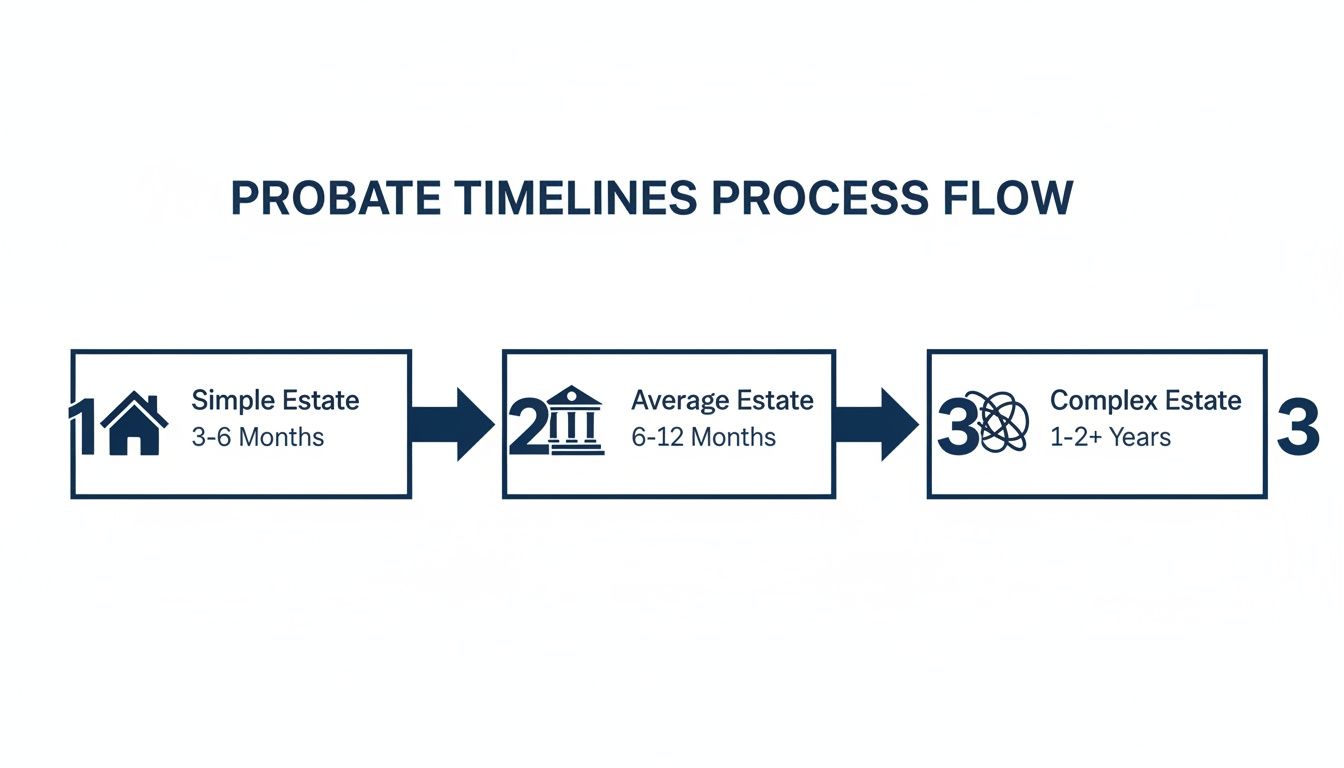
The probate process moves faster when there is an uncomplicated estate with no asset conflicts. But when you throw in things like a family business or feuding relatives, the brakes can really get pumped. Let’s break down each stage.
Stage 1: Kicking Things Off—Filing the Petition
The probate journey officially begins when someone, usually the executor named in the will or a close family member, files a petition with the local probate court. This is the step that gets the ball rolling.
The court then officially appoints a personal representative (or executor) who will manage the estate. The court schedule for this appointment requires a waiting period of about one to two months.
Stage 2: Spreading the Word—Notifying Heirs and Creditors
With a representative in place, the next job is to let everyone with a potential stake in the estate know what’s happening. The process requires that all recognized heirs and potential creditors receive formal notification.
The step represents a vital process for maintaining transparency. A notice will appear in a local newspaper to warn any unknown creditors about the situation. They have a set period to submit their claims. The notification process takes between two and three months to complete.
Stage 3: The Treasure Hunt—Inventorying and Appraising Assets
The actual work begins at this point which tends to be the most time-consuming stage of the entire process. The representative must locate and document all possessions of the deceased person. We need to include absolutely everything.
- Real Estate: The house, any vacation properties, or rental units all need a professional appraisal to nail down their current market value.
- Financial Accounts: This involves tracking down and valuing every bank account, 401(k), IRA, and investment portfolio.
- Personal Property: Don’t forget the tangible stuff. All cars along with jewelry and art and valuable antiques need to be included in the inventory.
The process of asset valuation can take between two and four months to complete but it might take longer when assets are difficult to find or assess their worth.
Stage 4: Settling Up—Paying Debts and Taxes
Once you know what the estate is worth, it’s time to pay the bills. The representative uses the estate’s cash to settle all legitimate debts and taxes. The process requires this step to be completed before any funds can be distributed to the heirs.
The final stage requires the deceased person to file their last income tax return while settling all outstanding property taxes and paying off any legitimate debts that creditors have filed. Ticking all these boxes can add another one to three months to the clock.
Stage 5: The Final Stretch—Distributing Assets and Closing the Estate
This is the moment everyone has been waiting for. The remaining assets will be distributed to the beneficiaries after all debts and taxes have been settled according to the will or state law if no will exists.
The representative submits a final report to the court which documents all financial transactions that occurred during the case. The court will issue an order that officially closes the estate after the judge signs off on it. The court needs between one and two months to finish the last administrative process.
The analysis of probate timelines becomes more understandable when you study it as part of the entire estate management framework. The knowledge about selling probate property becomes essential when you want to discover beneficial solutions for properties that need selling.
Why Some Estates Get Stuck in Probate for Years
While the average probate timeline gives you a useful benchmark, it doesn’t tell the whole story. What turns a standard nine-month process into a frustrating multi-year ordeal? The process faces multiple unplanned legal and emotional barriers which emerge as obstacles that stop all progress. The first step toward overcoming these delays requires you to identify their specific characteristics.

The actual duration of probate proceedings remains a mystery to many families who don’t realize how long the process will take. According to research only 2% of Americans understand that the national average probate process duration reaches 20 months. The process turns out to be far more complex than heirs expect which causes them to experience major stress.
The Problem of Family Disputes
The main reason for project delays stems from disputes between beneficiaries which leads to significant time delays. The entire process will come to a standstill when family members dispute about the will’s authenticity and asset distribution methods.
Think of it like a business partnership where the partners suddenly start suing each other. The entire project will remain at a standstill until the legal battles reach their conclusion. The process of contesting a will can lead to extended court proceedings which might last for several months or even years while legal expenses accumulate. The estate will lose its value while the probate process will take longer than expected. The person who handles the estate needs to know their exact responsibilities and our guide shows whether an executor can change a will and what duties they must perform.
Dealing with Complex or Hard-to-Value Assets
Not all assets are created equal. A simple bank account is easy to value and transfer, but other kinds of property can throw a major wrench into the inventory stage of probate.
These challenging assets almost always require specialized attention:
- A Family Business: Figuring out what a privately-owned company is worth is a complex job that requires business appraisers and accountants. This step alone can add months to the process.
- Unique Collectibles: Things like fine art, rare coins, or classic cars need expert appraisals to determine their true market value for the estate.
- Out-of-State Property: If the deceased owned real estate in another state, you’ll likely have to open a second, separate probate case there. This is known as ancillary probate.
Each of these situations introduces new layers of administrative work, extending the time it takes for the executor to create a complete and accurate inventory for the court.
Significant Debts and Tax Liabilities
An estate consists of both the assets someone possessed at their death and the debts they left behind. The executor must handle all creditor claims when the deceased person leaves behind major debts including credit card debts and mortgage payments and substantial medical expenses.
The assessment process becomes more difficult when an estate reaches the value threshold which requires federal or state estate tax payments. Preparing and filing an estate tax return is an incredibly detailed process that usually requires a tax professional. The IRS then has up to nine months just to review the return, and any disputes will tack on even more time to the probate clock, holding up the final distribution to the heirs.
How Probate Rules Differ Across State Lines
The probate system operates as a single uniform system but this understanding proves to be false. The reality is that probate is a patchwork of state-specific laws. The answer to “how long will this take?” can change dramatically just by crossing a state line, making local knowledge absolutely essential.
For instance, some states have adopted what’s called the Uniform Probate Code (UPC). This framework helps streamline the process for straightforward, uncontested estates. Then you have states like Texas, which offers something called independent administration. This lets an executor handle most of the estate’s business with minimal court oversight, which is a massive time-saver.
The probate process in California and New York is known for its extended duration and complex procedures. The court systems in these states face heavy workloads and require people to fulfill strict procedural requirements. The system frequently keeps ordinary estates for more than twelve months.
State-by-State Probate Timeline Comparison
The local rules of the game truly dictate the timeline. An executor might be dealing with property in multiple states for the same estate and find themselves juggling a quick, simple process in one location and a bureaucratic nightmare in another.
To give you a better sense of this variation, here’s a comparative look at what you might expect in a few different states.
| State | Average Timeline | Key Factor |
|---|---|---|
| Florida | 6 to 9 months | Can stretch well over a year for complex or contested estates. |
| Texas | 6 to 12 months | Independent administration speeds up many uncontested cases. |
| California | 12 to 18+ months | Known for significant court backlogs and mandatory waiting periods. |
| New York | 9 to 18 months | Busy courts and formal procedures often lead to longer timelines. |
| New Jersey | 6 to 12 months | Similar to national averages, but complications can add significant delays. |
The location of the property determines its value as much as the contents of the estate. The Garden State property owners need to understand their available options which includes the possibility of selling inherited property to avoid probate-related challenges.
The bottom line is simple: your location dictates the rules. A probate timeline depends on the state-level laws that govern the jurisdiction where the probate case gets filed.
A Look at International Timelines
Public safety dangers exist in various nations across the entire planet. People in England experience the same frustrating situation when they deal with their court system. The UK government reports that the typical probate application process takes about seven weeks from the time you submit your application.
The timeline will extend to 12 weeks on average when there are problems such as missing documents or simple mistakes. The process of settling an estate faces administrative delays which become a widespread issue according to the data.
Your Options for Managing a Lengthy Probate
When you’re staring down the barrel of a long, drawn-out probate, it’s easy to feel helpless. But you’re not powerless. Taking proactive measures will lead to important improvements which can reduce stress and save both time and money for you and your family.
Let’s explore a few practical strategies to help you manage the process and keep things moving forward.
Knowing your options is the first step toward regaining a sense of control. From seeking the right professional help to making smart decisions about estate assets, you have several powerful choices.
Hire a Skilled Probate Attorney
It might seem like an added expense, but hiring an experienced probate attorney is often the best investment you can make. A lawyer who specializes in this area understands the local court system and knows how to forecast problems and manage deadline-compliant paperwork submission.
Think of them as your professional guide through the legal maze. They are invaluable for:
- Avoiding Common Errors: Simple mistakes on forms are a primary cause of delays. An attorney ensures everything is accurate from the start.
- Navigating Family Disputes: When emotions are high, a neutral third party can mediate conflicts between heirs, helping prevent them from escalating into costly court battles.
- Meeting Critical Deadlines: Probate is full of deadlines for notifying creditors, filing inventories, and submitting reports. Missing one can set the timeline back by months.
Foster Open Communication Between Heirs
Family disputes serve as the main obstacle which causes delays in the probate process. The process will become stuck in suspicion and legal battles when heirs and beneficiaries stop communicating or start fighting with each other.
Clear, consistent communication is essential. The executor should make a concerted effort to keep everyone informed about the progress, decisions being made, and what to expect next. A simple, regular update can prevent misunderstandings from escalating into serious disputes.
An ounce of prevention is worth a pound of cure. Keeping all beneficiaries informed can be the most effective way to avoid the costly, time-consuming nightmare of a contested will.
Consider Your Options for the Inherited House
The house within an estate usually represents the most valuable property but it also brings the most complex challenges. The estate must cover all mortgage payments and property taxes and insurance costs and maintenance expenses during the probate process. The ongoing expenses will consume the available funds which exist in the estate.
Selling the house is often a practical solution. While you can list the property with a real estate agent during probate (with court approval), this traditional route can introduce more delays and uncertainties.
The option to sell directly to a cash buyer provides a solution for those who want quick and certain results. The option provides several important advantages:
- Speed and Certainty: A cash transaction can often close in just a few weeks, eliminating the lengthy process of listing, showing the home, and waiting for a buyer’s financing to be approved.
- No Repair Costs: You can sell the house “as-is.” This means you won’t need to use estate funds for costly repairs or updates, which is a common requirement in traditional sales.
- Simplified Process: A straightforward cash sale can make obtaining court approval easier. The property becomes liquid assets through this method for distribution to the heirs.
The quick cash sale method offers immediate financial relief to some families while getting rid of their major financial burden. The strategy seems to work well with Eagle Quick For Cash which provides this type of service. Learning how to sell an inherited house fast can give you a better understanding of what’s involved.
Answering Your Top Questions About the Probate Timeline
The general timeline provides some useful information but you probably have many particular questions. People frequently experience this as a regular occurrence. Real-world problems arise when you inherit an estate but finding clear answers enables you to take the right next steps. Let’s tackle some of the most common concerns heirs face.
The knowledge of what lies ahead enables you to identify possible challenges which leads to better choices for your family and estate.
Can We Sell the Inherited House Before Probate is Over?
Yes, you can often sell a house while it’s still in probate, but there’s a catch: you need the court’s permission. The process of selling a home differs from typical home sales because it requires more than just listing the property. The court needs to oversee the entire process to protect all heirs and creditors of the estate.
The court will issue Letters Testamentary to the executor who will then request permission to sell the property. A cash buyer can make the selling process much simpler. A cash offer without contingencies appears more favorable to judges because it minimizes the risk of the deal collapsing. The document presents a straightforward and quick way to convert property into cash for the estate.
How Badly Does a Contested Will Mess Up the Timeline?
The main reason probate cases get stuck in limbo for years instead of months is because of contested wills. The entire process comes to a halt when someone who is usually a beneficiary or an heir-to-be files a formal court challenge against the will’s validity.
The majority of will contests stem from three primary grounds:
- Undue Influence: Someone claims the deceased was pressured or manipulated into creating or changing the will.
- Lack of Capacity: The argument is that the person wasn’t mentally sound when they signed the document.
- Improper Execution: This is a technical challenge, arguing that the will wasn’t signed or witnessed correctly according to strict state laws.
A dispute like this turns a routine administrative process into a full-blown lawsuit. The process will require you to attend court dates while lawyers present evidence and witnesses provide testimony. The entire process of probate will face major delays and substantial legal expenses because each step adds to the total cost which will be deducted from the estate.
Is a Living Trust Really a Way Around All This?
The answer is affirmative. A properly set up and funded living trust is specifically designed to skip the court-managed probate process entirely. Trust ownership of assets like houses will automatically transfer to the beneficiaries you specified during your death.
The main distinction between probate and trust settlement lies in their process visibility since probate occurs in public courts while trust settlement happens privately through a successor trustee. The private nature of this process combined with court-free distribution enables assets to be distributed within weeks or a few months which stands in stark contrast to the typical probate duration of at least a year.
A living trust offers a much faster, more private, and often less expensive way to transfer an estate, providing valuable context for anyone considering their future estate planning options.
What Are the Real Costs of a Long Probate?
The longer probate drags on, the more expensive it gets. The process is straightforward. The estate will cover all these expenses through its assets which will reduce the amount left for inheritance.
The following expenses will accumulate during the process:
- Attorney and Executor Fees: These are often calculated as a percentage of the estate’s value or billed at an hourly rate. More time means more billable hours.
- Court Filing Fees: Every single document filed with the court comes with a fee.
- Property Maintenance Costs: If there’s a house, you’re on the hook for the mortgage, property taxes, insurance, and general upkeep while it sits empty during probate.
- Appraisal and Bond Fees: You’ll need to pay for official appraisals of assets and may need to pay for a bond to insure the executor’s actions.
The probate process becomes more expensive for heirs because they need to pay higher professional fees and house maintenance costs when probate takes longer than expected. A fast and smooth transaction process will produce financial benefits for all parties involved.
The probate process becomes difficult to manage when a property becomes a financial burden to the estate. The quickest way to sell your most valuable estate asset involves getting a cash offer at its fair market price. The probate property sale service of Eagle Quick For Cash lets you sell your property without repairs or realtor fees which speeds up your ability to take control of the timeline. You can find more information about this option by visiting https://www.eaglecashbuyers.com.