



Selling your house “as is” means selling it in its current condition, without making any repairs. The method works well for people who want a quick sale while avoiding the expenses and difficulties of home improvement projects. The method to sell a property in its current state depends on your primary objectives which might include quick sales or maximum returns or simple procedures. The main options include working with a real estate agent, selling directly to a cash home buyer, using an iBuyer, or handling the sale yourself (FSBO).
Your Options for Selling a House As Is
So, you’ve decided to sell your house as is. The next big question is how. The best path for you really comes down to what you value most—is it getting the highest possible price, selling as fast as possible, or having the easiest, most hands-off experience?
The different methods for selling products provide various methods of operation. The system you choose now will determine your long-term success whether you manage inherited property from a distance or overcome financial difficulties or want to move without any difficulties.

The Primary Paths to an As-Is Sale
By selling as is, you’re being upfront with potential buyers: “what you see is what you get.” The type of honesty you practice will determine which buyers you attract so your marketing plan needs to reflect that. Here are the main ways to get it done:
-
Real Estate Agents: A good agent with experience selling distressed or as-is properties can get your home listed on the open market. The route leads to a potentially higher ending cost but it requires more time to complete. You’ll have to factor in agent commissions (typically 5-6%) and be prepared for buyers who will still want inspections, even if you’ve listed it as is.
-
iBuyers: The term iBuyers describes large technology companies which offer instant cash purchases. The process is slick and convenient, but they are very selective. The service providers operate exclusively within particular metropolitan areas and they reject properties which need more than basic painting work. You can learn more about the key differences between cash buyers vs. iBuyers to see if this fits.
-
For Sale By Owner (FSBO): Going the FSBO route puts you in the driver’s seat. You have total control and won’t have to pay a seller’s agent commission. The trade-off?You need to handle all aspects of the process including marketing and showings and legal paperwork and negotiation. It’s a huge undertaking.
-
Cash Home Buyers: This is your fast-track option. Companies that buy houses for cash are set up to purchase properties in any condition, often closing in just a few days. They use their own funds, which means no waiting on bank approvals, no stressful appraisals, and no back-and-forth negotiations over a leaky faucet.
Comparing Your ‘As Is’ Selling Options
The table shows different methods to sell your house as is through a comparison of transaction speed and required effort and potential financial returns to help you select the best option.
| Selling Method | Typical Closing Time | Seller Effort Required | Price Potential | Best Suited For |
|---|---|---|---|---|
| Cash Home Buyer | 7-14 days | Low | Lower, but certain | Sellers prioritizing speed and convenience over top dollar. |
| Real Estate Agent | 30-90+ days | Medium | Highest | Sellers with time and a property in decent condition. |
| iBuyer | 10-21 days | Low | Moderate, fees apply | Sellers in specific markets with homes needing minor work. |
| FSBO | 30-90+ days | High | High, but risky | Experienced sellers comfortable with the legal process. |
Ultimately, weighing these factors against your personal situation will point you toward the right choice.
Making the Right Choice for Your Goals
Your own circumstances are the biggest factor here. If you inherited a house across the country and just want it handled, the pure simplicity of a cash buyer is hard to beat. But if your home only has minor cosmetic issues and you’re in no particular hurry to move, listing with an agent might bring in a better financial return.
The true advantage of selling a house as-is becomes apparent when you eliminate the need to deal with both financial and emotional burdens that come with major renovations. The transfer process enables you to move forward by giving the new owner both keys and complete responsibility for all repair tasks.
Expert guidance is available for those who want to learn more about selling homes with major repair needs. Exploring all your options will give you the clarity you need to pick the path that best suits your property and, more importantly, your peace of mind.
What Selling “As-Is” Really Means
People tend to think that “selling as-is” means sellers are trying to deceive buyers through quick sales. The reality stands in direct opposition to that statement. When you sell a house as-is you present the property in its current state without making any repairs or improvements.
This sets clear expectations from the get-go, which is a massive relief if you don’t have the cash, time, or energy for a big renovation project. It changes the whole conversation. However, it’s not a get-out-of-jail-free card for your responsibilities as a seller.
Honesty Isn’t Just the Best Policy—It’s the Law
Every state has laws that require you to disclose known material defects. What’s a material defect? It’s a significant issue that could seriously affect the home’s value or pose a safety risk. The property suffers from major foundation issues and basement water damage and outdated electrical systems.
Selling as-is doesn’t let you off the hook. The seller needs to complete a disclosure form which provides buyers with detailed information about the property. Being upfront is your best defense against legal headaches down the road.
Transparency stands as an essential legal requirement which organizations can use to develop strategic plans. A buyer who knows exactly what they’re getting into is far more likely to feel confident in their offer and see the deal through to the end.
If you know about a major problem and don’t disclose it, you could find yourself in a lawsuit long after you’ve handed over the keys. The rule of thumb is simple: if you know, you disclose.
How to Price Your Home Without Making Repairs
Pricing an as-is home is a delicate balance. You can’t just look at the perfectly remodeled house down the block and slap on a similar price tag. Your real competition is other homes that sold in a similar, non-updated state.
This is where getting good data is critical. An experienced cash buyer or a real estate agent who understands the investor market can pull “comps” (comparable sales) for other as-is properties in your neighborhood. The core information you need to establish your pricing strategy is revealed through this process. You have to bake in the cost of repairs the next owner will have to tackle. To get a better handle on this, you can explore the details of how much you might lose selling a house as is.
The single biggest mistake I see sellers make is overpricing. The listing will immediately turn off your target audience which includes investors and experienced DIY buyers who seek renovation opportunities and may lead to your house staying on the market for extended periods.
Making a Great First Impression on a Shoestring Budget
Just because you aren’t doing a gut renovation doesn’t mean you should do nothing. The goal is to highlight the home’s potential and show that it’s been cared for, despite its flaws. The best part? The most impactful prep work costs you nothing but a little elbow grease.
My Go-To No-Cost Prep List:
- Deep Clean Everything: I mean everything—from baseboards to ceiling fans. Wash the windows inside and out. A clean home feels cared for and lets in a ton of natural light.
- Be Ruthless with Clutter: Get rid of personal photos, knick-knacks, and bulky furniture. You want buyers to see the space, not your stuff. Give them room to imagine their own life there.
- Tidy Up the Outside: First impressions are made at the curb. Mow the lawn, trim back those overgrown bushes, and clear any junk from the yard. It takes just a few hours and makes a world of difference.
These simple steps send a powerful message to a buyer: “This house needs work, but it hasn’t been neglected.” The quality of your offers will see a major improvement because of this simple step.
Selling as-is is becoming a more popular strategy, especially with the ups and downs in the real estate market. The existing home sales market experienced a 1.2% increase which reached an annualized rate of 4.10 million units because mortgage rates dropped slightly. The market shows continued low inventory levels which makes as-is sales an attractive option for sellers who want quick transactions without investing in property upgrades. You can see more on this trend with these insights on existing home sales from Trading Economics. The fast-track approach attracts investors and renovators who are looking for quick action in competitive market conditions.
Choosing the Right Path for Your Property
The process of selling your house as-is requires you to discover which method works best for your specific situation. The different choices offer distinct combinations of how fast they are and how much they cost and how convenient they are. Your personal goals are what really matter here. The main goal for you is to complete the process as fast as possible while achieving the highest price or to get the simplest and most stress-free experience.
A magic formula does not exist. The requirements of a homeowner who needs to move within two weeks for a new job differ from those of an individual who inherited property and has enough time to market it. The first step requires you to understand all benefits and drawbacks of each approach.
The Four Main Roads to an As-Is Sale
Selling a property in its present state requires you to target buyers who expect to handle necessary repairs. You need to find particular buyers so you can use different methods to reach them. Let’s walk through what each journey actually looks like.
1. The Traditional Real Estate Agent
Working with a real estate agent is a familiar and solid choice, especially if your home is in decent shape but just needs some updating. A good agent can get your property listed on the Multiple Listing Service (MLS), which gives it maximum exposure to a wide pool of potential buyers.
- The Upside: You have the potential to get a higher sale price because more people will see your listing.
- The Downside: This is almost always the slowest route, often taking 30-90+ days to close. Plus, you’ll be paying agent commissions, which are typically 5-6% of the final sale price.
2. For Sale By Owner (FSBO)
Going the FSBO route means you’re in the driver’s seat for the entire process. You’ll be the one setting the price, marketing the property, scheduling showings, and negotiating offers. For most people who choose this path, the main motivation is to avoid paying the seller’s agent commission.
- The Upside: You skip the listing agent’s commission, which can save you thousands and give you more control over your bottom line.
- The Downside: This path is a huge commitment of time and energy. You’re suddenly responsible for everything from legal paperwork to marketing, and it can get overwhelming fast if you don’t have experience.
The decision tree helps you determine whether to renovate your home or sell it without improvements based on its current condition.
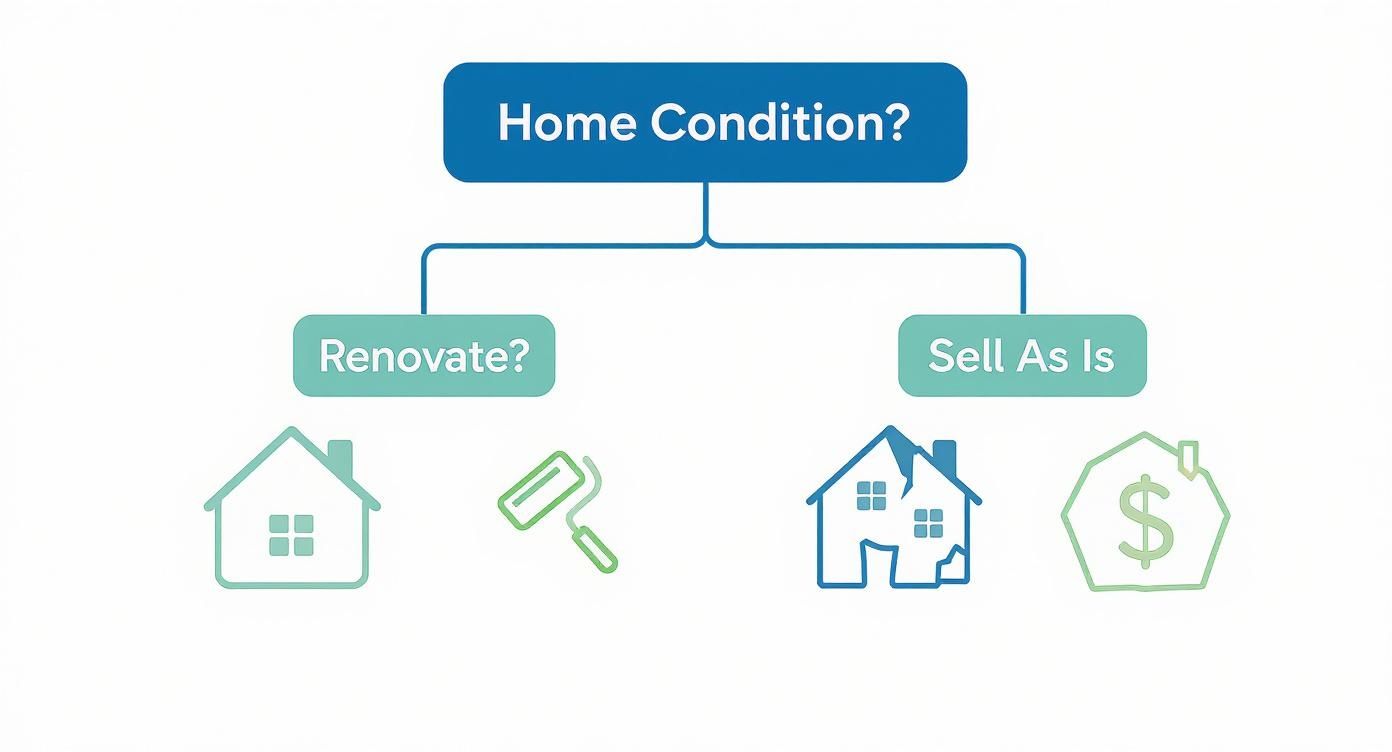
The actual state of your home serves as the starting point for the process according to the chart. Your financial requirements together with your home characteristics will determine the best sale approach for your property.
Exploring Faster, More Modern Alternatives
The new options have emerged as alternatives to established routes which focus on speed and simplicity. They work perfectly for homes which are being sold in their current state.
3. iBuyers
The term iBuyers refers to companies which offer instant home purchases. These are large, tech-driven companies that use computer algorithms to generate near-instant cash offers on homes. Their process combines digital convenience with simplicity which makes it an attractive option for sellers who want to get their sale done quickly.
- The Upside: The process is extremely convenient, with a fast, data-backed offer.
- The Downside: iBuyers are pretty picky. They usually have strict criteria and often won’t touch properties that need major work. They also charge service fees that can end up being just as much as a traditional agent’s commission.
An as-is sale represents a fundamental trade between buyers and sellers. The trade-off involves accepting a lower selling price in exchange for quick and certain transactions. The right choice is the one that gives you the exact blend of those elements that you need right now.
4. Cash Home Buyers
Cash home buying companies are exactly what they sound like: direct buyers who purchase properties with their own funds, no matter the condition. This is typically the fastest and most surefire way to sell a house as-is.
The option removes all uncertainties related to bank financing and appraisal processes and extended repair negotiation periods. The closing process becomes more reliable and faster because cash buyers operate with their own funds which enables them to complete transactions within one to two weeks.
- The Upside: The absolute fastest way to close, a guaranteed sale without financing headaches, and zero need for repairs, cleaning, or showings.
- The Downside: The offer will naturally reflect the home’s current state and the repair costs the buyer is taking on. This means it will likely be lower than what you might get on the open market after renovations.
Picking the right cash buyer is key, so you’ll want to do a little research. A great starting point is learning what defines the best ‘we buy houses’ companies to make sure you find a reputable partner. Ultimately, all four of these paths can work. The trick is to be honest with yourself about your property’s condition, your timeline, and how much you’re willing to manage yourself. That clarity will lead you straight to the option that serves you best.
How to Handle Offers and Negotiations
The receipt of an offer in your inbox feels like a major achievement. The process becomes more complex when you sell a house as-is compared to standard home sales. The negotiations aren’t about who will fix the leaky faucet; they’re about the certainty of the deal and the terms of the offer.
Your real goal here is to land a fair price that reflects your home’s current state while hitting your personal targets, whether that’s a quick close, zero hassle, or a specific number in your bank account.

Weighing Different Types of Offers
Let’s be clear: not all offers are created equal, especially for an as-is property. The highest number on the page isn’t always the best deal. You’ll probably see a few different kinds of proposals.
Here’s a quick rundown of what to expect:
- The Lower All-Cash Offer: This comes from a buyer who has the money ready to go. There’s no waiting on a bank, which means the risk of the loan falling through is zero. It’s your most reliable and fastest path to the closing table.
- The Higher Offer with Financing: Someone needing a mortgage might offer more, but it always comes with a financing contingency. For a house that needs work, this is a huge gamble. If the bank denies their loan—which happens all the time with fixer-uppers—the deal dies, and you’re right back where you started.
- The Offer with an Inspection Contingency: Even though you’re selling as-is, a buyer can still ask for an inspection. This doesn’t mean you have to make repairs. It just gives them a legal backdoor to walk away if the inspection uncovers something they can’t handle.
The true worth of an offer is in its certainty. A solid, all-cash offer for a bit less might be infinitely better than a higher, contingent offer that could easily fall apart.
Handling Inspection Reports and Price Credits
So, the buyer did their inspection. Now what?You’ve already said you’re not fixing a thing, but that doesn’t stop some buyers from trying to renegotiate.
They may come back with a long list of problems and ask for a price reduction or a “credit” to cover the repair costs. You are under no obligation to say yes. That said, if they found a major, legitimate issue you didn’t know about (like a cracked foundation), you might consider a small adjustment to keep a good buyer from bailing. It all comes down to your bottom line and how strong their initial offer was.
Responding to Lowball Offers
When you sell as-is, you’re almost guaranteed to get at least one lowball offer. Try not to take it personally; for some buyers, it’s just how they start a negotiation.
Instead of getting angry, be strategic. You can reject it flat out, but a better move is to send a counteroffer. Pick a number that’s closer to your asking price but still shows you’re willing to play ball. It sends a clear message: you’re serious about selling, but you won’t be lowballed.
The broader market context is on your side. The global residential real estate market is expected to hit USD 15.53 trillion by 2030. In the U.S. alone, there’s a housing shortage of around 3.8 million units. This pressure pushes sellers to list properties as-is to avoid renovation delays and helps hungry buyers get into the market faster. This dynamic makes as-is sales a crucial part of keeping the market moving. You can dive deeper into these global trends in residential real estate to see the bigger picture.
The Direct Cash Buyer Advantage
Handling all these negotiations becomes an exhausting task. The process of selling your home to a cash buyer brings a complete transformation to the real estate market. Their entire model is built to skip this stressful phase.
The offer they make is usually firm right from the start because it’s based on a detailed assessment of your property. They specialize in buying homes in any condition, so their offer already factors in the cost of repairs.
What does this mean for you?
- No Repair Negotiations: The price you agree on is the final price. Period.
- No Financing Hurdles: They use their own cash, so there’s no nail-biting wait for a lender’s approval.
- Certainty and Speed: You can sidestep all the back-and-forth and head straight to closing.
This direct path gives you clarity and peace of mind, which is priceless for many sellers. If you’re considering this route, it helps to be prepared. Check out these common questions to ask a cash buyer to make sure they’re the right partner for your situation.
You’ve accepted an offer and are on the home stretch—welcome to the closing process. The final stage of the process involves signing all documents and transferring ownership to the new owner through key delivery. It can feel a little overwhelming, but knowing what’s coming makes it a whole lot smoother.

This whole phase is managed by a neutral third party, usually a title company or real estate attorney. Their main job is to make sure the property title is clean—no unexpected liens or ownership disputes—and to handle the legal transfer of the deed.
The Paperwork: What You’ll Be Signing
The closing table will present you with various documents for your review. Your closing agent will walk you through everything, but it’s a good idea to know the key players in that stack.
Here’s a look at what you can expect to sign:
- The Deed: This is the big one. It’s the official legal document that transfers ownership from your name to the buyer’s.
- Bill of Sale: Are you leaving the refrigerator or any other personal items behind? This document officially transfers ownership of those, too.
- Seller’s Disclosure Statement: You probably filled this out ages ago, but it’s included in the final package as an official record of what you disclosed about the property’s condition.
- Affidavit of Title: This is basically you swearing, in a legally binding way, that you are the true owner and have the right to sell the house.
Having a clear title is non-negotiable. I’ve seen sales get completely derailed at the last minute because of surprise liens. That’s why it’s so critical to get ahead of any potential title problems that can arise at closing.
Decoding Your Closing Statement
The closing statement (also known as ALTA or Settlement Statement) stands as the most vital document for determining your financial results among all the documents you will review. The document provides a complete financial breakdown of all transaction amounts.
Your side of the statement will show all your credits (money coming to you) and debits (money you owe).
- Seller Credits: This is primarily the final sale price of your home.
- Seller Debits: These are your costs, like transfer taxes, your share of the year’s property taxes, or any final utility bills.
Take your time with this document. Seriously. It’s your last chance to catch any errors before the funds are wired.Your closing agent will explain every fee to you when you ask about it.
Closing With a Cash Buyer vs. a Traditional Buyer
The closing process will differ significantly based on the type of buyer you work with. A sale funded by a mortgage is a far more complicated beast than a straightforward cash deal. The entire process becomes easier to manage when you understand its full scope and know what it means to be in escrow.
The lender exercises its authority to make decisions throughout the entire process of dealing with a traditional buyer. The mortgage approval process includes an appraisal and an extended underwriting procedure which can add several weeks to the approval timeline. The buyer’s financing agreement remains active during the entire transaction but it can fail at any moment.
Selling to a cash buyer cuts through all that red tape. The transaction does not require any approval from a lender because the buyers use their own money. The process eliminates the need for appraisal and loan approval and last-minute financing denials. This approach allows for a faster, more certain path to closing, often on your preferred timeline.
Common Questions About Selling a House As Is
Thinking about selling your house as-is? You’re not alone, but it definitely brings up a lot of questions. It’s a completely different ballgame than the traditional route, so it’s smart to have some uncertainties. Let’s walk through the questions I hear most often from homeowners, so you can move forward feeling confident.
Do I Have to Disclose Problems If I’m Selling As Is?
Yes, you absolutely do. This is probably the biggest myth out there about selling a property as-is. Just because you’re selling the house in its current condition doesn’t mean you can hide known issues.
The term “as is” simply means you won’t be paying for any repairs. It does not let you off the hook for disclosing material defects. State laws are very strict about this. If you know the roof leaks, the foundation has cracks, or the plumbing is a mess, you are legally required to tell the buyer. Being upfront isn’t just about building trust—it’s about protecting yourself from a lawsuit down the road.
Think of the seller’s disclosure form as your legal shield. Honesty is non-negotiable and is the cornerstone of a successful, drama-free as-is sale.
Will I Make Less Money Selling My House As Is?
Not necessarily, especially when you run the numbers and look at your actual net profit. The sticker price for an as-is home will almost always be lower than a picture-perfect, renovated house, but that’s only half the story.
Remember what you’re not spending: tens of thousands on repairs, contractor bills, and months of carrying costs. Every month a house sits on the market while you’re renovating, you’re still paying the mortgage, taxes, and insurance. The final offer you get reflects the home’s current state and the work the buyer needs to put in. For many sellers, a fast, guaranteed sale with zero out-of-pocket costs is the smarter financial decision.
Can I Sell a House That Needs Major Repairs As Is?
Of course. In fact, homes that need a ton of work are often the best candidates for an as-is sale. If a property has serious issues—we’re talking structural problems, a failing roof, or a dead HVAC system—it’s not likely to qualify for a traditional bank loan anyway.
This is where cash buyers and investors become your perfect audience. They aren’t intimidated by big, expensive projects; that’s exactly what they’re looking for. These buyers have the cash and the know-how to tackle renovations that would send the average homebuyer running for the hills.
How Is a Cash Offer From a Direct Buyer Different?
Getting a cash offer from a direct buyer, like a professional home buying company, is a world away from a typical offer you’d see on the open market. The entire process is built for two things: speed and certainty.
Here’s a breakdown of what makes it so different:
- No Financing Contingency: The number one reason real estate deals fall apart is that the buyer’s loan gets denied at the last minute. A cash offer completely sidesteps this risk because the buyer is using their own money.
- A Much Faster Timeline: Forget waiting the standard 30-60 days for a mortgage-backed sale to close. A cash deal can often be wrapped up in as little as one or two weeks.
- Simplicity and Convenience: The whole experience is just easier. You don’t have to deal with public showings, staging, or even deep cleaning. The offer you get is your take-home amount—no agent commissions or surprise fees are tacked on at the end.
This approach is tailor-made for sellers who value a guaranteed, hassle-free closing on a timeline that works for them.
If a straightforward, no-hassle sale sounds like the right fit, you might consider getting a cash offer. At Eagle Cash Buyers, we provide fair, transparent offers with no obligation, allowing you to skip the repairs, showings, and uncertainties. This is one of several ways you can sell, but it offers a simple path for those who prioritize a quick and confident closing. Get your free cash offer today and discover if this option is right for you.