



People encounter numerous obstacles when they need to sell a property during probate but the process remains achievable. You need to understand your available options so you can complete the process efficiently.
Cash home buyers serve as the fastest method to help people who need to sell their house during probate. You can sell your property in its current state through this method because it lets you avoid both repair work and agent fees while you stay away from market unpredictability. The property usually sells within a few weeks after you get your legal authority to sell.
Your Options For Selling A House In Probate
The moment you receive a house inheritance you become responsible for paying property taxes and insurance costs and utility bills and performing required maintenance work. The estate funds will disappear quickly because of these carrying costs which makes it essential for executors and beneficiaries to complete the sale as fast as possible.
The process of probate sales differs from regular real estate transactions. The court oversees the entire process to make sure all steps including major asset sales for houses follow legal procedures which protect the interests of the estate and its beneficiaries. The initial step toward success requires you to understand the available options which lead to achievement.
Three Primary Paths For A Probate Sale
The sale of probate property offers three primary options to property owners. The three options present different timeframes and expenses and need various amounts of work from you as the estate’s representative.
-
List with a Probate-Specialized Real Estate Agent: The traditional route involves hiring an agent experienced in probate sales. They assist with home market preparation and listing services while handling all incoming offers. The process will generate the highest sale price but it requires the most time and effort because it takes multiple months to finish.
-
Sell at a Real estate Auction: An auction provides a definite sale date and can create a competitive bidding environment. The auction process demands extensive marketing work before the event to draw suitable bidders but the final sale price stays unknown.
-
Sell Directly to a Cash Home Buyer: This is the most straightforward and fastest option. A cash buyer will purchase the property in its current “as-is” condition, meaning you don’t need to make repairs or even clean it out. The court needs to give approval before you can finish a cash sale that will take about three weeks to complete.
The best choice depends on the estate’s specific circumstances. The estate should choose a traditional listing approach when it wants to reach the highest sale price and has enough funds to cover all ongoing expenses. A cash sale stands as the most practical choice when buyers need quick transactions with guaranteed results and no extra work.
Comparing Your Probate Sale Options
The table provides a direct comparison which enables you to evaluate various probate property sale methods.
| Sale Method | Typical Timeline | Key Advantage | Best For |
|---|---|---|---|
| Traditional Sale (Real Estate Agent) | 3-6+ months | Potentially highest sale price | Estates that can afford carrying costs and want to maximize the price. |
| Real Estate Auction | 2-3 months | A fixed sale date and competitive bidding | Unique properties or when a quick, definitive sale timeline is needed. |
| Direct Sale (Cash Buyer) | 7-30 days | Speed, convenience, and “as-is” sale | Estates needing to sell quickly, avoid repairs, and minimize hassle. |
Every choice fulfills a particular requirement. You can select the best option after you assess all options based on the estate’s specific objectives. People who want to sell their inherited property for cash quickly can follow this method to manage their inherited home sales during emergency situations.
Understanding Your Role in the Probate Process
You must prove your legal right to represent the estate before you can start the sale process. The executor who received power from the will or the court-appointed administrator needs to get their official document which shows they control the deceased person’s assets.
The document exists under two names depending on whether there is a will or not. It is your legal key to managing the estate, including signing contracts to sell the property. The Guide to the Probate Process in Texas provides essential resources which explain all legal aspects of this procedure.
Full Authority vs. Limited Authority
You need to understand which authority level the court has given you after they send you your “Letters.” This information will create a significant effect on the sales process and its estimated completion date.
-
Full Authority: This is the most efficient scenario. The Independent Administration of Estates Act (IAEA) grants you full authority to manage the sale as you would any other traditional property transaction. You can set the price, accept an offer, and proceed to closing without needing the court’s constant approval.
-
Limited Authority: This path is more restrictive and involves direct court supervision. You need to list the property for sale before you can accept an offer which must then be submitted to the court for approval. The process needs a public hearing which allows other parties to place bids on the property while they deal with unpredictable situations that cause extended waiting periods.
Two executors named Sarah and Tom serve as an example to show this process in action. Sarah has full authority; she accepts a fair cash offer and closes in three weeks. Tom has limited authority; he accepts a similar offer but must wait two months for a court date, where his buyer is outbid, sending him back to square one.
The flowchart shows how your selling approach depends on the amount of power you possess.
A cash sale provides the most direct route to success when you need to sell quickly.
The probate process takes between three and twelve months to complete but it can stretch beyond this time frame. The extended duration of this process makes executors want to complete property sales as quickly as possible. How Long Is Probate? contains additional information which will help you understand this process better.
Choosing Your Best Sales Path
Your first duty as an executor requires you to decide how you will sell the property which belongs to the estate. The route you select will determine how long it takes to resolve the estate and how much money it will cost and how much tension you will experience. The two main routes become essential to understand when people want to sell their houses quickly through probate.
The Traditional Market Route
Most people first consider listing the home with a real estate agent. This method enables you to get the best possible sale price which benefits the beneficiaries when they receive their inheritance.
The chance to win a prize requires you to put in both substantial financial resources and extended periods of time. The process of preparing a property for market sale requires following an extensive checklist which demands estate funds to cover all expenses.
- The repair process requires you to fix both minor cosmetic issues and major structural problems which include roof replacement and HVAC system installation.
- You need to arrange the deceased person’s personal belongings for removal and disposal during the decluttering process.
- The staging process requires you to place furniture and decorative items in specific arrangements which will attract all types of home buyers.
- You need to schedule multiple potential buyer visits which will occur at different times throughout the day.
The process continues at a slow pace while it consumes large amounts of money and requires extensive labor. The estate continues to pay for property taxes and insurance and utility bills. The sale process depends on three critical factors which include property inspections and appraisals and the buyer’s ability to secure financing. These three factors can lead to extended sales periods which might force the transaction to fail.
Every executor needs to understand that time expenses will generate costs which will reduce the estate’s total monetary value. The property value decreases every month because the house stays on the market while owners must pay for its maintenance and upkeep.
The Direct Cash Sale Alternative
A direct sale to a cash home buyer represents the most functional choice which executors can use. The process enables fast results with guaranteed outcomes because it removes all preparation work and unpredictable elements which occur during standard sales.
A cash sale is an “as-is” transaction. You must sell the house in its existing state. You make no repairs, do no deep cleaning, and don’t need to stage the property. A cash buyer assesses the home as it is and provides a fair offer based on that condition.
The method shows strong value for regular probate situations which include:
- The estate does not have enough money to cover both repair expenses and ongoing maintenance fees.
- The heirs reside in different states which prevents them from handling property sales at a distance.
- The house requires extensive repairs which prevent it from selling through standard real estate channels.
- The buyer needs a guaranteed closing date instead of dealing with the market’s unpredictable changes.
Probate properties need updates which form a considerable part of properties that investors target based on NAR.realtor housing statistics. A cash sale presents you with an easy-to-understand offer which includes a fixed closing date that usually happens within a few weeks. This process enables you to settle estate debts and distribute assets to beneficiaries without facing prolonged periods of stress. The company Eagle Cash Buyers provides no-obligation offers to people who select this method.
How to Find a Reputable Cash Buyer
You need to find a reliable buyer after you determine that a fast cash sale represents the best option for the estate. Different “we buy houses” businesses have different levels of honesty in their operations. To successfully sell my house fast probate, you need a reliable partner who will close on time without any last-minute issues.
Your goal is to find a business which operates with transparency and possesses deep knowledge and maintains excellent customer feedback. Making a fast decision without proper investigation will lead to receiving a lowball offer which will result in a failed contract and unexpected closing fees. A brief period of research work will prevent you from facing major issues later on.

Vetting Potential Cash Buyers
You need to perform an initial online search before you can start making phone calls. A legitimate cash buyer will have a professional web presence and verifiable credentials.
Here are key things to look for:
- Better Business Bureau (BBB) Rating: A high rating from the BBB is a strong indicator of an ethical and customer-focused company. Look for an A+ rating and review any complaints filed against them.
- Real Customer Reviews: Search for reviews on third-party platforms like Google. Real reviews include particular information which describes how the process worked and who was part of the team. Stay away from businesses which have no customer feedback or display only generic customer testimonials. Our guide on how to evaluate companies that buy houses reviews can help you identify genuine feedback.
- Proof of Funds: A serious cash buyer should be able to provide a bank statement or letter confirming they have the necessary funds to complete the purchase. Do not hesitate to ask for this. If a buyer is reluctant to provide it, they may be a “wholesaler” who intends to sell your contract, adding risk and uncertainty to the deal.
A reliable buyer will focus on finding solutions while they never try to force you into making a choice. A major red flag emerges when you experience any kind of rush or discomfort during your discussion. You should always follow your instincts.
Understanding Their Process
A trustworthy buyer will be transparent about their offer calculation. The team members need to explain their process of using comparable property sales and their approach to estimating repair expenses.
The offer needs to exist in a written agreement which should avoid any confusing terms or unexpected charges. You should ask directly: “Is this the net amount the estate will receive at closing?” A trustworthy buyer usually pays for all closing expenses which means the offer value represents the actual amount the estate will obtain.
You will reach the final stage of closing after you accept an offer but the closing process depends on how much authority the court gave you to represent the estate. You need to determine your authority level because it will impact how quickly you can complete the closing process.
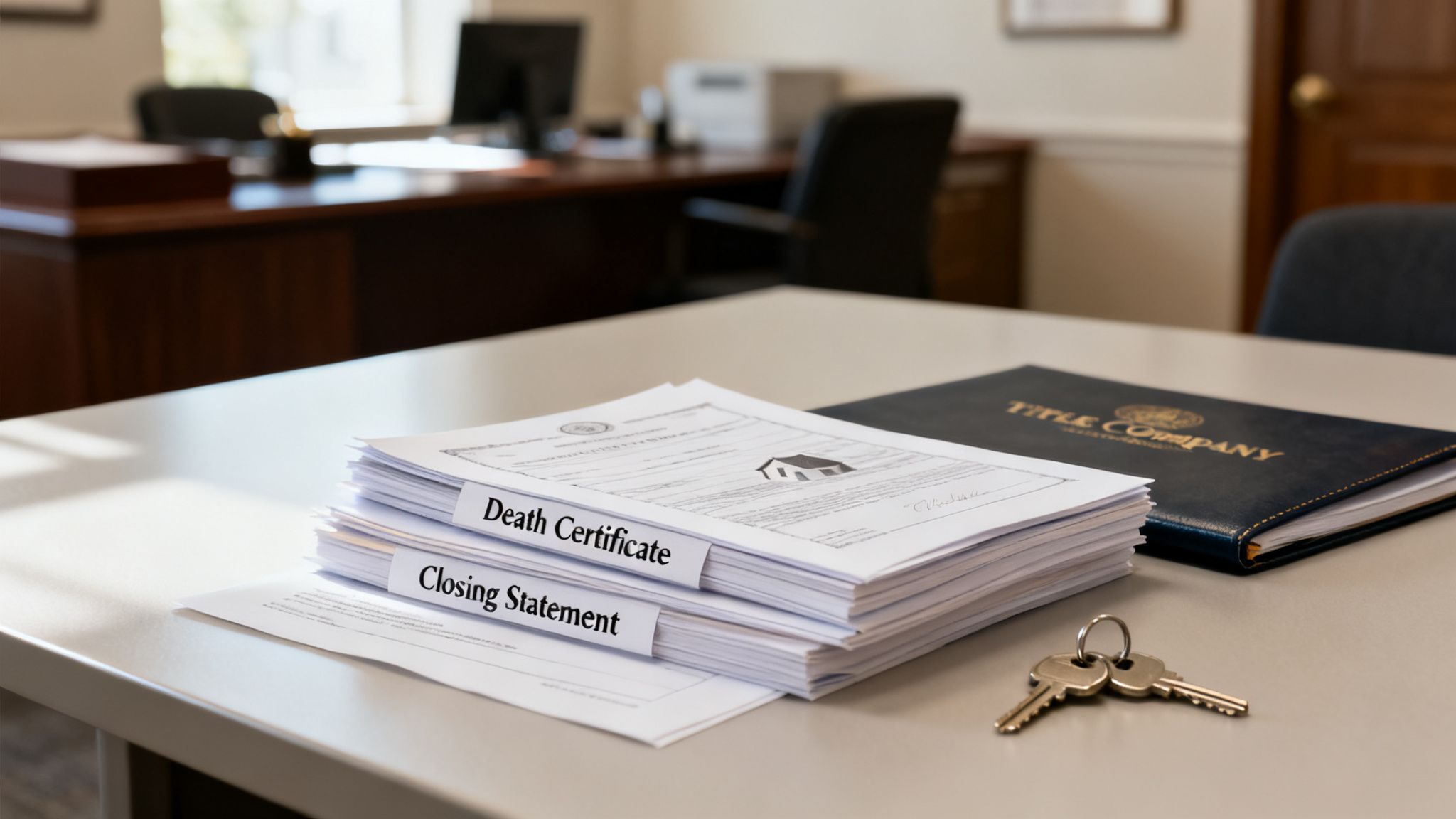
If You Have Full Authority
You can complete the closing process through Independent Administration of Estates Act (IAEA) authority because it functions like a regular property sale. You have the authority to sign documents and complete the sale without needing court approval.
Here’s what to expect:
- The cash buyer opens escrow with a title company.
- The title company conducts a title search to ensure there are no liens or claims against the property.
- You sign the deed and other closing documents.
- The title company wires the funds directly to the estate’s bank account.
This process operates efficiently because it does not include any superfluous steps which would cause unnecessary waiting periods.
If You Have Limited Authority
The process requires court oversight because limited authority leads to additional procedures which extend the time needed for completion.
You need to file a “Report of Sale and Petition for Order Confirming Sale of Real Property” with the probate court after you accept an offer. The process starts with a formal court hearing. The heirs receive a “Notice of Proposed Action” which shows them all the details about the sale. The court auction starts with your buyer’s offer as the first bid which other bidders can choose to beat. The sale becomes official after the judge approves the highest bid during the court session.
The court confirmation process serves as the main factor which leads to probate sales taking longer to complete. The process creates uncertainty which extends the time needed to complete the sale by several weeks or months thus making it difficult to sell quickly.
The financial strain of a prolonged sale can be significant. The monthly costs of owning an inherited home including taxes and insurance and utilities range between $1,000 and $3,000 according to J.P. Morgan’s current U.S. housing market outlook which shows how these expenses reduce the value of your inherited property.
The Title Company’s Crucial Role
The title company serves as a crucial entity which works with all levels of authority that you possess. The transaction receives proper handling because of its role as a neutral party. The title company performs three essential functions which include verifying your right to sell the property and removing any existing debts and ensuring proper recording of the new deed to protect both the estate and buyer. The guide explains the primary operations of title companies which serve as educational resources for understanding their work.
Common Questions About Selling a Probate House
You will face various obstacles when you need to fulfill your duties as an executor while numerous questions will enter your mind. The following answers address the most common questions which people ask about probate house sales.
The sale process becomes available to me before probate reaches its conclusion, right?
Yes, you can. The process of selling the property serves as the main probate step which takes place before the entire process reaches its conclusion.
The court needs to officially designate you as the executor or administrator before you can start sales activities after they issue you “Letters Testamentary” or “Letters of Administration.” The funds from the sale go into an estate bank account which first uses them to pay off the deceased person’s debts before distributing the remaining assets to the heirs.
Do I Have to Make Repairs Before Selling?
No, you do not. Most estates do not have enough resources to perform any renovation work. The estate lacks sufficient cash resources while the executor must handle contractor management duties which become particularly difficult when they need to work from outside the state.
Homeowners choose the “as-is” probate house sale method because it effectively solves their problems. Cash buyers expect properties to need repairs so they include these costs in their purchase price. You are not required to do any repairs, cleaning, or updates.
The key takeaway from this method shows that selling properties in their current condition preserves estate funds while enabling fast deal closures without any additional renovation-related delays.
How Long Does a Probate Sale Typically Take?
The timeline depends entirely on your chosen sales method. The process of selling a home through an agent takes between four and six months under normal circumstances when no problems arise. The court confirmation process for sales transactions extends the entire process which can take up to twelve months.
A direct sale to a cash buyer is much faster than other methods. The court needs to give you legal authority before you can finish the sale which usually takes between two and three weeks.
What Happens to the Money from the House Sale?
The executor needs to open a bank account which will serve as the estate’s official bank account to receive all sale proceeds. The funds remain in the estate bank account until the distribution process begins.
Your legal duty is to use this money to settle the deceased’s debts and the estate’s expenses, which may include:
- The remaining mortgage on the property.
- Credit card balances and other personal loans.
- Attorney and court fees.
- Final income and property taxes.
You can distribute the remaining funds to beneficiaries after all creditors have received their payments and the court has given its final approval. Our guide on how capital gains tax applies to inherited property provides essential information for understanding the financial impact of this matter.
You require assistance to manage the probate sale process because it involves complex procedures. A direct cash sale stands as the most suitable solution for people who want to sell an inherited property quickly while avoiding the stress of repairs and showings and agent fees. You can obtain a fair cash offer without any obligations by contacting Eagle Cash Buyers who operate on your preferred schedule.