

Selling a house during probate is very possible, but it certainly works differently from the normal real estate transaction. Before the property can legally be transferred to a buyer, the probate court must authorize the executor or personal representative to act on behalf of the estate.
If you are wondering if you can sell a house before probate, you should consider all the specific details and exceptions of the situation. If the answer is positive, then keep in mind that the legal authority matters, because without it, nobody can sign contracts, approve offers, or close the transaction.
For many families, speed becomes the main priority. Ongoing property taxes, bills, maintenance, and other costs continue piling up while probate moves through the system. A delayed sale can slowly drain the value of the estate. The good news is that there are several ways to sell a probate property.
Understanding the Probate Process First
Probate is the legal process used to settle a deceased person’s estate. The court oversees:
- Validation of the will;
- Appointment of the executor;
- Payment of debts;
- Distribution of assets to heirs.
When real estate is involved, probate often becomes more complicated because the court wants to ensure the property sale benefits the estate properly. The process starts when the executor files paperwork with the probate court.
Once approved, the court issues legal authorization documents commonly called Letters Testamentary and Letters of Administration. These are the documents that give the executor authority to manage and sell the property. You should be prepared for the steps and challenges of selling a house in probate.
Why Probate Sales Often Move Slowly
Many families assume they can immediately list the inherited property after someone passes away. In reality, probate contains several mandatory legal stages before a sale can fully close. Common delays include:
- Court backlogs;
- Missing paperwork;
- Creditor waiting periods;
- Family disagreements;
- Title issues;
- Property appraisals.
You must always consider how long probate takes. The realistic timeline is essential. Even simple probate cases often take six months or longer. Complex estates can stretch well beyond a year.
The Executor’s Role in the Sale
The executor controls the probate sale process. Their responsibilities usually include:
- Securing the property;
- Maintaining the home;
- Paying estate expenses;
- Communicating with heirs;
- Handling court filings;
- Reviewing offers.
The executor also has a fiduciary duty, which means they must act in the estate’s best interest instead of favoring one heir over another. You should know what an executor is and what duties this person has.
Full Authority vs Limited Authority
The court may give the executor either full authority or limited authority. The distinctions dramatically affect how quickly the house can sell. Here, you can see what the executor can do with their authority:
Full Authority | Limited Authority |
List the property immediately | Needs extra hearings |
Accept offers directly | Should deal with more paperwork |
Negotiate terms | Experience delayed closing timelines |
Close the sale without repeated court hearings |
Executors who hope for a much faster probate process usually request full authority. The fastest probate sales are made when the executor has the authority at the beginning. You can check our tips on how to sell a house fast during a probate.
Choosing the Right Way to Sell
Once the executor has legal authority, the next decision becomes choosing the actual selling method. Every option involves tradeoffs between speed, profit, convenience, and risk.
Traditional Real Estate Listing
Many probate properties sell through real estate agents. Advantages include:
- Broad market exposure;
- Potentially higher sale price;
- Access to traditional retail buyers.
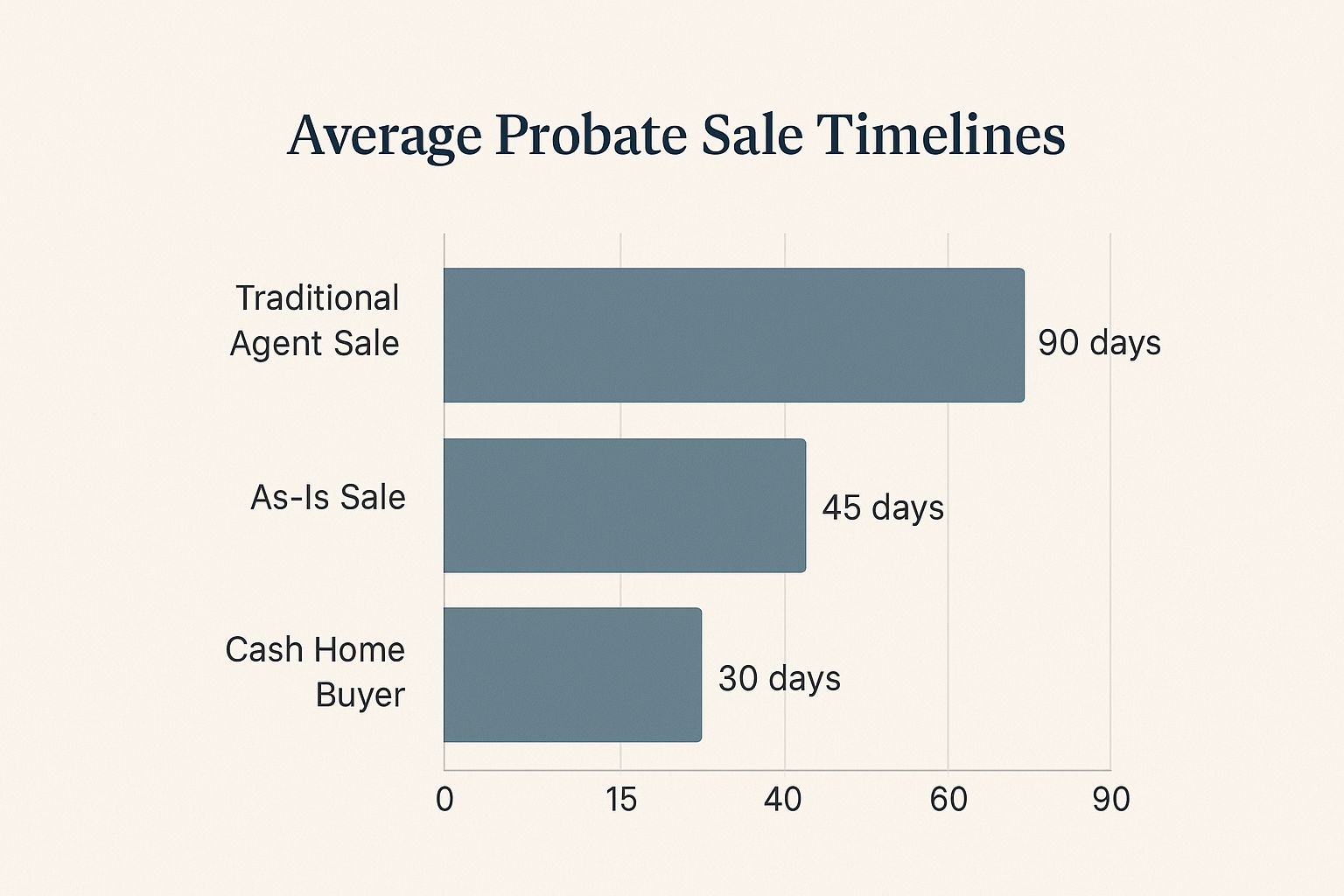
However, the route creates common delays. Traditional listings usually involve repairs, cleaning and staging, inspections, and open houses. Buyers who rely on mortgage approval can also fall through late in the process. If you will be moving, make sure to check tips on packing for a stress-free move.
For Sale By Owner (FSBO)
Some executors try selling without an agent to avoid fees. That means they decide to handle marketing, contracts, showings, and legal paperwork on their own. This route can work, but it demands a lot of time and real estate knowledge during an already stressful probate process.
Selling to a Cash Buyer
Cash buyers offer the fastest and simplest option in many probate situations. Cash sales usually involve:
- No repairs;
- No financing delays;
- No commissions for agents;
- The fastest closing timelines.
The property sells as-is, which removes many common probate sale headaches. It is an increasingly popular option, as in the first half of 2025, cash buyers drove one-third of home sales.

Why Probate Homes Often Need Fast Sales
Many probate properties become financial burdens super quickly. The estate remains responsible for mortgage payments, property taxes, bills, repairs, and insurance. Vacant homes also deteriorate faster than occupied ones.
Leaks, vandalism, mold, and neglected maintenance can reduce the value of the home while probate drags on. That is why some executors prioritize certainty and speed instead of chasing the highest possible sale price.
Pricing a Probate Property in the Correct Way
One of the biggest probate mistakes is overpricing the property. Family members often attach emotional value to inherited homes, but buyers focus on the following:
- Condition;
- Location;
- Repairs;
- Market trends.
The realistic price attracts serious buyers much faster. The properties that are priced too aggressively often sit unsold while estate expenses continue growing.
How Do Cash Buyers Simplify Probate Sales?
Cash buyers remove the many traditional sale obstacles. Most direct cash transactions skip lender financing, avoid inspections, and close within days or weeks. The speed is super important when the estate owes debts, multiple heirs want quick distribution, or probate deadlines are approaching.
What Happens if Heirs Disagree?
The executor does not need unanimous approval from every beneficiary to act. Their legal duty is to protect the estate overall. If the sale becomes necessary to pay debts, cover taxes, or distribute inheritance fairly, the probate court will usually support the decision of the executor even if the heirs object.