



Inheriting a house brings about major life changes which create a range of emotional responses. The sudden appearance of this valuable asset creates a major responsibility that demands immediate attention when people are in the middle of grieving. The process of selling an inherited house quickly requires you to understand your legal responsibilities and work with other heirs and select the appropriate selling method for your particular circumstances. The fastest way to sell your house is by working with cash buyers who eliminate the need for repairs and showings and lender approvals so you can close within weeks. The traditional methods of using a Realtor or selling on your own remain valid options but they tend to take more time to complete.
The Complete Guide to Selling Your Inherited House

A property that falls under your responsibility brings about sudden financial and operational difficulties. Your emotional state is complicated by the fact that you need to manage new expenses for property taxes and insurance and utilities and maintenance costs for a house which you might not want or be able to afford.
You are not alone in this situation. Research shows that around 40% of heirs find they simply can’t afford to keep an inherited property. The transfer of trillions of wealth from Baby Boomers to their families will create this situation for an increasing number of American households during the next two decades.
Understanding Your Main Selling Options
Before getting overwhelmed by the details, it’s helpful to understand the three primary ways to sell an inherited property. The different routes provide various trade-offs between speed of sale and personal effort required and final sale price.
Quick Comparison of Your Selling Options
The following table presents a direct comparison of these three options to help you understand their differences. The tool shows the different options you have to choose from.
| Selling Method | Typical Time to Close | Required Upfront Effort | Key Benefit |
|---|---|---|---|
| With a Realtor | 2–4 Months | High (repairs, staging) | Highest potential sale price |
| For Sale By Owner | 2–6 Months | Very High (all tasks) | No agent commissions |
| To a Cash Buyer | 7–21 Days | Very Low (sell “as-is”) | Speed, certainty, and no out-of-pocket costs |
Your current needs together with those of the other heirs will determine the best option for you.
- The traditional method of selling with a Realtor serves as the standard approach. The process to get the highest price takes the longest time and requires the most effort. After you find a buyer you will need to make repairs and stage the house before the closing process takes 30 to 60 days.
- For Sale By Owner (FSBO): Going it alone means you handle everything—from marketing the property to navigating the legal paperwork. You save on the agent’s commission, but it requires a ton of your own time, energy, and expertise.
- Selling to a Cash Buyer: This is the fastest option. Home sellers who work with cash buyers do not need to do any repairs or cleaning. The process takes between 7 to 21 days to complete.
Your personal circumstances will determine which option works best for you. A cash offer provides the perfect solution for those who want to sell their property quickly without dealing with repairs or carrying expenses.
The selection process needs to match your financial stability and emotional strength during this challenging period. The detailed guide on selling inherited property provides a complete explanation of the process along with its legal aspects.
First Things First: Tackling Probate and Family Dynamics
Your house needs to overcome two essential barriers before you can place a “For Sale” sign in your yard. The first is a legal process called probate. The second, and often more challenging, is getting all the heirs on the same page. The process of identifying these issues at the start will protect you from future problems and disagreements and delays.
Here’s a hard truth about inheriting property: ownership doesn’t just magically switch over to you. The estate must be legally settled first, and that almost always means going through probate.
What Exactly Is Probate?
The court supervises probate to validate wills while it also oversees debt payments and property transfers to heirs. Until the probate court grants the authority to sell and the property title is legally in the correct name(s), you cannot sell the property.
While probate laws vary by state, the general process looks something like this:
- Filing the Will: The executor submits the will to the local probate court to begin the process.
- Executor Appointment: The court officially appoints the executor, giving them the legal authority to manage the estate.
- Handling Debts: The executor must identify and pay any of the deceased’s outstanding debts using estate funds.
- Asset Transfer: Once all debts are settled, the remaining assets, including the house, are legally transferred to the heirs.
This is a step you absolutely cannot skip. The problem exists in a way that most people do not understand its full extent. The ‘Great Wealth Transfer’ will take place between now and 2045 when $84.4 trillion will move to the next generation. The logistics of this situation remain unprepared by most people. Only 24% of Americans have a current will which leaves many families vulnerable to unexpected situations.
Expert Tip: Don’t attempt to sell an inherited house until probate gives you (or the executor) the legal authority. Any premature attempt will come to a screeching halt the moment a title company reviews the property records. For a closer look at your local requirements, a resource like this guide to probating a will in Texas can be helpful, but always check your specific state’s laws.
Getting Everyone on the Same Page
The legal process is one thing, but navigating family dynamics can be a whole different challenge. When a house is left to multiple heirs, everyone becomes a co-owner with an equal say in what happens next. This is precisely where a plan to sell the house fast can get bogged down.
Three siblings inherit their childhood home together in the following scenario:
- One lives across the country and just wants a quick, clean sale to be done with it.
- Another lives nearby, is attached to the memories, and wants to spend months fixing it up to get the highest possible price.
- The third is struggling financially and needs their share of the inheritance as soon as possible.
Poor communication between partners will cause this situation to develop into a conflict. The best approach is to hold a family meeting—in person or virtually—to discuss everyone’s needs and expectations. The guide we offer about selling a house in probate will answer many of your legal questions.
Once you reach a consensus, write it down. It doesn’t have to be a formal legal document. A simple signed agreement outlining your selling strategy (Realtor vs. cash buyer), the minimum acceptable price, and how you’ll split ongoing costs can be a relationship-saver. It keeps everyone aligned during an already stressful time.
Your Three Paths to a Fast Sale Compared
Okay, you have the legal green light to sell, and all the heirs are on the same page. Now comes the big decision: how are you actually going to sell the house? This is where you really need to be honest about what matters most—speed, maximum profit, or just plain convenience.
You’ve got three main roads you can go down, and each one has a very different timeline and set of headaches.
First things first, though. No matter which path you choose, the initial steps are always the same. You absolutely must get the legal paperwork squared away and make sure every heir has signed off on the plan to sell.
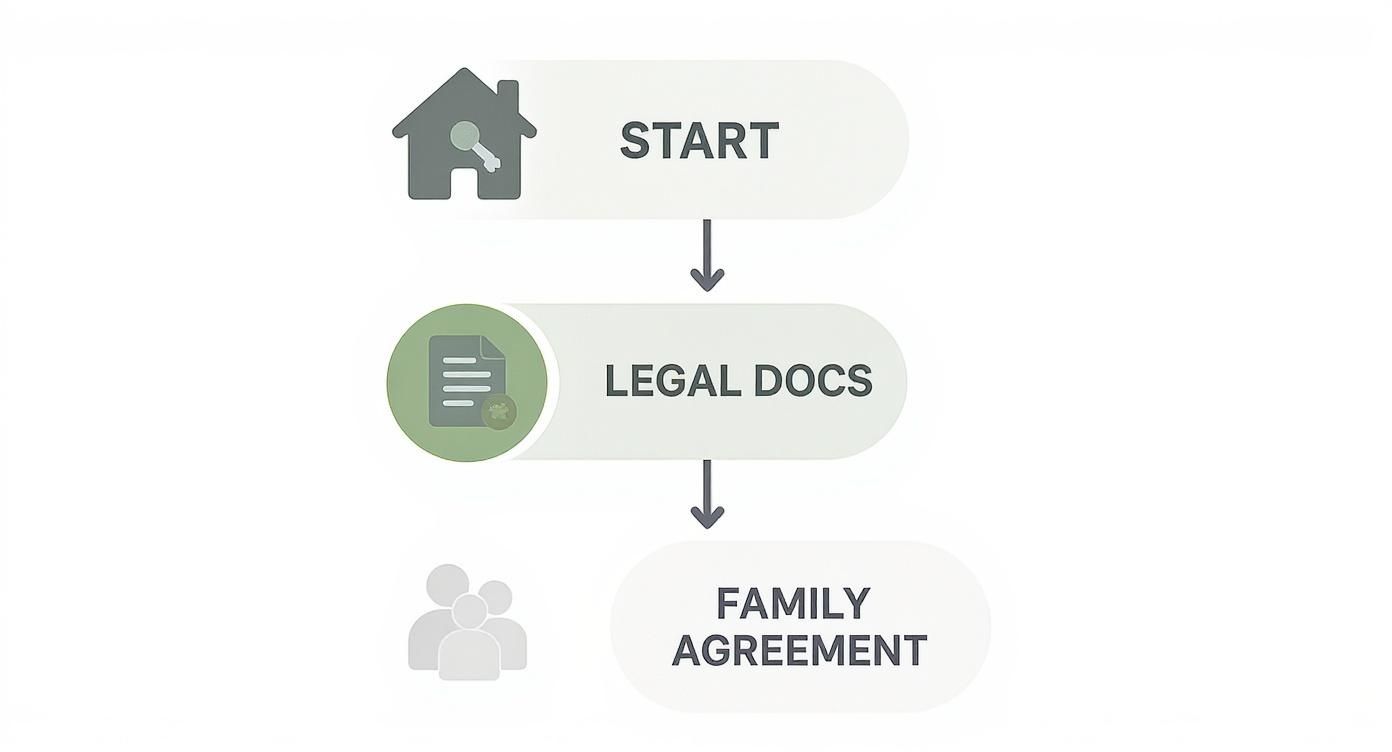
Think of this as your foundation. Without it, any attempt to sell will crumble. It’s a non-negotiable part of the process for a smooth, conflict-free sale.
The Traditional Route: Working with a Realtor
Listing with a real estate agent is the most common approach to selling a home. The main benefit is the potential to get the highest possible price by reaching a wide audience on the open market. However, this path is rarely the fastest.
Here’s a realistic look at the timeline you’re facing with an agent:
- Getting Ready (1-2 months): This isn’t just a quick tidy-up. The process needs you to remove all possessions from your home while fixing everything from wall repairs to furnace replacements and doing a thorough cleaning and home staging.
- On the Market (1-3 months): Now the house is listed. Get ready for a parade of strangers at showings, open houses, and inspections, all of which you have to coordinate.
- Closing the Deal (30-60 days): You’ve accepted an offer—great! But you’re not done. The buyer’s bank now starts its own marathon of appraisals, underwriting, and approvals.
All in, you’re easily looking at three to six months, and that’s if everything goes perfectly. For an inherited home that’s a bit dated or needs significant work, that clock can tick even longer.
The Ambitious Path: For Sale By Owner (FSBO)
Going the FSBO route means you’re selling the house yourself to avoid paying the seller’s agent commission, which is typically 2.5-3% of the final sale price. The idea of saving money by thousands of dollars seems great at first but it turns into a stressful job that requires a lot of work.
You now perform marketing duties while also handling scheduling and negotiation tasks and legal document management. The task requires a large amount of effort because it would be difficult for someone who has never done it before.
You’ll be responsible for:
- Pricing the home correctly (a huge gamble without access to real-time market data).
- Creating listings and marketing materials that actually get seen.
- Fielding every call, text, and email from potential buyers.
- Walking people through the house.
- Haggling over the price and terms.
- Managing all the legal disclosures and contracts, where one mistake can land you in serious trouble.
For heirs already dealing with grief and the complexities of settling an estate, FSBO adds an incredible burden. It’s almost never a “fast” option unless you’re lucky enough to already have a trusted, qualified buyer lined up.
A Word of Caution: While FSBO might save you money on commissions, the sheer time, stress, and legal risk involved often make it a poor choice when you just need to sell an inherited house and move on.
The Direct Route: Selling to a Cash Buyer
The direct sale to a cash home buyer provides an easy solution for people who need a fast and definite sale. The system eliminates the main time-consuming elements which are part of the conventional sales process. The key phrase here is “as-is.”
Selling “as-is” means you don’t have to:
- Fix a leaky roof or update the kitchen.
- Haul away old furniture or clear out the garage.
- Stage the home for a single showing.
- Worry about a buyer’s loan getting denied at the last minute.
The process is refreshingly simple. A cash buyer will assess the property and give you a no-obligation offer. If you accept, you can often close the deal in as little as 7-21 days. That speed is a game-changer when you’re paying property taxes, insurance, and utility bills for an empty house.
The method serves as a crucial resource to handle challenging probate case closings. Cash buyers do not need to go through bank financing because they use their own money for purchases. The solution delivers instant peace to families who want to solve their problems quickly and without any disturbance. The complete list of benefits and downsides appears in this comparison between using a cash buyer and working with a Realtor.
The need to sell inherited properties quickly will increase as we move forward. The Baby Boomer population will decrease by about 23% between 2025 and 2035 which equals a total of 15.6 million people. The financial burden of home maintenance will push many heirs to choose fast sales without any complications when they receive properties from their parents. Eagle Cash Buyers is a company that provides probate closing services.
Detailed Breakdown of Selling Methods for Inherited Homes
| Consideration | Realtor | FSBO | Cash Buyer (e.g., Eagle) |
|---|---|---|---|
| Average Timeline | 3-6 months (or longer) | 2-6+ months (highly variable) | 7-21 days |
| Commissions/Fees | 5-6% of sale price | 2.5-3% (for buyer’s agent) | $0 |
| Repair Costs | Often required | Usually necessary | $0 (sold “as-is”) |
| Closing Costs | Seller pays 1-3% | Seller pays 1-3% | Often covered by buyer |
| Effort & Stress | Moderate (agent handles much) | Very High (you do everything) | Very Low (hands-off process) |
| Sale Certainty | Low (contingent on financing) | Low (buyer quality varies) | High (no financing needed) |
Looking at the table, it’s easy to see how the numbers and timelines stack up. While a Realtor might promise a higher sale price on paper, that number shrinks quickly after you subtract commissions, repair costs, and months of holding costs. A cash sale provides a firm, predictable number and a guaranteed closing date, which is often exactly what heirs need most.
Preparing the House for Sale the Smart Way

The process of deciding what to do with your home becomes the most challenging part after you complete the first legal requirements. Should you sink thousands of dollars into renovations, hoping for a bigger payout? Or is it better to cut your losses and sell it exactly as it is?
The main barrier to achieving a quick and clean sale is this choice you have to make.
The preparation of inherited property for sale through traditional real estate methods becomes an extensive project. The problem goes beyond simple painting work. The main challenge stems from dealing with years of postponed maintenance work and removing all possessions from a lifetime of accumulation which proves to be both expensive and emotionally exhausting.
The Repair vs. As-Is Dilemma
The pressure to make your home ready for the market becomes an immediate concern when you list with a Realtor. The process requires you to address all problems that buyers will discover during their inspection. Which repairs actually boost home value while others become financial drains?
The best approach is to focus on repairs which fix essential operational problems or safety risks. The following criteria represent the essential requirements for most borrowers who need to get a mortgage.
- A leaking roof combined with an outdated electrical panel and a broken HVAC system will typically eliminate any chance of a deal going through. These are the kinds of problems that almost always have to be fixed to close a traditional sale.
- The value added by new kitchen countertops and modern bathroom fixtures and updated flooring falls short of complete investment recovery. A minor kitchen remodel might run you over $25,000 and only recoup about 71% of that cost at closing.
- Money Pits: Steer clear of highly personal or luxury upgrades. The installation of a high-end home theater system together with a swimming pool will not attract all buyers and you will probably lose money on the investment.
You need to assess your resources in terms of time and money and emotional energy to complete this project. The majority of heirs who want to sell their inherited property quickly will not succeed in finding suitable buyers.
Don’t fall into the renovation trap. Sinking tens of thousands into a property you just want to get rid of can delay the sale by months and drain the estate’s resources, often for a minimal increase in the final sale price.
Clearing a Lifetime of Memories
The process of sorting through a house’s contents requires both physical work and emotional commitment. The situation becomes most difficult to handle during this phase. Every item has a story, and deciding what to keep, donate, sell, or discard can feel completely overwhelming.
The best way to get through it is with a clear, methodical plan.
- Involve All Heirs: First things first, schedule a time for all beneficiaries to walk through the home and claim any items with sentimental value. This simple step can prevent a lot of disputes down the road.
- Create Sorting Zones: Use a straightforward system. Designate different rooms or use colored stickers for four categories: Keep, Donate, Sell, and Discard. The key is to be decisive to keep the process moving.
- Hire Professionals: If the task is just too big, consider hiring an estate sale company. They’ll manage the pricing, advertising, and the sale itself, taking a commission from the proceeds. For everything left over, a junk removal service can clear the property in a single day.
The Smartest Path Forward
The entire preparation process which includes cost-benefit analysis of repairs and physical work and emotional strain can be skipped according to the good news. Selling to a cash buyer offers a clean, simple alternative.
The sale process lets you offer your home to buyers without making any changes to the property. This means exactly what it sounds like. The property owner does not need to perform any repairs or remove any unwanted items. The buyer can select whatever they want from the property while the seller remains responsible for everything else. You can learn more about the benefits of selling “as-is” on our blog. This approach removes the financial and emotional burden entirely, letting you close the sale in weeks, not months.
The Final Steps to Closing Your Sale
You’ve accepted an offer—congratulations! That’s a huge step forward in selling your inherited house. But you’re not quite at the finish line yet. The final leg of this race is the closing, sometimes called the settlement, where all the paperwork gets signed and the property officially changes hands.
Knowing what happens during this stage is key. The guide helps you stay calm while showing you how to handle legal documents and avoid any last-minute problems that could delay the process.
What Happens Between Offer and Closing Day
Once you and the buyer sign the purchase agreement, the property is officially “in escrow.” Think of an escrow company or a real estate attorney as a neutral referee. They hold onto all the money and documents, making sure everyone plays by the rules until the sale is complete.
This is where you’ll see a massive difference between a traditional sale and a cash sale.
The waiting period becomes unbearable when a buyer requires a mortgage to purchase a home. The lender will order an appraisal to confirm the property’s market value matches the loan amount. The home will undergo inspections that may reveal problems which could force you to renegotiate the price or lead to a complete deal collapse.
On the other hand, a cash sale sidesteps all that drama. Cash buyers use their own funds, so there’s no bank to impress. That means no appraisal delays and zero risk of a loan getting denied at the last minute. It’s the single biggest reason cash sales are so much faster and more reliable.
Key Documents You Will Encounter
All paths lead to signing essential documents. Learning about them before the closing process starts will help remove much of the mystery from the entire process.
- The Purchase Agreement: This is the core contract. It lays out every single detail of the sale, from the price and closing date to any specific conditions you’ve agreed on.
- The Deed: This is the legal document that officially transfers ownership from the estate to the buyer. The executor of the estate is the one who signs it.
- The Closing Statement (or Settlement Statement): Think of this as the final receipt. It’s an itemized list of all the costs and credits for both you and the buyer, showing exactly where every penny goes.
Getting the ownership transfer right is non-negotiable from a legal standpoint. To get a better handle on the specifics, check out our guide on how to transfer property ownership.
Expert Tip: Never, ever feel shy about asking questions. The closing agent or attorney is paid to make sure you understand everything. Have them walk you through every line on that closing statement until you’re completely comfortable before signing.
The Simplified Cash Closing Process
For most heirs, the biggest benefit of a cash closing is how refreshingly simple it is. The whole process is straightforward and, most importantly, predictable.
Once you accept a fair cash offer, the buyer gets the ball rolling with a trusted local title company. They handle all the behind-the-scenes legal work to make sure the title is clear and ready to be transferred.
Since this process cuts out the mortgage lenders, it can shrink a timeline that normally takes months down to just a matter of days. All you have to do is show up on closing day, sign the documents, and the funds are wired straight to the estate’s account. Often, the buyer will even cover all the typical closing costs. It’s genuinely the most certain and stress-free way to finalize the sale and help your family move on.
Got Questions About Selling an Inherited House? You’re Not Alone.
The process of acquiring property through inheritance usually generates many questions for people. The entire procedure becomes difficult because most individuals have never experienced it before. Let’s tackle some of the most common concerns I hear from heirs, clearing up the confusion so you can make informed decisions.
Do I need probate to sell an inherited house?
The answer will usually be positive in almost all situations. Probate serves as the legal process which enables courts to confirm wills while handling debt payments and transferring property titles to named heirs. The law prohibits you from selling property when you do not have official ownership rights. The sale remains unauthorized until the court completes probate and transfers the title to you or the estate’s executor.
The property will bypass probate through living trust arrangements and Transfer on Death (TOD) deeds which serve as exceptions to the standard probate process. For most inherited homes, however, probate is a mandatory first step.
How long does it take to sell inherited property?
Two separate timelines determine the answer to this question because the court and the market operate at different speeds.
First, you’re on the clock for probate. The process duration varies between several months up to more than twelve months based on your location and estate complexity. Only after probate is settled can you actually sell the house.
The rest of the timeline depends on your chosen selling method:
- Listing with a Realtor: This is the traditional route, but also the longest. Expect it to take 3 to 6 months from the day you list to the day you close.
- For Sale By Owner (FSBO): This is a total wildcard. The timeline could be 2 months, or it could be over 6 months. It all depends on your skill in pricing, marketing, and navigating the paperwork.
- Selling to a Cash Buyer: This is the fastest way. Once probate is complete and you agree on a price, a reputable cash buyer can often close the entire deal in just 7 to 21 days.
Remember, your total time-to-cash is the probate period plus the selling period. Your best choice is to focus on the fastest selling method when you need to finish things quickly.
Can I Get the Ball Rolling on a Sale Before Probate Is Over?
The transfer of ownership cannot be finalized yet you can begin the ownership transfer process. The move represents a smart choice because it lets you complete tasks faster.
The executor of the estate often has the authority to market the property and even sign a purchase agreement with a buyer while probate is still ongoing. The contract will simply include a contingency stating that the sale can only close once the court finalizes the probate.
Cash buyers succeed in this particular situation. The buyers possess expertise in handling probate sales and they offer reasonable prices as they are willing to wait for the legal process to conclude. The court will give you permission to proceed with the transaction when you have a buyer ready to make the purchase.
What Kind of Taxes Am I Going to Get Hit With?
The “stepped-up basis” tax rule helps heirs avoid large tax liabilities even though inheritance taxes produce the most stress for them.
Here’s how it works: for tax purposes, the value of the property isn’t what your loved one originally paid for it. Instead, its value is “stepped up” to its fair market value on the date of their passing. This is a huge benefit. It means you only pay capital gains tax on the profit you make from the date of inheritance to the date of sale.
Here’s a real-world example:
Your parents purchased their home for $50,000 back in 1980. The home receives an appraisal value of $300,000 when it is inherited. The capital gains tax will apply only to the $5,000 difference between the original purchase price and the new selling price. You’re not on the hook for the $255,000 gain that happened over the past four decades.
The market value of your property will stay the same if you decide to sell right away which means you won’t have to pay any capital gains tax. A quick discussion with a tax professional will help you understand the stepped-up basis system which shields most heirs from paying excessive taxes.
You can get help with the process of selling an inherited house. A professional home buyer will provide you with a no-obligation offer which represents an excellent option for families who need a quick and guaranteed cash sale. Eagle Cash Buyers makes the process of probate sales easy for you to complete your sale before focusing on your priorities. Learn more about how our process works.