

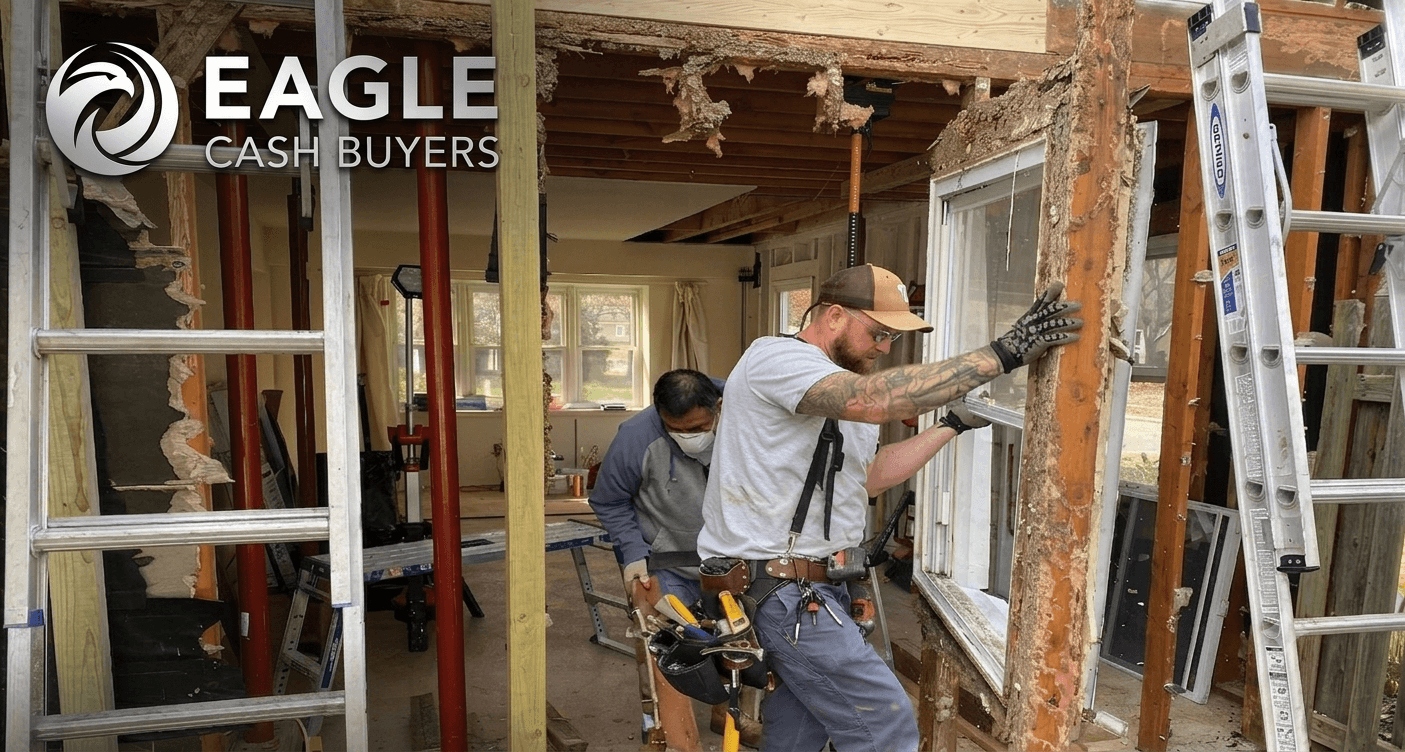
In this case, we are also not talking about treating the home for termite damage beforehand and after writing in stone the price you will get for the time and materials needed to make that treatment happen.
If you find termite damage in your home and wonder, “Can I sell my house if it has termites?” Cash buyers buy homes with infestations and damage all the time, without fumigation being required or structural repairs to be made before closing.
This guide explains everything you need to know for a home that shows signs of termite activity, from understanding how damage impacts your offer and pricing, what types of disclosures are legally required, and how the cash sale process works from first contact all the way through closing day.
Termite Damage is More Common than You Think
It helps to know about the reason behind termite damage in American home sales before we get to the sale itself.
The average homeowner in the US is looking at a repair bill of about $3,000 every time, and termites do around $5 billion worth of damage to properties on an annual basis in just one country. In cases where there has been structural damage, that number is often far surpassed.
Termites are especially troublesome foes for several reasons: they chew wood slowly and surreptitiously, possibly for months or even years before damage becomes apparent. A lot of damage can already be done in other parts of the house before you realize that there is something wrong.
Here is the thing: termite damage is par for the course, and buyers purchasing distressed properties have seen it all. That does not render your home unsellable. It just means some buyers are a better fit for the transaction than others.
What Kind of Termite Damage Do You Have?
Termite harm is not all the same. What a cash buyer wants to inspect, and how your offer is drawn up, will depend on the type of infestation.
Subterranean Termites
The most invasive and destructive species in America. The termites from these colonies work underground, entering homes through the soil and focusing on the floor joists, subfloor framing, and wall structure, doing great damage. Subterranean infestations can lead to repair bills of $3,000 to $10,000 or more depending on how much structural damage is involved.
Drywood Termites
Drywood termites are the one kind of termite that lives completely inside of the wood it eats and never comes in contact with dirt, unlike underground species. Damage is usually more of a cosmetic and localized nature, but it can still be serious. The repair can cost between $600 and $3,000.
Formosan Termites
Among the most aggressive of these are Formosan termites, which form large colonies and can cause serious structural damage in a matter of months. Those are concentrated in warm-climate states in the South and Southeast. When Formosan termites get to load-bearing components, it can often cost more than $25,000 simply in repairs.
Cash buyers are likely to want to know what type of infestation has occurred and the level of damage done to the property. Both factors have a direct impact on the offer.
Impact of Termite Damage on Your Home Value
The relationship between termite damage and resale value is apparent but depends on the extent and type of damage done.
On average, home losses due to termite infestations range from 20% to 25% of the current market value of the home. On a $300,000 house, that means losing about $60,000 to $75,000, although the actual number varies based on which structural components are damaged and how much it costs to fix and remediate them.
Also, homes with a previous record of termite activity sell for 3% to 5% less than comparable properties without a history of wood destroying insect infestation. Information from pest controllers is recorded in property records and can be uncovered during a buyer’s due diligence.
This is where the cost math becomes important. Treatment alone costs $1,200 to $8,000 when treating and repairing before listing, and those structural repairs can drive that cost much higher. Most often, selling as-is to a cash buyer means taking less money, however you forgo out of pocket remediation costs and agent commissions, along with the risk that a buyer’s financing can fall apart right after inspection.
How Traditional Buyers and Lenders Make It Difficult
A lot of the most popular lending products in the US, including FHA and VA loans, often ask sellers to remediate an active infestation or conditions that are likely to develop into structural damage before closing. You must take these steps; they are not options. Only then will your loan be approved.
Which implies that if a buyer with traditional financing goes under contract on your home and their inspection finds active termite damage, the lender might not wish to fund the loan until repairs are made. You, as the seller, will have to perform and pay for that remediation before you can legally transfer ownership. The agreement breaks if you cannot or do not want to.
It is a cycle that many homeowners with homes damaged by termites go through. You list your home and get excitement from buyers, pitch it to families searching, let them conduct inspections, and make the deal, only to have the mortgage lender say no. Weeks or months of waiting, all the while accruing costs.
A cash buyer is one who pays for the property in full without the use of a lender. It means no financing contingencies, no WDI (Wood Destroying Insect) clearance requirements from a bank, and no stated levels of property condition you must meet for closing. A cash buyer evaluates your property in its current state, extends an offer based on its actual condition, and operates on a timeframe that is convenient for you. If you would like a more detailed comparison of cash offers and traditional listings, check out our article on what a cash offer means for sellers.
When a Home Has Termite Damage, What Do Cash Buyers Evaluate?
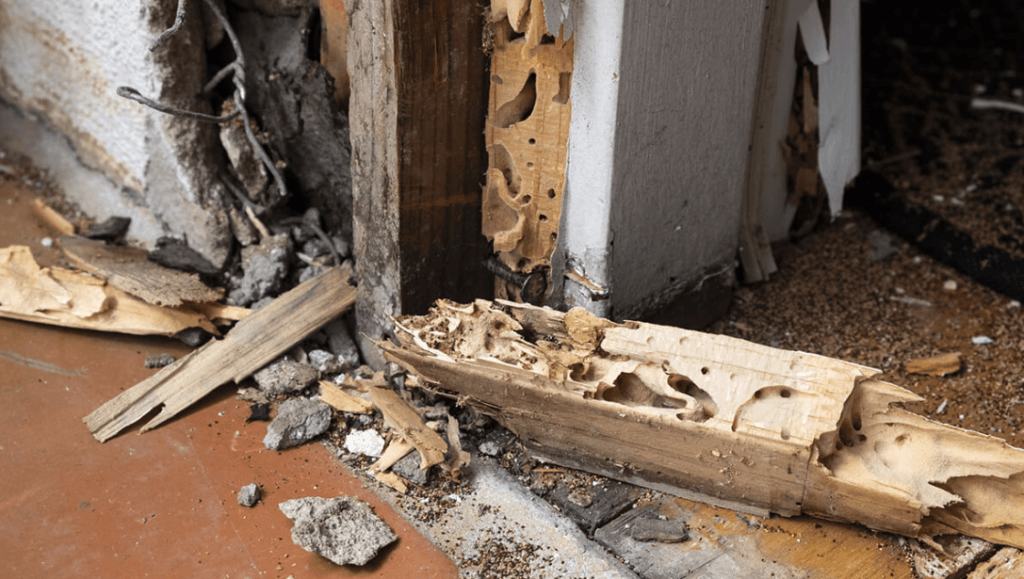
Termite damage is well known in real estate investment circles and among cash buyers. Here is what they are gauging during a walkthrough.
Active vs. Historical Damage
The difference between a live, current infestation and an old infestation that is no longer active is critical. Neither is a deal breaker for moving ahead with a cash sale, but an active infestation indicates that the buyer will have to plan on needing remediation. If a pest control company already treated the property and paperwork is present, it gives you an upper hand and helps assure the buyer to move along with their buying process confidently.
Structural vs. Cosmetic Damage
This is the biggest choice a cash buyer makes. Cosmetic termite damage is a surfacing blistering of the paint in interior or exterior paint, affects only primarily an aesthetic side and not the integrity of the material. Structural damage to floor joists, load-bearing beams, subfloor panels, or roof trusses is pricier to fix and weighs more heavily in how the offer comes together. Cash buyers, as opposed to buyers using a mortgage, will usually want to unveil spaces where structural framing can be seen, like crawlspaces and attics.
Extent of Damage Throughout the Home
Localized damage concentrated in one section of the house, like an individual crawlspace or exterior wall, makes a much smaller dent on the offer than damage that occurs across multiple structural systems. Quantifying the number of affected elements, such as joists, wall framing, sill plates, and window and door framing, helps the buyer develop a reasonable cost estimate for remediation and repair.
How Long the Infestation Went Undetected
Damage is probably accumulating in places that we cannot see, therefore the longer an infestation lasted undetected the worse it would be. If there is a record of when they first discovered the infestation, any inspections that were done, and what date treatment was applied or repair was implemented, sharing this timeline gives a cash buyer important context and often leads to fewer unknowns being taken into account in their offer.
Your Two Choices as a Seller
Option 1: Treat, Repair, and List Traditionally
You pay for commercially treated termites ($1,200 to $8,000, depending on the infestation type and scope) and both structural or aesthetic repair as needed, which can be an extra $5,000 to easily surpass $15,000. At that point, you put the property on the market and pay 5% to 6% in agent commissions, and wait for a buyer and their lender, who will require a clean WDI report before closing. Overall time frame: 3 to 6 months in the majority of cases. This is likely to give a greater gross sale price, but will take cash at the outset and runs the risk of expenditure on repairs not being recovered in full when the property is finally sold.
Option 2: Sell to a Cash Buyer As-Is
You sell the house as-is. No repairs, no treatment needed, and no agent commissions. The offer will be for the as-is value of the home, minus remediation and repair costs. What you pay in headline price, you win back in avoided costs, lower risk, and a much smaller timeframe before closing. This typically represents the more pragmatic outcome for sellers in need of certainty and expediency.
Eagle Cash Buyers specializes in purchasing termite damaged homes and other structural problems with 100% no fees to the seller and no repairs needed.
The Cash Sale Process Explained
Step 1: Fill in Your Property Information
Complete the form at eaglecashbuyers.com. Share your location information along with details about the damages at the property.
Step 2: Schedule a Walkthrough
We book a free, no-obligation in-person or virtual walkthrough at your convenience, no stress and no strings attached. This lets us determine the structural areas that are involved, as well as how extensive the damage is.
Step 3: Get a Fair Cash Offer
Depending on the actual condition of your home, we will make you a written cash offer. The number we give you is the actual number you get at closing, with no fees, no costs coming out of your pocket, or hidden charges between now and closing.
Step 4: Pick Your Date to Close
You set the timeline. Eagle Cash Buyers can close in as little as 14 days, or on your timeframe.
Step 5: Get Paid
Closing happens at an authorized title company. You receive your funds. Done.
For a step by step breakdown, please see our how it works page.
What You Must Disclose by Law
Selling a house with termite damage is perfectly legal. It is not illegal to reveal damage that you are aware of.
Seller disclosure requirements in almost all states deem termite damage, either current or past, as a material defect that must be disclosed. That is true whether you are selling to a cash buyer or to a person who needs traditional financing. While some states use dedicated pest disclosure forms, others inquire more generally about material defects, a category that includes termite activity and damage, on their seller’s real estate property disclosures.
To the cash buyer, this is something that they expect in properties, and from a practical perspective. Full transparency does not decrease your offer. It opens up trust and protects you legally after the transaction is closed. If a seller is aware of existing termite damage and fails to disclose it, that gives a buyer an opportunity to sue the seller, or in some cases, rescind the purchase entirely. As always, consult with a qualified real estate attorney licensed in your corresponding state prior to selling property to understand exactly what disclosures you are legally required to make.
What Documents Will Help You Speed Up the Process
No paperwork is required before receiving an offer when dealing with a cash buyer. Yet if any of the following are available, it may speed up the review process and cut down on risk in the offer:
- Previous termite inspection reports and their dates, such as if the report was produced when the infestation had first been found
- Treatment invoices or fumigation records
- Receipts from contractors for any repairs that have already been done
- Current or transferable termite warranty, if applicable
- Structural engineering reports, if any were ordered
- Pest or structural damage insurance claims
In fact, documenting even a rudimentary timeline for when signs were originally observed and subsequent actions taken, or not taken, gives buyers some context to limit speculation when preparing the offer amount.
Frequently Asked Questions
Can I sell a home that has a live termite infestation?
Yes. Cash buyers buy homes with active infestations. When you sell to a cash buyer, you are not required to treat before the close of escrow, but the cost of remediation will be included in their offer. You do not have to wait until the issue gets solved before you contact us.
Will termite damage always bring your sale price down?
Not necessarily in net terms. If you take a gross price above what an investor would pay and subtract treatment costs ($1,200 to $8,000), repair costs, agent commissions (5% to 6%), plus carrying costs for the duration of the typical listing period, you are likely at or below what a direct cash sale will provide.
How much is appraised value affected by termite damage?
Major termite damage usually diminishes appraised value 20% to 25%. Properties with a verifiable history of previous termite activity can cause appraisers to value them 3% to 5% under similar properties without such a record, even after treatment, because pest history is documented and part of the due diligence process viewed by prospective buyers as well as quality inspectors.
Are you required to disclose past termite damage if the infestation has been resolved?
In most states, yes. Resolved termite damage is largely viewed as an inherent defect that must be reported as well. Properly documenting every repair and treatment history is a way to show good faith and offers buyers peace of mind.
How quickly can I close?
Eagle Cash Buyers closes quickly, in as little as 14 days after you accept an offer. The timeline is yours to set.
What is covered under a homeowners’ insurance claim from termite damage?
Most of the time, no. Termite damage is considered an act of maintenance, not an accident or a loss, so standard homeowners insurance does not cover it. This is part of the reason that so many sellers do not have the budget for pre-listing repairs, opting to sell as-is instead.
What if the damage is localized to a small portion of the home?
Yes, it matters significantly. Localized damage in a small area like a crawlspace, an exterior wall, or even just one room can have significantly less effect on an offer than damage that affects several structural systems. They assess each property based on what is really there.
The Bottom Line
The termite issue is one nobody has time to deal with if you want to sell your home fast. It basically limits your buyer pool since lenders providing financing for traditional buyers will usually require certain repairs before writing a loan. Cash buyers have complete freedom to work within this limitation, and that is why selling as-is to a cash buyer ultimately is a practical financial solution for homeowners with these issues.
No treatment required. No repairs needed. No fees charged to you. No matter what shape your home is in, you can reach out to Eagle Cash Buyers and request a no-obligation cash offer for your home.