A cottage in the backyard sounds like a gold mine. Extra rental income, a place for family to stay, more square footage on the lot, and maybe a little pride in having built it. Then the day comes to sell. Selling a house with a detached rental unit turns out to be a different job from selling a plain single-family home, with its own paperwork, its own buyers and its own ways to go wrong.
The questions pile up fast. Was the unit permitted? Is someone living in it? Who pays the utilities? Will a lender count it at all? This guide covers what an accessory dwelling unit (ADU) is, why these properties sell differently from ordinary houses, how permits, lenders and tenants change the price and the timeline, and how a cash sale compares with listing.
This article is general information, not legal, tax or financial advice. Rules differ a lot. Zoning, permit rules and landlord-tenant law differ by city and state, so check with your local building or planning department and a licensed professional about your own property.
What Is a Detached Rental Unit or ADU?
An accessory dwelling unit is a second, smaller home on the same lot as the main house. Simple enough. Fannie Mae describes it as an additional living area, independent of the primary dwelling, that may be added to, created within, or detached from a one-unit home. Its Selling Guide lists what the unit needs to qualify for a loan: its own entrance, a kitchen, a sleeping area and a bathroom.
ADUs come in three forms:
- Internal: carved out of the main house, like a basement apartment.
- Attached: built onto the house, like a unit over a garage.
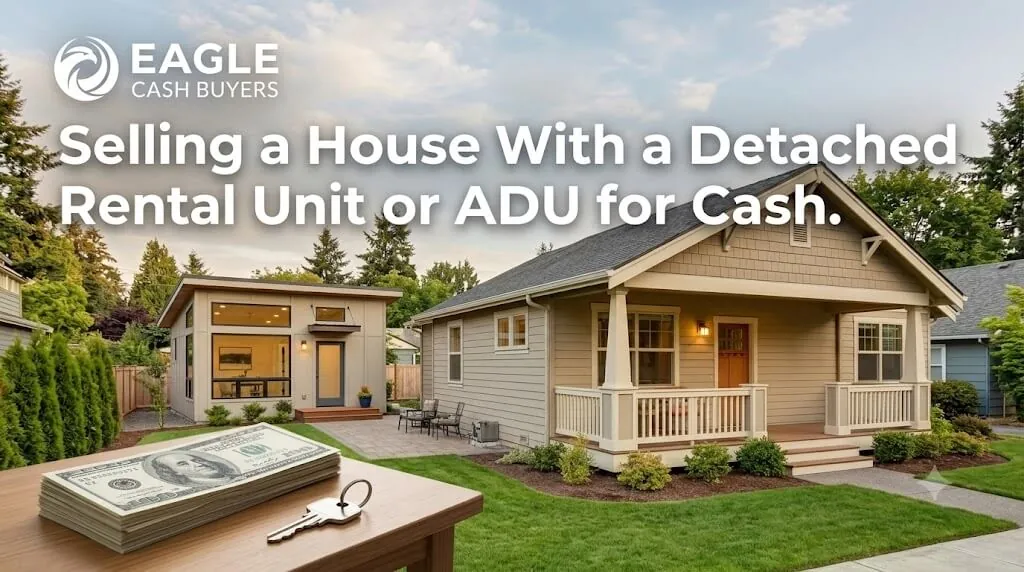
- Detached: a separate building, whether a converted garage, a backyard cottage or a small second house.
Names change by region. Granny flat. Guest house. In-law suite. Casita. Carriage house. Whatever it is called where you live, the question for a sale stays the same: is the unit a legal part of the property, and how does that change the price and the pool of buyers who can close on it?
Why an ADU Changes How a House Sells
Permit Status Comes First
Permit status shapes everything else. Unpermitted units exist, and some owners honestly never knew a permit was required. Still, a buyer, an appraiser and a lender will all look hard at the question, and a unit with no paper trail can unravel a deal that looked solid a week earlier. It can happen.
An unpermitted unit tends to cause three problems in a listed sale:
- Disclosure. Disclosure rules vary by state. Texas, for example, has a standard Seller's Disclosure Notice that asks about additions and alterations made without necessary permits. Confirm your own state's rules with a local attorney.
- Legalizing it can be slow and costly. Depending on the city, you may face inspections, drawn plans, fixes to bring the work up to current code, permit fees and penalties, or in some cases removal of the structure altogether, and none of that can be predicted from outside the building department. Ask them.
- Buyers walk. Some buyers and agents leave the moment unpermitted space shows up in due diligence. However well the unit is built. However much rent it brings in.
Lenders and Appraisals
A buyer with a mortgage brings an appraiser and an underwriter into the sale, and both care about the unit's legal status. Fannie Mae's guidance says that when an appraiser finds an addition without the required permit, the appraiser must comment on its quality and its effect on market value. It also says an ADU's living area should not be folded into the main home's finished square footage, and that the appraisal must analyze how the ADU affects value and marketability.
Bottom line: an unpermitted unit may add little to the appraised value. It can also raise questions that slow a mortgage down. Or stop it cold. FHA-insured loans add their own minimum property requirements. How a given lender and appraiser treat a given unit is their call, not a fixed rule, and that uncertainty is exactly what makes some buyers back away.
Tenants in the Unit
A renter adds a moving part. Whether an existing lease continues after a sale depends on the lease and on state law, so ask a local attorney how yours works. Some buyers who finance may want the property empty. Not all. A buyer who would rather keep the tenant will want to see the lease, the rent history and the security deposit.
If you are still renting the unit while you prepare to sell, the usual landlord rules apply, and our guide to selling a rental property with tenants walks through them.
Rental Income and Taxes
Rental income must be reported on your tax return, and in general the related expenses can be deducted. The IRS explains the basics in its rental income and recordkeeping tips. A rented unit can also change how the sale itself is taxed. Talk to a tax professional before you set a price. Do it early.
Listing vs. Cash Sale for a Property With an ADU
A listing can bring in more money. If you have both the time and the cash to sort out permits, finish repairs and wait through a financed sale, a retail buyer will often pay more than a cash buyer will. A cash price sits below market value. The buyer takes on the work and the risk. Here is what changes between the two routes.
| Factor | Listed Sale | Cash Sale |
|---|---|---|
| Unpermitted unit | Appraisal and lender review can cut its value or hold up financing | Considered in the offer as part of the property's condition |
| Disclosure | Required where state law applies | Required where state law applies |
| Legalizing or removing the unit | Sometimes requested by the buyer or lender | Not something the seller has to finish first |
| Occupied unit | Some buyers want it vacant | Depends on the buyer; the lease is part of the discussion |
| Lender involvement | The unit's status affects underwriting | No lender |
| Buyer pool | Can shrink once the unit's status is known | Cash buyers and investors |
| Timeline | Depends on permits, appraisal and financing | As little as 21 to 42 days, or longer if you need it |
How a Cash Sale Works When the Property Has an ADU
Eagle Cash Buyers evaluates properties in 43 states. Whether we can make an offer on a house with a detached unit depends on the property, the title and our buying criteria. Here is how it generally goes. Short version: less to fix up front, a lower price.
Permit status is part of the pricing. We take it into account when we price the property, along with the unit's condition, the title and what the local market will bear. Settling the permit is not something you have to finish before a cash sale closes.
A tenant is part of the conversation, not an automatic no. Tell us about the lease. The rent. The deposit. The tenancy is factored into the offer.
No agent commission on a direct sale. Eagle pays the closing costs except your mortgage payoff, any back taxes or liens, and your share of transfer tax. The offer itself is lower than what a fully repaired, fully permitted property might bring on the open market.
You pick the closing date. Closings can happen in as little as 21 to 42 days, or longer if you need more time. Eagle may buy the property directly or assign the contract to another buyer, and that is disclosed in the agreement before you sign. Our how it works page lists the steps.
Disclosure still applies. You tell us what you know about the unit's permit history, its condition and any tenancy, because honesty up front is what keeps a sale from falling apart later. That is a legal expectation whoever the buyer is. Saying it early keeps the sale moving. If other issues come with the unit, our guides on selling with code violations and selling as-is cover the same ground. For the permit side in more depth, read about selling a house with unpermitted renovations.
What Affects the Offer on a Property With an ADU
- Permit status. A permitted, code-compliant unit and an unpermitted one can look identical from the street and still be very different assets.
- Condition of the unit. Age, foundation, roof, wiring, plumbing and heating all count, and they are judged separately from the main house.
- Occupancy and lease terms. Vacant, family-occupied or rented, and on what terms.
- Local zoning. ADU rules differ by city and can change over time. That can affect whether an unpermitted unit could be legalized later. Your city decides that, not us.
- Utilities. Separate meters, shared lines, shared septic or a shared well all shape what a buyer can do with the unit.
Frequently Asked Questions
Can I sell a house if the ADU has no permit?
Often, yes, though the ADU rules vary by city and state. You will likely need to disclose what you know. A financed buyer may balk or ask for a lower price. A cash buyer can take the property as-is and price in the unpermitted status. Confirm your state's disclosure rules with a local attorney before you sign anything. Do not guess.
Will an unpermitted ADU hurt my appraisal?
It can. Fannie Mae's guidance tells appraisers to comment on how an unpermitted addition affects value, and an ADU's living area is reported separately from the main home's square footage. The result varies by appraiser and lender, which is why two identical units can appraise very differently in two different counties.
Can I sell with a tenant in the unit?
In many cases, yes. Whether the lease continues after a sale depends on the lease and on state law. Some buyers want the property vacant. Others, including some cash buyers, will consider an occupied unit once they have seen the lease and understand the rent.
Do I have to disclose an unpermitted ADU?
Disclosure rules and forms vary by state, so ask a local real estate attorney what applies to you, including for unpermitted work. Texas, for example, uses a standard Seller's Disclosure Notice that asks about alterations made without necessary permits.
Does an ADU add value to my house?
It can raise your property value, particularly a permitted, well-kept unit with a rental history. An unpermitted unit is harder to value. Much harder. A financed buyer's appraisal may treat it differently, which is one reason cash offers can differ too.
The Bottom Line
A detached rental unit adds questions a single-family sale never raises. Is it permitted? Is it occupied? Will anyone lend against it? In a listed sale those answers can add weeks, narrow the buyer pool and change the price. Sometimes all three.
A cash sale looks at the property as it stands, unit included. Permits, vacancy and repairs do not have to be settled before closing, which is where much of the delay in a listed sale tends to come from. The trade-off is a price below what a polished listing might bring. If you have the time and money to put the property right, listing can net more. If you do not, a cash sale can be the simpler route.
Not sure which option fits your situation? See all of our services.