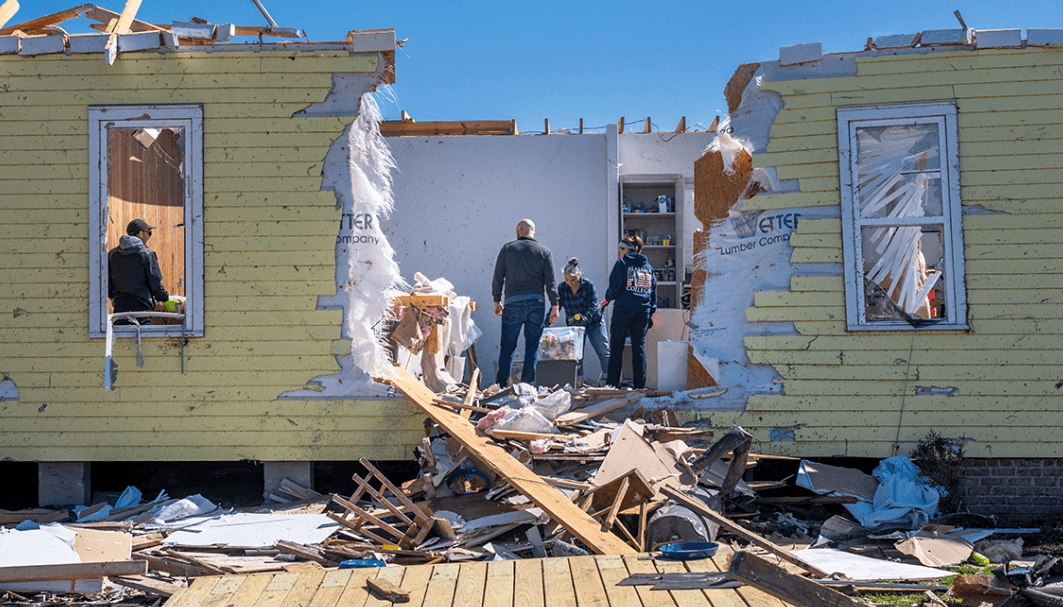
If you are selling a storm damaged house, you have three realistic paths: file the insurance claim, make the repairs and sell at or near full market value; file the claim and sell the house as-is, either keeping the claim or passing it to the buyer; or sell directly to a cash buyer without leaning on your insurer at all. The right choice depends on how bad the damage is, how much your insurance will really pay, and how long you can wait.
Here is the scenario many storm-damage sellers are actually living. The roof is tarped. The adjuster hasn’t called back, the contractors you reached are booked out for months, and you can’t tell whether to put money into repairs or cut your losses and move on.
This guide lays out your options and the insurance mechanics that catch homeowners off guard: the gap between what a policy promises and what the check says, the way a mortgage servicer can hold a payout, and what happens to a claim if you sell before the repairs are done. Eagle Cash Buyers has completed more than 1,000 transactions since 2019 and evaluates properties in 43 states, including homes with storm and water damage. Whether we can make an offer depends on the property, the title and our buying criteria. We’re a cash buyer, so weigh our view with that in mind.
Your Four Options After Storm Damage
After a storm damages your home, you have four realistic paths to a sale. Each one trades speed against potential proceeds, and the right choice depends on the damage, your coverage, your finances and your timeline.
| Factor | A: Repair and sell retail | B: Sell as-is with an open claim | C: Cash sale, no claim filed | D: Claim assigned to the buyer |
|---|---|---|---|---|
| Speed | Slowest: contractor wait, repairs, listing, buyer’s closing | Depends on buyer financing and claim status | Fastest: cash, no financing contingency | Depends on the buyer and the claim |
| Upfront cost | High; you may have to front money before reimbursement | Low | None | None |
| Potential price | Highest | Moderate; buyers discount for damage and claim uncertainty | Lower; damage priced into the offer | Moderate; buyer factors in claim value |
| Insurance | Full claim; actual-cash-value payment first, holdback released after repairs | Claim stays open; you keep it or negotiate it with the buyer | No claim; no insurance involvement | Claim rights pass to the buyer under the agreement |
| Complexity | High | Moderate | Low | Moderate; depends on your policy and state law |
| Often fits when | Damage is cosmetic or moderate, you have time and funds | Damage is significant, you want some insurance recovery without managing repairs | You want speed and certainty, or insurance is slow, denied or underpaid | Buyer will take on the claim and your policy allows assignment |
Illustrative. Timelines, proceeds and complexity vary by property, market, policy terms and state law. Some policies restrict or prohibit assignment of benefits.
Most homeowners hear about only two of these: repair and list, or sell as-is. The claim mechanics behind Paths B and D are where the real decisions live, and nobody explains them well until you’ve already committed to a path.
How Insurance Actually Works After Storm Damage
Homeowners insurance commonly covers wind, hail and some water damage, but what you receive depends on your policy type, your deductible and whether your mortgage servicer holds the payout. Learn these mechanics before you choose.
What Your Policy Covers (and What It Doesn’t)
Often covered: wind, hail, falling trees, lightning, fire, and water that gets in because a covered event opened the house up, such as a tree through the roof.
Often not covered: flood damage, earth movement, gradual wear, neglected maintenance, and mold that develops because remediation was delayed. FEMA notes that most homeowners insurance does not cover flood damage, and that flood insurance is a separate policy.
One cost surprises many coastal homeowners. Policies in hurricane-prone areas often carry a separate wind or named-storm deductible, which can be a percentage of the home’s insured value instead of a flat amount, so it can be much larger than your usual deductible. Read your declarations page. Policies differ.
If the damage is mostly water, our guide to selling a water-damaged house covers how buyers judge the water source, mold and structural damage. We won’t repeat it.
ACV vs. RCV: How Much You Actually Get
Many policies pay in two steps. They first pay actual cash value (ACV), which is replacement cost minus depreciation. They release the rest, the replacement cost value (RCV) holdback, after you finish the repairs and submit documentation. Your policy decides whether yours works this way. This difference directly affects whether repairing before selling makes sense.
Here is a hypothetical roof claim with round numbers, for illustration only.
| Line | Amount (hypothetical) |
|---|---|
| Cost to replace the roof | $18,000 |
| Depreciation for age | $8,000 |
| ACV payment before deductible | $10,000 |
| Deductible | $2,000 |
| First check | $8,000 |
| Holdback, released after repairs and receipts | $8,000 |
| Total if you repair and document | $16,000 |
Illustrative. Your payment depends on your policy terms, deductible and the insurer’s depreciation method.
The point: if you sell without repairing, you may receive only the first payment, because the holdback is usually tied to completed repairs, so ask your insurer exactly how your policy treats a sale made before the repairs are done and get the answer in writing.
The Mortgage Servicer Hold
If you have a mortgage, the insurance payout may not come straight to you. Many servicers hold larger payouts in an escrow account and release the money in stages as repairs are completed and inspected. The thresholds and rules vary by servicer and loan, so ask yours.
In practice that can mean weeks or months between claim approval and money in hand. You can’t simply pocket the check and walk away. If you sell, the mortgage is paid off at closing and the hold goes away, but what happens to the claim depends on whether repairs have started and how the claim is structured.
Can You Sell a House with an Open Insurance Claim?
Generally, yes. A claim and a sale are separate matters. The claim does not normally stop you from selling the property. What changes is who ends up with the claim, and that affects what you net. Policies and state law differ, so check yours.
Three Ways to Handle the Claim When You Sell
Option 1: Sell at a reduced price and keep the claim rights. You sell as-is at a price that reflects the unrepaired damage, and you keep the right to pursue the claim. Because no repairs were made, the insurer may pay only the ACV portion. The buyer gets a discount. You get the sale proceeds plus whatever the claim eventually pays. Cash buyers commonly price storm damage this way, and the claim stays your business.
Option 2: Assign the claim rights to the buyer. You transfer the right to collect the payout in the sale agreement, and the price may land closer to market value because the buyer gets the claim. One caveat: some policies restrict or prohibit assignment of benefits, and some states have limited it. Check your policy language and your state’s rules first. Never sign an assignment of benefits with a contractor without understanding what you’re giving up, because it can complicate both the claim and a future sale.
Option 3: Settle the claim, then sell. You complete the repairs with the payout, then sell the repaired house at or near market value. In theory this produces the highest sale price. It also takes the longest and carries contractor risk, cost-overrun risk and months of carrying costs.
Claim handling varies by state, policy and circumstances. Talk to an attorney or a licensed public adjuster before structuring a sale around an open claim.
What If Your Claim Is Denied or Underpaid?
A denied or underpaid claim doesn’t stop you from selling. It changes your options.
Appeal. You can ask your insurer for a formal review, add documentation such as contractor estimates, independent inspections and photos, or hire a public adjuster. Public adjusters are licensed and regulated by state, and their fees vary, so ask what yours would charge before you sign.
File a complaint. Every state has an insurance department that handles consumer complaints about claim handling. The NAIC keeps a directory of state insurance departments.
Sell as-is anyway. A denied claim just means no insurance money is coming. You can still sell the house in its current condition, and the denial doesn’t attach to the property.
The worst move is doing nothing. Each month the house sits damaged, carrying costs keep running and secondary damage can quietly turn a repairable house into a much more expensive one.
The Real Cost of Repairing vs. Selling As-Is
Repairing storm damage before selling can give you the highest sale price. But the net, after repair costs, contractor delays, carrying costs and the insurance gap, can land closer to an as-is cash offer than people expect, especially after a major storm when everyone on your street wants the same roofer.
The Contractor Problem After Major Storms
After widespread storms, demand can stretch contractor schedules for months and push prices up. Unlicensed or unscreened contractors also tend to show up, and homeowners who are rushed by insurance deadlines and carrying costs are easy targets for poor work or fraud. Check licenses. Check references. Get everything in writing.
Insurer estimates may not match what contractors bid after a storm. Here is a hypothetical: your insurer approves $80,000 in repairs, but the bids come in at $95,000. That $15,000 gap comes out of your pocket, and it changes the repair-or-sell math.
What Decides Your Net
A listing after repairs can net more when you have both the time and the money to see the work through and the gap between insurance and actual cost is small. A cash sale can win when either is missing. The cash price will be below market value. The buyer takes on the damage, the repairs and the risk.
| What to compare | Repair and list | Sell as-is (open claim) | Cash sale (no claim) |
|---|---|---|---|
| Money in | Sale price plus any claim payout | Sale price plus any claim payout you keep | Cash price |
| Money out | Repairs beyond what insurance pays, agent commissions, seller closing costs, months of carrying costs | Possibly agent commissions and closing costs if listed | No agent commission on a direct sale with Eagle; closing costs paid by Eagle except your mortgage payoff, back taxes and liens, and your share of transfer tax |
| Time | Longest | Moderate | Shortest: as little as 21 to 42 days, or longer if you need it |
| Main risk | Cost overruns, delays, insurance gap | Claim uncertainty, buyer financing | Lower price |
Compare them on your own numbers: your claim estimate, written repair bids and your carrying costs. Our guide to cash offer vs. listing with an agent shows how.
Disclosure Requirements: What You Must Tell Buyers
In many states you must disclose known storm damage to buyers no matter how you sell, whether through an agent, as a for-sale-by-owner or to a cash buyer. Selling “as-is” doesn’t erase that duty. It means the buyer accepts the property in its current condition, and you still have to tell them what you know. Rules vary by state, so ask a local real estate attorney.
Disclosure typically touches known structural damage, water intrusion, mold, roof condition, prior insurance claims, flood-zone status and permits tied to storm repairs. Some states use a standard form. Others rely on a general duty to disclose material defects.
With a cash buyer who works with damaged houses, disclosure is usually straightforward, because the damage is the reason for the sale and the buyer prices it in from the start, so there is less renegotiation after an inspection. For how condition issues interact with local requirements, see our guide on selling a house with code violations.
How Selling a Storm-Damaged House for Cash Works
You sell the property in its current condition to a cash buyer who takes on the repairs after closing. No contractors. No lender-required repairs. The damage is priced into the offer, and closing happens through a title company or closing attorney.
A few things make this path work for damaged homes, as a general pattern:
- No buyer financing to fall through. Lenders can balk at significant unrepaired damage. A cash buyer doesn’t need lender approval.
- No appraisal contingency. Damaged homes can appraise below the contract price, which can kill a financed deal.
- No buyer insurance hurdle. Some insurers hesitate to write a new policy on a house with visible damage or an active claim, which can block a financed buyer. A cash buyer deals with that after purchase.
The steps with Eagle are the same whether the damage came from wind, water or fire:
- Tell us about the property. Condition, type of damage, occupancy, claim status and your timeline.
- Get your offer. We review comparable sales and estimate the damage and the repairs. Some properties need a walkthrough or more research first.
- Agreement, property review and title. The written agreement covers the price, the transaction structure, your review rights and the timeline. How an open claim is handled is something to settle in that agreement.
- Close and get paid. The title company handles the paperwork. We pay closing costs except your mortgage payoff, back taxes and liens, and your share of transfer tax. You choose the date, which can be as little as 21 to 42 days out, or later if you need more time.
For the full process, see How It Works. For how an offer is built, see how cash buyers calculate offers.
The First 48 Hours: What to Do After Storm Damage
What you do in the first two days protects your safety, your insurance rights and your options, whether you end up repairing or selling. Use this checklist.
- Document everything. Photograph and video all damage before any cleanup or temporary repairs. Include the exterior, interior, roof (if you can see it safely) and damaged belongings. Date-stamp it.
- Make temporary emergency repairs. Tarp roof openings, board up broken windows and shut off water to prevent further damage. Keep every receipt. Many policies reimburse reasonable emergency repairs, so check yours.
- Contact your insurer. File the claim promptly. Write down the claim number, the adjuster’s name and the date of every conversation.
- Be careful with an assignment of benefits. Don’t sign one with a contractor until you understand what you’re giving up and have asked an attorney.
- Get your mortgage payoff amount. You need it to compare your options. The title company will request it later, but having it early helps.
- Save every document. Adjuster reports, estimates, invoices, photos, correspondence and permits.
- Know your decision timeline. You don’t have to choose today. But carrying costs start immediately, and secondary damage such as mold or water in the framing gets worse over time.
Frequently Asked Questions
Can I sell a house with an open insurance claim?
Generally, yes. The sale and the claim are separate matters. You can sell as-is and keep the claim rights, assign the claim to the buyer, or settle the claim before closing. Check your policy and your state’s rules, including any limits on assigning a claim.
Do I have to repair storm damage before selling?
No. Cash buyers purchase storm-damaged houses in their current condition and price the damage into the offer. You don’t have to hire contractors, finish repairs or close out a claim first, though a financed buyer will usually expect repairs.
What happens to my insurance claim if I sell the house?
It depends on how the sale is structured and on your policy. If you keep the claim rights, you may be able to keep pursuing the payout, but without repairs the insurer may pay only the actual cash value. If you assign it, the buyer takes over. If you settle first, you finish the repairs and sell the repaired house. Ask your insurer before you sign anything.
Can I keep the insurance payout and sell the house?
In many cases, yes, depending on your policy and the sale agreement. If you have a mortgage, the servicer may hold the payout until repairs are complete. Ask your insurer and an attorney how your situation works.
How much do cash buyers pay for storm-damaged homes?
It varies by property, location, damage and market. A cash buyer works backward from what the house would be worth repaired, minus the cost of the work, resale and holding costs and a margin. The price is below market value, but the net after avoided repairs, commissions and carrying costs can be closer than the headline price suggests.
Should I file the insurance claim before selling for cash?
It depends on the size of the claim and your timeline. For a small claim, the hassle may not be worth it if the buyer prices the damage in. For a larger one, filing first may put more money in your pocket. Don’t let a claim delay a sale if you need to move quickly.
What if my insurance claim is denied?
You can still sell. You can appeal, hire a public adjuster, complain to your state insurance department, or sell as-is to a cash buyer, and a denial doesn’t attach to the property.
Is it worth repairing a storm-damaged house before selling?
It depends on the gap between what insurance pays and what repairs really cost. If insurance covers most of it and contractors are available at reasonable prices, repairing first may net more. If insurance underpays or contractors are booked out and expensive, selling as-is can produce a comparable net much faster.