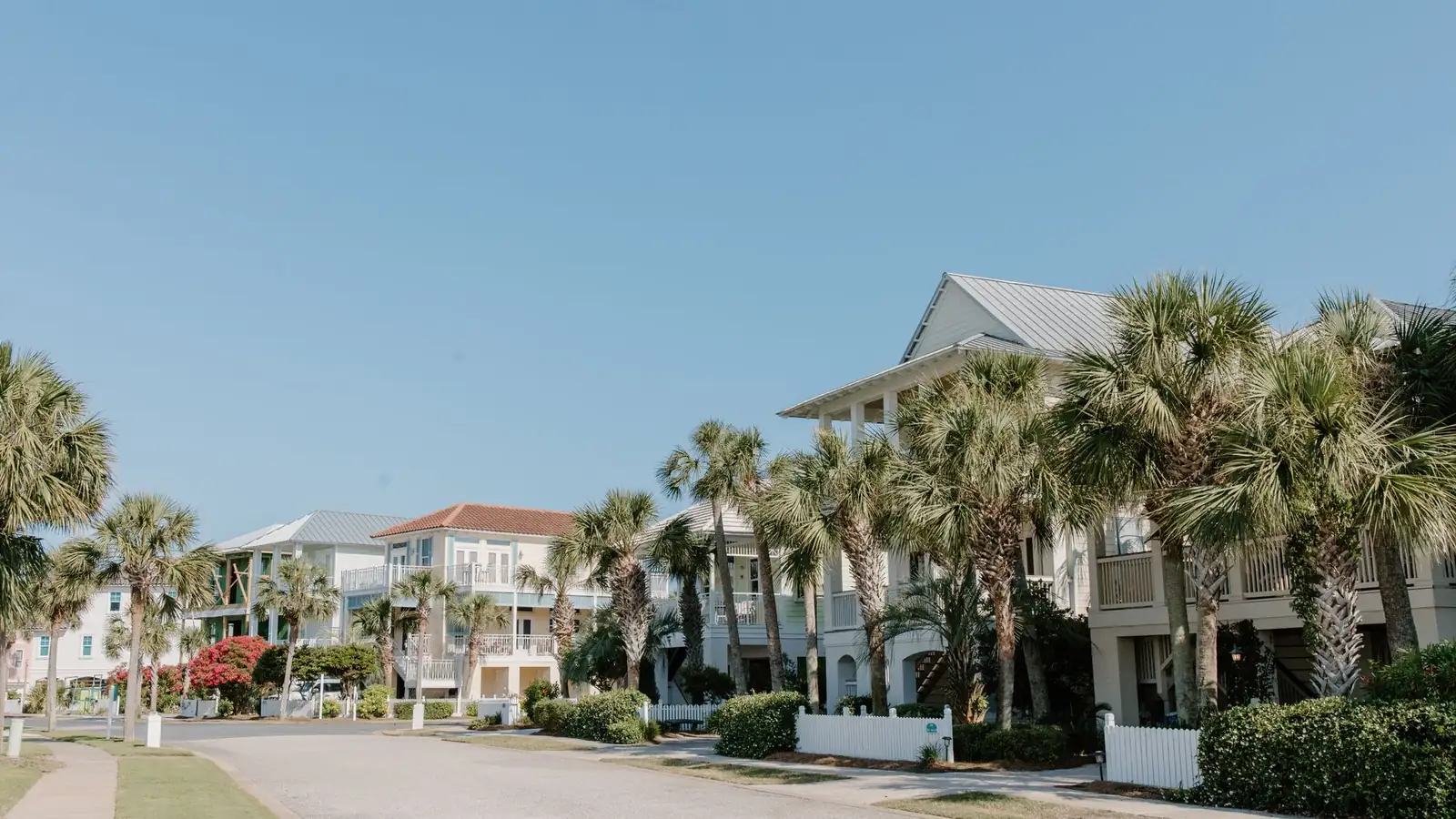
Florida street lined with palm trees and elevated coastal homes
Questions? Call us: (833) 330-1625

Sell My House Fast in Florida: We Buy Houses for Cash, As-Is, Any Condition

Any condition, from the Panhandle to the Keys. Tell us the address and we will put a real number in writing, free, with nothing to sign.

Sold as-is, no repairs to fund Free, no-obligation offer No agent commission to pay All 67 Florida counties

Homeowners in 43 states can request a written cash offer from Eagle. In Florida that includes homeowners from Miami and Fort Lauderdale up through Tampa, Orlando and Jacksonville to Pensacola. Florida is moving slowly right now, and what a house costs you while it sits is often the real number to look at. Tell us about the property and we will explain what a cash sale would actually look like, and whether something else would serve you better.

Question 1 of a few

What is the Florida address?

We price against sales in your own county, and Miami-Dade prices nothing like Escambia, so this is where we have to start. The next few questions cover condition, ownership and your timing.

Free, and nothing to sign. If a traditional listing would leave you with more, we will tell you.

Next: condition of the house, who is on the title, and the date you would like to close by.
Google Reviews BBB Accredited
  • A+BBB rating
  • 4.5from 40 Google reviews
  • 1,000+transactions completed
  • 43states we buy in

Oren Sofrin, as quoted inMSNYahoo FinanceGOBankingRatesBiggerPockets

Finding your cash offer...

How to Sell Your House Fast in Florida for Cash

Send us the address and enough detail about the property to work with. During business hours an initial no-obligation offer is often possible within minutes to a few hours, though plenty of houses need research, photographs or a walkthrough first. If you accept, we open title with a Florida title agency, which is how most closings run here. Most Eagle transactions close in roughly 21 to 42 days, depending on title readiness, liens, payoffs, association estoppels and the property review. See how our sell my house process works, from your first call to closing.

1

Tell us about the house

The address on this page, or a call to (833) 330-1625. We ask about condition, who is on the title, what is owed and when you want to be out. Not your credit.

2

We underwrite, then put it in writing

Comparable sales in your county, what the repairs will cost us, and the resale risk. The written agreement states the price, the closing target and the contingencies.

3

Property review, title, closing

We inspect the house and open title. Payoffs, liens and ownership get verified. The title agency records the deed and disburses your proceeds.

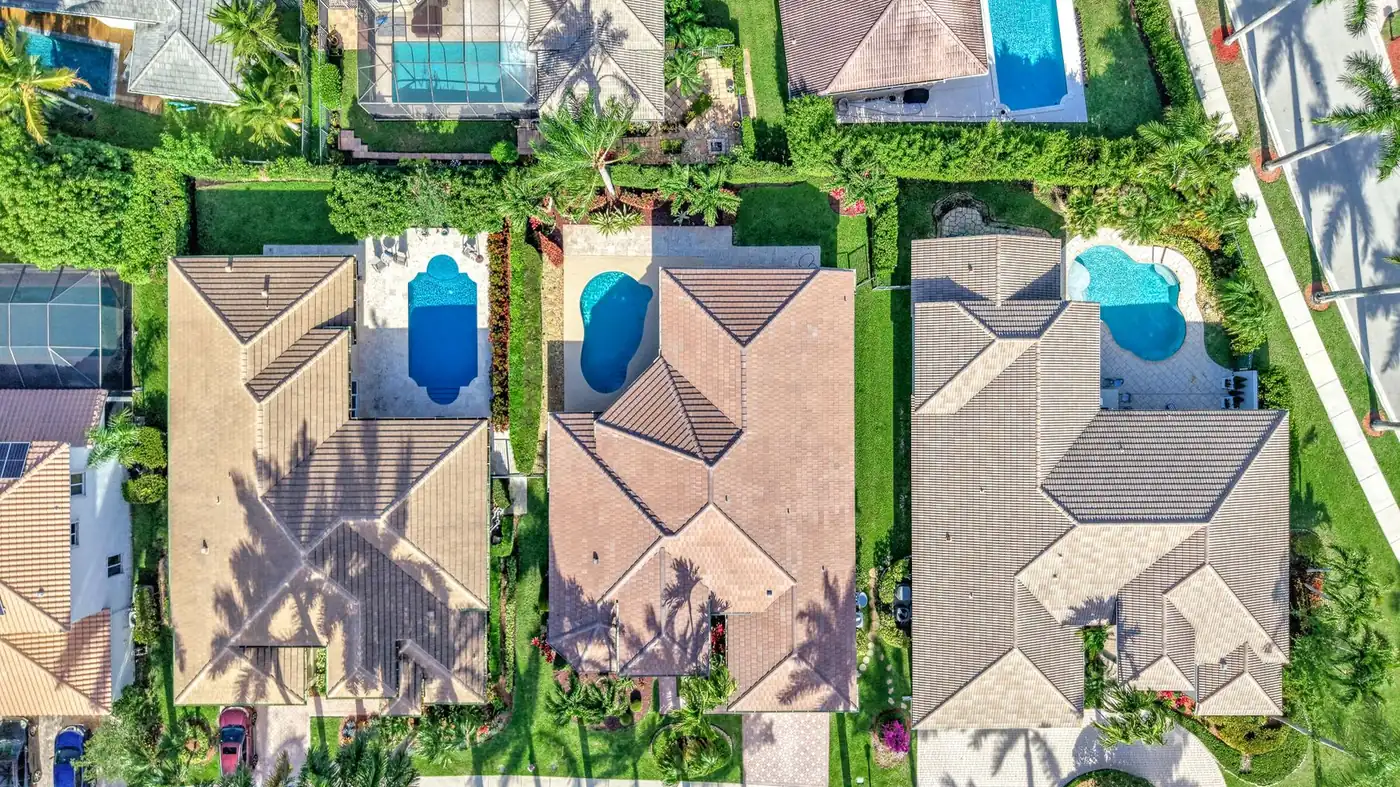
Overhead view of South Florida homes with barrel tile roofs, pools and screen enclosures
Roof age, insurance and association balances decide more Florida sales than price does.

What a cash sale in Florida actually costs you

A cash offer comes in below what a prepared house would fetch on the open market. You are trading price for speed, an as-is sale and a much shorter list of things that can go wrong. Whether that trade makes sense depends on the condition of the house and what waiting is costing you.

Below is the honest comparison. Read the last two rows as carefully as the first ones.

 Listing with an agentEagle Cash OfferEagle Retail Max
Typical timelineAbout 73 days on market, then 30 to 45 days to closeRoughly 21 to 42 daysLonger than a cash offer, and driven by the end buyer
Agent commission 5% to 6% of $383,403About $19,200 to $23,000 from your proceedsNone from youNone from you. Eagle covers applicable commissions
Closing costs other than transfer taxSeller pays a shareEagle pays themEagle pays them
Mortgage payoff, prorated taxes, documentary stamp taxYoursYoursEagle pays the documentary stamp tax. The rest is yours
Repairs before saleOptional, but selling as-is usually narrows the buyer pool and the priceNone. Sold as-isNone from you. Eagle covers approved repair and concession costs
ShowingsOngoing, on the buyer's scheduleProperty review and inspection onlyRequired. Normally scheduled 24 hours ahead when occupied
Financing riskA buyer’s loan can fail on underwriting, appraisal or property conditionNo lender on our sideDepends on the end buyer
Likely proceedsHighest, if the house is market ready and you can waitLowest of the threeBetween the two

Commission figure uses the Florida median sale price of $383,403 as of August 2026 and a typical 5% to 6% rate (it varies by market), for illustration only. Your numbers will differ. Which structure fits depends on the property, your equity and your timing, and the written agreement controls in every case.

Two things decide this, and they are worth separating: whether you have the time to wait a sale out, and whether you have the money to put the house right before it goes on. Where you have both, list it with a good local agent. We would rather say that up front than spend three weeks getting to the same answer. Where one of them is missing, a cash sale is not the consolation prize. It is often the better outcome and sometimes the only one that closes: a house that needs work you cannot fund, a tangled title, a real deadline, or a situation that takes the listing route off the table.

Want to see the number before you decide anything?Tell us the address. The offer is free, there is nothing to sign, and if listing would net you more we can usually say so.
Get My Cash Offer or call (833) 330-1625

We Buy Houses Across Florida

Select a city to learn more

Cash Home Buyers Across Miami, Tampa, Orlando, Jacksonville and Every Florida Metro

Florida is not one market. South Florida, the I-4 corridor, the Gulf coast and the Panhandle each have their own price levels, their own insurance problems and their own reasons houses sit. We operate across all of them.

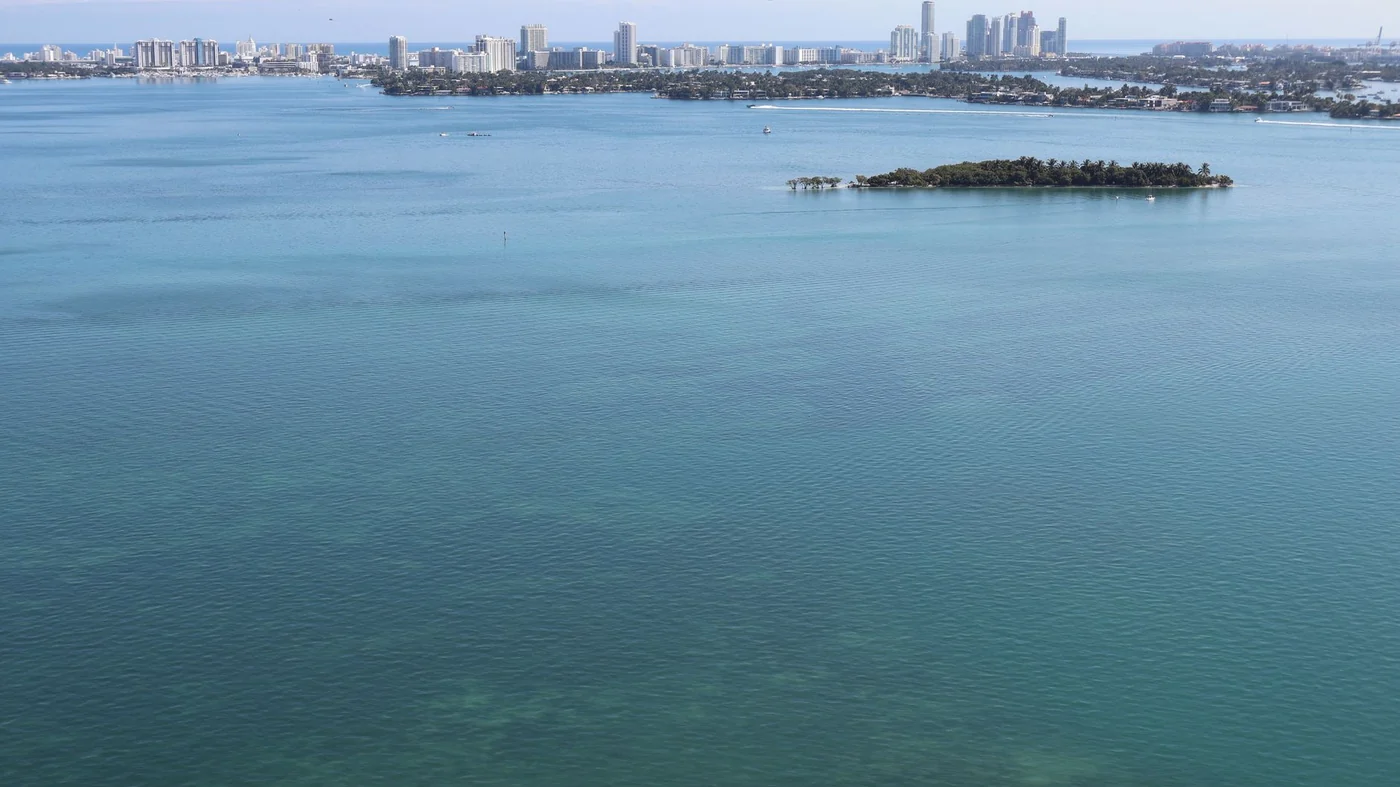
Aerial view of the Miami skyline and coastal water
Florida metros range from some of the most expensive markets in the south to some of the most affordable.

Miami Metro

Miami-Dade, Broward and Palm Beach

The most expensive market in the state and the one with the heaviest condominium exposure. Milestone inspections and reserve funding have pushed assessments up across a lot of older coastal buildings, and units facing them are difficult to finance. Miami-Dade also handles documentary stamp tax differently from the rest of Florida, so check that figure with the county.

Sell Your House in Miami →

Tampa Bay

Hillsborough, Pinellas and Pasco

A large, varied market running from Tampa's older bungalow streets to newer Pasco subdivisions. Storm and flood exposure along the Pinellas coast has made insurance a live issue here, and prior flood claims now have to be disclosed in writing under the 2024 statute.

Sell Your House in Tampa Bay →

Orlando and the I-4 Corridor

Orange, Osceola and Seminole

Central Florida carries a heavy concentration of investor-owned and short-term rental property, a lot of which came to market at once as rents softened and dues rose. We evaluate tenant-occupied and vacation-rental property here regularly.

Sell Your House in Orlando and the I-4 Corridor →

Jacksonville and North Florida

Duval, Clay and St. Johns

More affordable than the south of the state, with a large stock of mid-century housing in Duval County where roof age and older electrical service are the usual obstacles to a financed sale.

Sell Your House in Jacksonville and North Florida →

Southwest Florida

Lee, Collier and Charlotte

Cape Coral, Fort Myers and Naples. This stretch took the heaviest storm damage in recent years, and insurance availability rather than price is frequently what decides whether a house sells. We buy properties with unrepaired storm damage.

Sell Your House in Southwest Florida →

Treasure Coast and Space Coast

St. Lucie, Martin, Indian River and Brevard

Port St. Lucie, Palm Bay and Melbourne grew quickly and now carry a lot of recently built inventory competing with resale. Older coastal property here faces the same insurance questions as the rest of the state.

Sell Your House in Treasure Coast and Space Coast →

Polk County and the Interior

Polk, Highlands and Hardee

Lakeland, Winter Haven and the towns along the US 27 corridor. Among the most affordable markets in Florida, with a lot of pre-1980 housing and manufactured homes, both of which narrow the financed buyer pool considerably.

Sell Your House in Polk County and the Interior →

The Panhandle

Escambia, Santa Rosa, Okaloosa and Leon

Pensacola, Fort Walton Beach and Tallahassee sit closer in character to the Deep South than to Miami. Thinner markets, longer marketing times, and being inside the footprint is not the same as an offer in the most rural parts.

Sell Your House in The Panhandle →
Do not see your town on the list?We evaluate property in all 67 Florida counties, not only the cities with their own page.
Get My Cash Offer or call (833) 330-1625
Asked in Florida

Why Houses Are Not Selling in Florida Right Now

This is one of the most asked questions attached to selling a house in Florida, and the answer is not the one most sellers expect. It is mostly not about your asking price.

The market has genuinely turned

  • 206,508 homes for sale statewide in August 2026, with about six months of supply. Six months is the level at which a market stops favoring sellers.
  • 73 days to sell the median home.
  • Only 10.9% sold above the asking price.
  • One listing in five took a price cut.
  • The typical sale closed at 96.6% of list, so the average Florida seller is already accepting less than they asked.

Inventory actually fell 8.1% over the year while days on market stayed high. That combination usually means sellers are withdrawing rather than buyers returning.

But supply is only half of it. The other half is insurance.

A buyer using a mortgage has to obtain property insurance, and in Florida that has become the step where deals die. Insurers look hard at roof age, the four-point inspection and the wind mitigation report. An older roof can complicate insurance and financing for an ordinary buyer even when nothing is leaking, depending on its condition, remaining useful life, inspection results and the insurer's underwriting requirements. Prior claims narrow the field further.

The result is that two identical houses can behave completely differently. The one with a five-year-old roof gets offers. The one with an eighteen-year-old roof gets viewings and then silence, and the seller concludes the price is wrong when the real obstacle is that buyers cannot insure it affordably.

And in a condominium, there is a third thing

Milestone inspection and reserve funding requirements have pushed association assessments up sharply in many Florida buildings. A unit facing a large special assessment, or in a building with unresolved inspection findings, can be very hard to finance at all. Buyers who can are often paying cash, which shrinks the pool and the price at the same time.

What this means if you are the one trying to sell

Cutting the price is the obvious lever and often the wrong one, because it does not fix an insurance problem or an assessment. The questions worth answering first are these. How old is the roof? Is there claim history? Is the property in an association, and what does its estoppel actually say? Would a buyer's lender be able to finance it at all?

If a financed buyer could handle the house, and you have the time to wait out the 73 days and the money to fix what needs fixing first, list it. Those two conditions are what a listing actually runs on, and where you have both it will normally beat us.

Where one of them is missing, the comparison is no longer list price against cash price. It is a cash price now against an unknown number of months of taxes, insurance and association dues on a house that a financed buyer may never be able to take anyway. In that situation a cash sale is not the consolation prize. It is frequently the better outcome and sometimes the only one that actually closes.

Will you tell me which one I am? Yes, and we will tell you when it is the first one. Send the address, the roof age and the association name if there is one, and we will say what we think rather than just quoting a number.

Florida Counties We Cover

From Escambia in the western Panhandle to Miami-Dade at the southern tip, our city pages span the state, and we evaluate property anywhere in Florida. Being inside the footprint is not the same as an offer. Location, property type, condition, marketability, title and our current buying criteria all decide whether we can make one.

Alachua County
Bay County
Brevard County
Broward County
Charlotte County
Citrus County
Clay County
Collier County
Columbia County
Duval County
Escambia County
Flagler County
Hernando County
Highlands County
Hillsborough County
Indian River County
Lake County
Lee County
Leon County
Manatee County
Marion County
Martin County
Miami-Dade County
Monroe County
Nassau County
Okaloosa County
Orange County
Osceola County
Palm Beach County
Pasco County
Pinellas County
Polk County
Putnam County
Santa Rosa County
Sarasota County
Seminole County
St. Johns County
St. Lucie County
Sumter County
Volusia County
Every Florida metro prices differently. So does every street.Send the address and we will look at what has actually sold near you.
Get My Cash Offer or call (833) 330-1625

Florida Cities We Serve

Communities from the Panhandle to the Gold Coast. Our busiest Florida markets are Miami, Tampa, Orlando, Jacksonville, Cape Coral, Port St. Lucie, Kissimmee, Lakeland, Pensacola and Tallahassee. Select your city for local detail.

Miami-Fort Lauderdale area
Tampa-St. Petersburg area
Orlando area
Jacksonville area
Cape Coral area
Daytona Beach area
Palm Bay area
Sarasota area
Lakeland area
Port St. Lucie area
Pensacola area
Tallahassee area
Gainesville area
Ocala area
Crestview area
Sebastian area
Panama City area
The Villages area
Port Charlotte area
Naples area
Homosassa Springs area
Other Florida communities

Florida Seller Situations: Foreclosure, Probate, Insurance, Condos and Rentals

These are the situations we run into most often in Florida, and what we can and cannot do about each one.

⚠ Facing Foreclosure in FloridaA court case, and a window that closes at the certificate of sale

Florida lenders have to sue. The case is filed in the circuit court for your county, you are served, and you have a deadline to respond. If you do not answer in time the lender may seek a default, which substantially reduces your ability to contest the case.

The part people get wrong is the end of it. You can stop the sale by paying what the judgment says, but only until the certificate of sale is filed or the time set in the judgment, and there is no redemption period after that. The laws section on this page sets out the detail. So the leverage is before the sale, and the certificate closes it.

A closing that pays off the mortgage before the sale ends the case. We cannot promise to stop a foreclosure or protect your credit, because that depends on your lender, the timing and whether a closing actually happens. Send us the case number and the dates on your paperwork and we will tell you quickly whether it is realistic.

See selling before foreclosure, selling during foreclosure and how foreclosure auctions work.

🌪 Insurance, Roof Age and Storm DamageThe Florida problem that stops financed buyers

More Florida sales fall apart over insurance than over price. A buyer's lender requires coverage, and an insurer looks hard at roof age, the four-point inspection and the wind mitigation report. An older roof can complicate insurance and financing for an ordinary buyer even when nothing is leaking.

Add open claims, prior flood damage, a tarped roof or unrepaired storm damage and the buyer pool narrows to people paying cash, which is the position we are in. We buy houses with roofs that need replacing and with storm damage that has not been put right.

Tell us about it early, and tell us about any claim history, because since 2024 Florida's flood disclosure has to be completed at or before contract anyway.

Related guide: Selling a House With a Bad Roof

🏢 Condos, HOAs, Assessments and Estoppel LettersWhere a Florida sale usually slows down

If the property is in a condominium or homeowners association, three things matter. The association has to issue an estoppel letter stating what is owed, which is a real item on the closing timeline. Unpaid dues and any special assessment come out of your proceeds. And for many Florida condominium buildings, milestone inspection and reserve requirements have pushed assessments up sharply.

A unit facing a large assessment, or in a building with unresolved inspection findings, can be very hard to sell to a financed buyer. That is a situation we look at regularly. What we need from you is the association's contact details and whatever paperwork you have, early, because the association controls that part of the timeline and not all of them move fast.

🏠 Inherited Property and Florida ProbateAuthority to sign comes before anything else

Florida real estate held in a deceased owner's sole name generally has to go through probate before it can be sold, unless it was held jointly with survivorship, in a trust, or under a lady bird or enhanced life estate deed. A personal representative normally needs letters of administration from the circuit court before signing a deed, and homestead property has its own rules about who inherits it.

It is usually the longest single item in an inherited sale, so start early. We work alongside your attorney or personal representative rather than around them, and we buy inherited property in the condition it is in, including houses that have sat empty through a Florida summer.

We are not attorneys and this is not legal advice. See selling an inherited house.

🔑 Tired Landlords and Tenant-Occupied RentalsShort-term rentals, long-term tenants and the numbers behind both

Florida has an unusually large investor-owned housing stock, and a lot of it is now for sale at once. Rising insurance, rising association dues and softening rents have squeezed returns, particularly on short-term rental units bought at the top of the market.

We buy tenant-occupied property. A lease generally survives a sale, so tell us what is in place, what the rents are and whether anyone is behind. We would far rather price it correctly than discover a tenancy during the property review.

See selling a rental with tenants.

🚫 Vacant Property and Houses That Have SatHumidity, insurance and 73 days of carrying cost

An empty house in Florida deteriorates fast. Humidity and heat bring mold, air conditioning left off accelerates it, and standard homeowner policies often restrict cover once a property has been vacant for a set period. Insurers sometimes decline to renew a vacant property outright.

Meanwhile the median Florida house is taking 73 days to sell. On a vacant property that is 73 days of taxes, insurance, utilities and, in an association, dues, on a house nobody is living in. That carrying cost is usually the real argument for a faster sale, and it is worth working out before you decide anything.

See selling a vacant house.

💵 Liens, Back Taxes and an Underwater LoanWhat comes out of the proceeds before you see any

Code enforcement liens, unpaid utilities, association liens, judgment liens and delinquent property taxes all attach to the property and come out of the proceeds at closing. Florida code enforcement liens in particular can accrue daily and reach surprising totals. None of them stop a sale by themselves. They reduce what reaches you, and they need to be on the table early so the figure we quote is the figure you actually net.

If you owe more than the house is worth, a straightforward sale cannot close, because the lender has to be paid in full to release its lien. The honest options are bringing the difference, asking your lender to approve a short sale, which is their decision and takes time, or listing if that nets more. We will tell you which applies on the first call.

Related guide: Selling a Home With Liens or Back Taxes

Recognize your situation above?Most of what we do is untangling the awkward ones. Send the address and we will tell you what is possible.
Get My Cash Offer or call (833) 330-1625

What Actually Happens on the First Call

People put off calling a company like ours because they do not know what they are walking into. Here is a real call, with the details that could identify anyone removed. We are not saying it was a Florida seller, because we do not attach cases to states they did not come from.

From our own call records

A man called about his wife’s house. She had sent the inquiry, he was out running errands, and he thought he would get things started. Our acquisition manager noticed the inquiry was in her name, asked whether she was unable to take part, and when the answer was no, she simply asked me to call, he stopped the conversation there. Not for a signature. We talk to the owner. They booked a three-way call for once he was home, around his drive rather than our calendar.

What that first call is for, in his words: it is pretty basic, really more for us to find out about the property and the condition it is in. No offer on the spot, no paperwork, no pressure.

Anonymised from a recorded call. No names, no location, no property details, because the record holds none and we do not invent them. This account ends where the record ends, with a follow-up scheduled.

Asked in Florida

Companies That Buy Houses As-Is in Florida, and How to Read Them

Florida has a great many cash-buying companies, and they are not all the same thing. Here is how to tell them apart, including where we sit.

The three models you will run into

  • A buyer who actually closes. Buys with its own or committed funds and takes the property. The risk to you is a low number, not a failed closing.
  • A wholesaler. Puts your house under contract and then looks for someone to assign that contract to. If nobody takes it, the deal can collapse late. Assignment is a legitimate and common structure, but you should be told it is happening.
  • A lead reseller. Collects your details and sells them on. You then get called by several companies at once.

Questions worth asking any of them, including us

  • Will you purchase directly, assign the contract, or work with a partner? Get it in writing.
  • What would cause this price to change between now and closing?
  • Do you inspect? An offer made with no property review is not a real offer, it is a placeholder that gets cut later.
  • Who pays the documentary stamp tax, and what comes out of my side?
  • Can you put the closing date in the agreement?

Our own answer to those

Eagle may purchase the property itself or, if the purchase agreement permits, assign its contractual rights to another investor or purchasing entity. Which one applies is set out in the written agreement rather than left vague. We do inspect. We pay the other closing costs, while your mortgage payoff, prorated taxes, liens, association balances and the documentary stamp tax where custom leaves it with you come out of your proceeds. Most of our transactions close in roughly 21 to 42 days.

And the thing most of this industry will not put on a page: in a market where the median house still sells in 73 days at 96.6% of asking, a financed buyer will usually pay you more than we will, provided you have the time to wait and the money to get the house ready. Where you have both, take that route. Where you do not, and in Florida that often means roof age, insurance or an association assessment, we are not the fallback. We are the option that works.

Those are statewide averages. Your house is not an average.We price against sales in your own county and put the number in writing.
Get My Cash Offer or call (833) 330-1625

Florida Real Estate Laws Every Seller Should Know

Florida foreclosures go through a court, the window to redeem closes at a specific filing, and since 2024 every residential seller has had to give a written flood disclosure. Here is what generally applies before you sell, in plain language.

Generally not until more than 120 days delinquent

Before Any State Clock Starts: the Federal 120-Day Rule

Every state timeline on this page sits behind a federal one, and it is the single most useful thing to know if you have missed payments. Under Regulation X, 12 CFR 1024.41(f)(1), a mortgage servicer generally “shall not make the first notice or filing” required for a judicial or non-judicial foreclosure unless the borrower's mortgage loan obligation is more than 120 days delinquent.

That is roughly four months of missed payments before the state process is even allowed to begin. It is why a state sequence that looks alarmingly short on paper is usually longer in practice than the statute alone suggests.

The exceptions, because they are real. The rule does not apply where the foreclosure is based on a violation of a due-on-sale clause, or where the servicer is joining the action of a superior or subordinate lienholder. Small servicers are not exempt from this particular prohibition. Loan types and servicing arrangements vary, and some loans are outside Regulation X altogether.

So treat 120 days as the general floor rather than a guarantee, and work from the dates on your own paperwork. If a notice has arrived and you do not believe you are past that point, that is a question worth putting to a HUD-approved housing counselor or an attorney before you do anything else.

From the first filing in the circuit court

Foreclosure Goes Through a Court

Florida forecloses through the courts. Your lender files a lawsuit, you are served, and you have a period in which to respond. A Florida foreclosure is therefore slower and more visible than in a non-judicial state, and the court controls the pace. Filing to sale is commonly measured in months, and it varies considerably by county and by how contested the case is.

The deadline that is genuinely yours is the response to the complaint. Missing it is how most people lose the chance to be heard, and it is the one date worth putting in a calendar the day you are served.

Free HUD-approved housing counseling is available before you commit to anything, including to us, and a Florida attorney is the right person to read your actual complaint.

Official source: Florida Statutes Chapter 45, judicial sales

Up to the clerk filing the certificate of sale

Your Right to Redeem Closes at a Filing, and Surplus Is Not Simply Yours

Florida's redemption right does not run for months after the sale. Under Fla. Stat. §45.0315 the right to cure generally ends at the later of the filing of the certificate of sale or the time specified in the judgment. In practice that is a narrow window and it closes quickly, so the useful move is to act before the sale rather than to rely on anything afterwards.

If the sale produces more than the debt, Florida has a defined surplus process under §45.032. Read the qualifier: a surplus is what remains after satisfying the mortgage, costs and other valid liens, and subordinate lienholders are generally paid ahead of the former owner. There are deadlines attached to claiming it, and there is an entire industry of surplus-recovery outfits that exists because people do not know the money is there. You can usually claim it without paying anyone a percentage.

Official source: Fla. Stat. §45.032, disbursement of surplus

Within one year of the sale

What You Have to Disclose, and What a Sale Costs

Flood disclosure has been mandatory since 2024. A seller of residential property must give the buyer a flood disclosure at or before the contract is signed, covering flood damage history and any federal flood assistance received. The rule is recent, and it applies to cash sales.

Selling as-is does not switch off disclosure. As-is describes who pays for repairs, not what you are allowed to leave unsaid. Florida law generally requires a seller to disclose known defects that materially affect value and are not readily observable. We buy properties with serious problems every week, so telling us early costs you nothing and being found out later costs the transaction.

Documentary stamp tax. Florida charges documentary stamp tax on the deed, generally $0.70 per $100 of consideration outside Miami-Dade, which has its own rate. It is customarily the seller's, though it is negotiable and the purchase contract controls.

Closing runs through title agencies rather than attorneys as ordinary Florida practice.

Official source: Fla. Stat. §689.302, flood disclosure

General information, not advice. This section describes Florida practice in general terms and was checked against the sources cited in September 2026. Laws, timelines and local procedures change, and how any of it applies to your property depends on facts we have not seen. It is not legal, tax or financial advice, and it is no substitute for talking to a Florida attorney, accountant or HUD-approved housing counselor about your own situation.

Florida Housing Market Snapshot

Florida has slowed considerably, with six months of supply and one listing in five cutting its price. Figures below are Redfin statewide data for August 2026.

$383,403Median sale priceRedfin, August 2026
73 daysMedian days on marketRedfin, August 2026
+0.9%Year-over-year price changeRedfin, August 2026
206,508Homes for sale, down 8.1%Redfin, August 2026
20.6%Listings taking a price cutRedfin, August 2026
96.6%Sale-to-list price ratioRedfin, August 2026
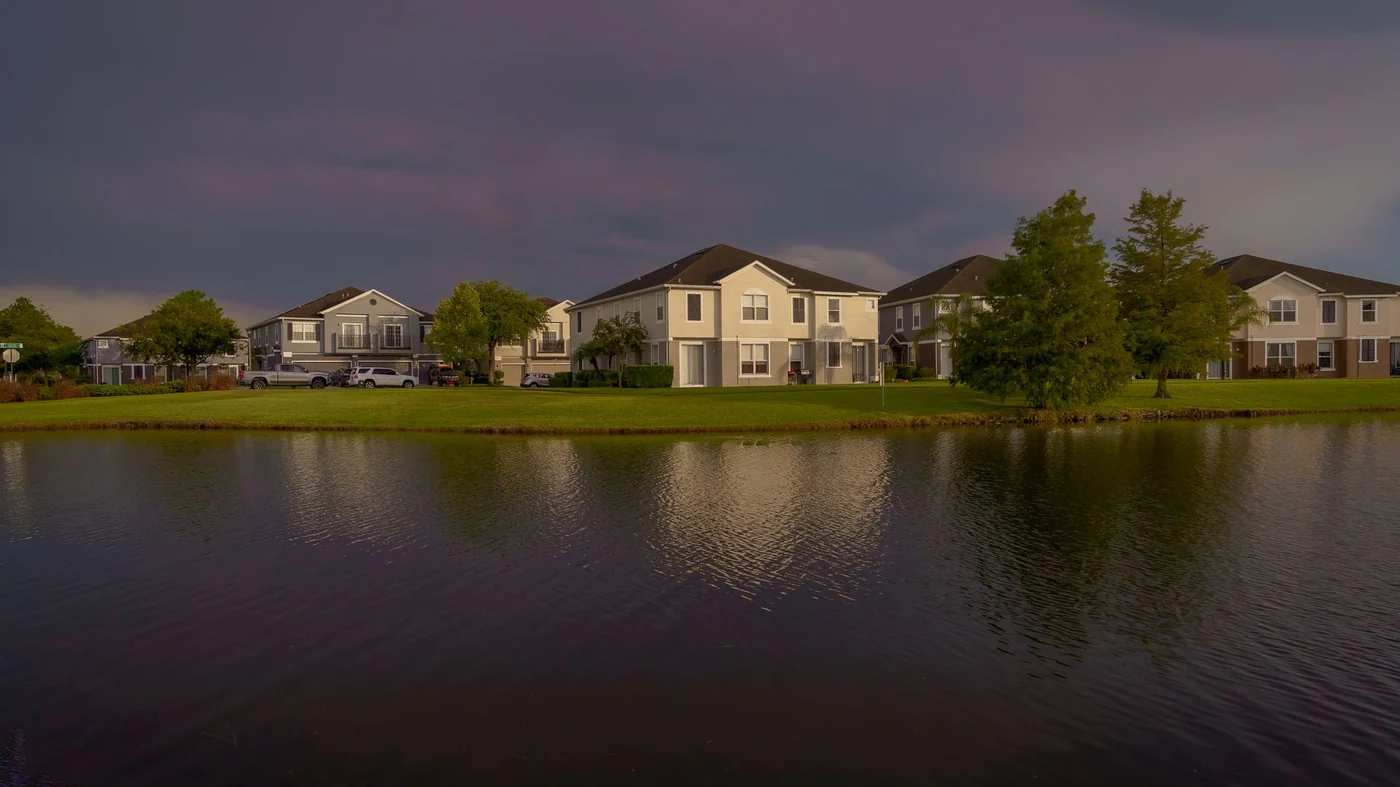
Orlando area homes beside a retention pond under a darkening sky
Florida homes took a median of 73 days to sell in August 2026, and the typical sale closed below the asking price.

Why the carrying cost is the number that matters here

Six months of supply is the textbook definition of a market that has stopped favoring sellers. Only 10.9% of Florida homes sold above asking in August 2026, one listing in five took a price cut, and the typical sale closed at 96.6% of list. A seller who lists is not choosing between a fast high price and a slow low one. They are choosing between a slow price that is already being negotiated down and a fast one that is known up front.

What fills that gap is what the house costs you while it sits. Seventy-three days is two and a half months of mortgage, taxes and property insurance, and Florida insurance is not a small line. In a condo it is also two and a half months of association dues, and possibly a special assessment landing mid-listing. Those numbers are specific to your property, and they are the ones worth working out before you decide anything.

Statewide, the median sale price was $383,403 in August 2026, up 0.9% on the year, with 206,508 homes on the market, down 8.1%. Inventory falling while days on market stay high usually means sellers are withdrawing rather than buyers returning. Figures are as of the date shown and worth rechecking before you rely on them.

Selling Just Over the Florida Line?

Plenty of Florida sellers own a second property, an inherited house or a former rental across a border, and the rules change the moment you cross it. Florida runs foreclosures through the courts and closes through a title agency. Its neighbors do not all work that way. We evaluate property in all of these.

Georgia

North across the state line, and a state where lenders can foreclose without going to court. See Savannah or Valdosta.

Alabama

West of Pensacola, with a different closing custom and its own timetable. See Mobile or Dothan.

What Sellers Say About Working With Us

Bar PeretzRated 5 out of 5
Our home in Miami had roof damage after last season's storms. Listing it felt impossible, but Eagle Cash Buyers stepped up with a fair cash offer and closed in under two weeks, repairs included. They handled everything, so we could move on without stress.
Roger WolfRated 5 out of 5
Very accommodating. Made the process easy and not stressful.

One of these describes a closing faster than our normal range. We move as fast as the title work allows, but most transactions close in roughly 21 to 42 days.

4.5 from 40 reviews on Google · read them all

2019

Founded, and headquartered in Columbus, Ohio.

1,000+

Transactions since 2019 across a 43-state footprint. Coverage does not mean every property qualifies.

A+

Eagle Cash Buyers, LLC is BBB Accredited with an A+ rating. Accreditation is not an endorsement. See the profile.

Ready to See What a Florida Cash Sale Looks Like?

Sold as-is. No agent commission. Most transactions close in roughly 21 to 42 days.

Get My Free Cash Offer

Or call us: (833) 330-1625

Florida Home Selling Questions, Answered Straight

Real answers about Florida law, timelines and how the process actually works here.

How fast can you close on a Florida home?

Most Eagle transactions close in roughly 21 to 42 days. Florida closings normally run through a title agency rather than requiring an attorney, which helps, but the timeline still depends on title readiness, liens, mortgage payoffs, the property review and, where the property sits in an association, how quickly that association issues its estoppel letter. Faster is sometimes possible when the title is clean and there is nothing to untangle, but it is an exception rather than something to plan around. If you have a hard date, such as a foreclosure sale, tell us early and we will say honestly whether it is realistic.

How quickly can I get an offer?

During business hours an initial no-obligation offer is often possible within minutes to a few hours once we have enough information about the property. Some houses need research, photographs or a walkthrough before we can put a number in writing. We would rather take an extra day and give you a figure we can actually perform on.

Why are houses not selling in Florida right now?

Supply and cost, more than price. In August 2026 Florida had 206,508 homes for sale and about six months of supply, which is the level at which a market stops favoring sellers. The median home took 73 days to sell, only 10.9% sold above the asking price, one listing in five took a price cut and the typical sale closed at 96.6% of list. On top of that, property insurance has become a real obstacle: a buyer's lender requires coverage, and insurers look hard at roof age and claim history. In condominium buildings, milestone inspection and reserve requirements have pushed assessments up and made some units very difficult to finance. So houses are not failing to sell because sellers are asking too much in isolation. They are sitting because the pool of buyers who can get financing on an older or association-governed property has narrowed.

How does Florida foreclosure work, and can a sale stop it?

Florida is a judicial foreclosure state: the lender files a lawsuit in the circuit court for your county, you are served, and you have a deadline to respond. If you do not answer in time the lender may seek a default, which substantially reduces your ability to contest the case. A closing that pays off the mortgage before the sale ends the process. We cannot promise to stop a foreclosure or protect your credit, because that depends on your lender, the timing and whether a closing actually happens. Send us the case number and the dates and we will tell you quickly whether it is realistic.

Is there a redemption period after a Florida foreclosure sale?

Effectively no. You can stop the sale by paying what the judgment says is owed plus costs, but only until the clerk files the certificate of sale or the time set in the judgment, whichever is later, and after that there is no right of redemption. That is not a fixed number of days you can plan around, so act before the auction. The laws section on this page has the detail, and a Florida attorney can advise on your own case.

The foreclosure sale raised more than I owed. How do I claim the surplus?

The surplus generally goes to the owner of record, after any junior lienholders who filed timely claims are paid. The claim form itself says you do not need a lawyer and do not have to assign your rights to anyone to claim it, and the clerk may help you. Roughly one year after the sale, surplus still held by the clerk is generally reported to the state as unclaimed property, so keep your address current with the court.

Do I have to disclose problems if I am selling as-is?

Yes. Florida has no mandatory statewide seller disclosure form, but a seller who knows of facts materially affecting the value of the home that are not readily observable and not known to the buyer generally has a duty to disclose them. Since 2024 a residential seller also has to give a written flood disclosure at or before the contract, whoever the buyer is. As-is means you are not being asked to repair anything. It does not mean you can stay quiet about what you know. Roof leaks, prior flooding, sinkhole activity, polybutylene plumbing, open permits and active association litigation are the usual examples. Telling us early does not put your sale at risk, because we buy houses with those problems.

What is the Florida documentary stamp tax and who pays it?

Florida sets the tax on deeds at 70 cents for each $100 of consideration, or fractional part thereof, which is $7.00 per $1,000 or about 0.70%. On a house at the Florida median of $383,403 that is roughly $2,680, and the amount rounds up to the next $100 rather than prorating. Florida measures consideration more widely than many states: it includes the amount of any mortgage or other encumbrance whether or not the buyer assumes it. By Florida custom the seller normally pays the documentary stamp on the deed, though the contract controls. Miami-Dade County works differently, so if your property is there, check the figure with the county or your closing agent.

My roof is old and I cannot get insurance. Can you still buy?

Usually yes, and this is one of the most common reasons Florida sellers come to us. A buyer using a mortgage has to obtain insurance, and insurers look closely at roof age, the four-point inspection and wind mitigation. An older roof can complicate insurance and financing for an ordinary buyer even when it is not leaking, depending on its condition, remaining useful life, inspection results and the insurer's underwriting requirements. Florida law generally requires an insurer to allow an inspection of a roof at least 15 years old before demanding replacement on age alone. We are not applying for a policy on your behalf to complete a purchase, so that obstacle does not apply in the same way. Tell us the roof age, any claim history and whether the property has been tarped or repaired.

Can you buy a condo with a special assessment or association problems?

Often, and it is a situation we look at regularly. Florida milestone inspection and reserve requirements have pushed assessments up in many buildings, and a unit facing a large assessment or sitting in a building with unresolved findings can be very hard to sell to a financed buyer. What we need early is the association's contact details and whatever documentation you have, because the closing agent has to obtain an estoppel letter stating what is owed and the association controls that part of the timeline. Unpaid dues and assessments come out of your proceeds at closing.

What if I inherited a Florida property and it is still in probate?

Florida real estate held in a deceased owner's sole name generally has to pass through probate before it can be sold, unless it was held jointly with survivorship, in a trust, or under a lady bird or enhanced life estate deed. A personal representative normally needs letters of administration from the circuit court before signing a deed, and homestead property carries its own rules about who inherits. It is usually the longest single item in an inherited sale. We work alongside your attorney or personal representative and buy the property in the condition it is in. We are not attorneys and this is not legal advice.

Can I sell a tenant-occupied rental in Florida?

Yes. A lease generally survives a sale, so the tenancy comes with the building. Tell us what leases are in place, what the rents are and whether anyone is behind, because that changes the number and we would rather price it correctly than discover it during the property review. Florida has a large investor-owned housing stock and a lot of it is being sold at once, so this is familiar ground for us.

Who pays closing costs, and is there anything left for me to pay?

Eagle pays the closing costs, except your share of any transfer tax, and there is no agent commission on a direct sale to us. You do not pay us a fee. What still comes from your side of the settlement is your mortgage payoff and prorated property taxes, along with anything else attached to the title, such as code enforcement liens, unpaid utilities, association dues and assessments, judgment liens or probate expenses, and the documentary stamp tax where custom or the contract leaves it with you. Those are seller obligations rather than closing costs, and they are not interchangeable. The title work and the written agreement set out exactly what applies.

Will Eagle always purchase the property directly?

Not necessarily. Eagle may purchase the property itself or, if the purchase agreement permits, assign its contractual rights to another investor or purchasing entity. The written agreement explains the rights and obligations that apply. What matters is that the structure is disclosed to you, the agreed terms are honored and the buyer is positioned to actually perform.

Oren Sofrin

Reviewed by Oren Sofrin, Founder and CEO of Eagle Cash Buyers

Oren has more than ten years in real estate, and he and the Eagle team have completed over 1,000 transactions. His market commentary has been quoted by MSN, Yahoo Finance, GOBankingRates and BiggerPockets. Last reviewed October 2026.

See How We Calculate Your Florida Cash Offer

Get My Cash Offer →