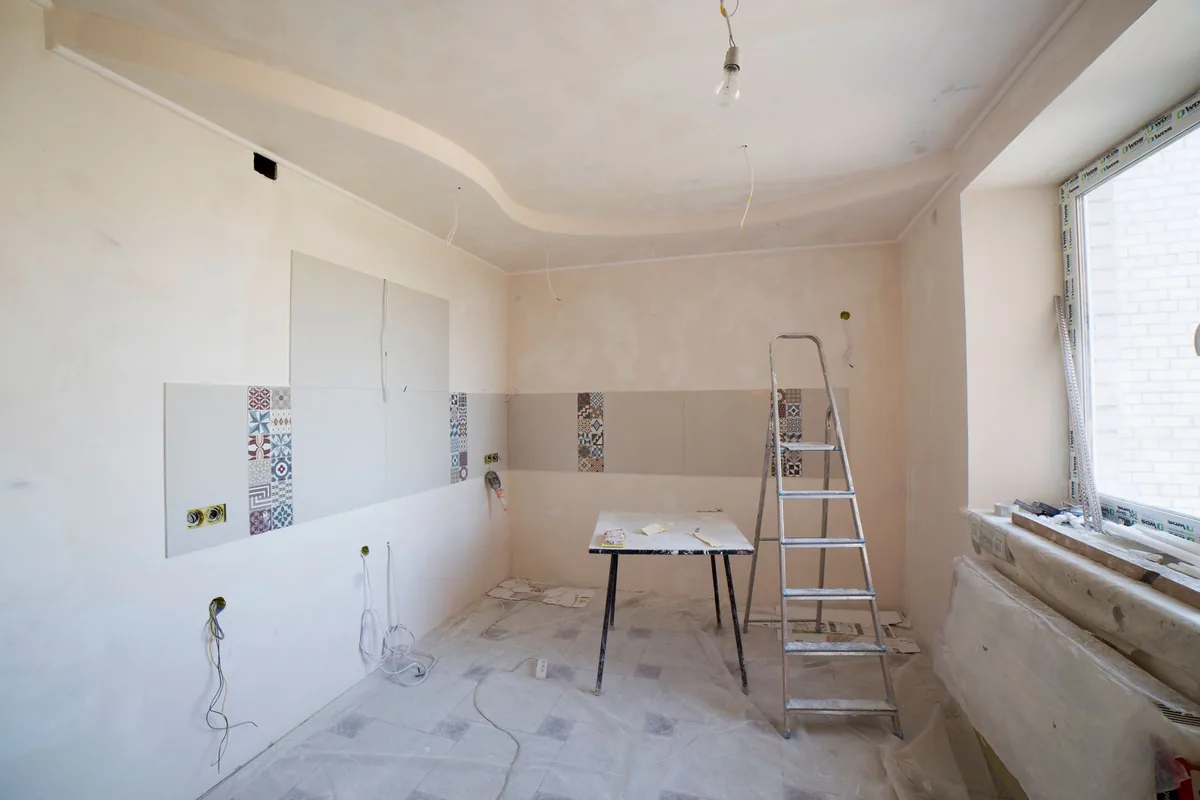
The kitchen hasn't been touched since the late 1990s. The roof has a few years left, maybe. The bathroom grout is crumbling. Now you're asking the question many homeowners ask: do I put money into this place first, or take a cash offer and move on? Weighing a cash home sale or renovation comes down to three things, your cash, your time and what the work will actually return.
Nobody can answer that without seeing your house. What this guide can do is show you how the math works on both paths, so you can run your own numbers, and it covers which projects tend to pay back, what renovating really costs beyond the contractor's invoice, and when a sale as-is is the better tool. One note first: this is general information, not financial advice. For a decision this size, talk to a licensed professional, such as a real estate agent, an accountant or an attorney in your state.
Cash Home Sale or Renovation: Which Path Fits Your House?
Renovating before you sell can raise the price you get. It also costs money up front, takes months, and carries risk. A sale as-is to a cash buyer costs nothing up front and can close in weeks, but the price is often lower than a fully fixed-up listing could bring. That is the trade. Neither side is free.
Put plainly, a cash price is generally below market value. A cash buyer is taking on the repairs, the holding time and the resale risk, and the offer reflects that. A listing can net you more when you have both the time and the money to put the house right. If you are short on either one, the gap often closes. If you have plenty of both, renovating may win.
Both conditions matter. Money without time is not enough. Neither is the reverse.
Which Renovations Tend to Pay Off Before a Sale?
Fewer than you might think. The cheap ones usually do best. Zonda publishes an annual Cost vs. Value report, produced with Verisk's XactRemodel, that compares what common projects cost with the resale value they add. In the 2025 edition, garage door replacement led at about 268% of cost recouped, steel entry door replacement followed at about 216%, and manufactured stone veneer came next at about 208%. A minor kitchen remodel was the only interior project near the top, at about 113%.
The report's editor says exterior replacement projects remain the clear winners on resale value, while large interior remodels may be personally rewarding but are too subjective to deliver the same return.
Two cautions. These are national figures, and your market may differ. A high percentage on a small project is not a big profit, because a project that returns 200% on a few thousand dollars still adds only a modest amount of value, while a large remodel that recovers only part of its cost can lose far more in actual dollars even though the percentage looks less dramatic.
What Renovating Really Costs Beyond the Contractor's Invoice
The invoice is only one line. Every month the work and the listing take, you are still paying the mortgage, property taxes, insurance and utilities on a house you are trying to leave, and none of that money comes back when the house finally sells. That adds up. Total your own monthly carrying cost, then multiply it by the months you expect the project and the sale to take.
Then come the costs tied to the sale itself. A traditional listing usually involves an agent commission, which is negotiable, plus the seller's share of closing costs and sometimes buyer concessions, and a renovated house still has to get through showings, inspections and the risk that a buyer's financing falls through at the last minute.
And there are surprises. Opening a wall can reveal water damage, old wiring or plumbing that has to be brought up to code. Older houses can hide more. A budget that looked comfortable on paper can change fast, so keep a cushion for the things nobody can see yet.
If you want to see how buyers think about repairs, our guide to selling a house that needs repairs walks through the options. And the explanation of how cash buyers calculate an offer shows where repair estimates fit into the number.
Side by Side: A Hypothetical Example
The figures below are illustrative only. They are round numbers chosen to show the method, not typical prices, and not an offer or a prediction for any house. Your numbers will differ.
Illustrative scenario: a house that would list for $300,000 after $40,000 of work. Assume a six-month project-and-sale timeline, $2,500 a month in carrying costs, a 5% agent commission (commissions usually run 5% to 6%) and $5,000 in other seller closing costs.
| Item | Renovate, then list (illustrative) |
|---|---|
| Renovation | $40,000 |
| Carrying costs (6 months at $2,500) | $15,000 |
| Agent commission (5% of $300,000) | $15,000 |
| Other seller closing costs | $5,000 |
| Total cost of this path | $75,000 |
| Left from the $300,000 sale | $225,000 |
Before the mortgage payoff comes out, this path leaves about $225,000. So in this example, an as-is offer above that number would leave you with more on paper, and an offer below it would leave you with less. That is the whole method. Plug in your own sale price, your own repair quotes and your own carrying costs.
In a direct sale to Eagle Cash Buyers there is no agent commission. Eagle pays the closing costs, except the seller's mortgage payoff, back taxes and liens, and the seller's share of transfer tax. Whether we can make an offer at all depends on the property, the title and our buying criteria.
The renovation path can come out ahead if the work stays on budget, the market holds and the sale closes. That is a lot of ifs. The cash path gives you a lower number with a lot more certainty. For a closer comparison, see our breakdown of cash offer vs. listing with an agent.
Five Questions That Point to the Right Path
Walk through these honestly. Often the third question is where the answer shows up, even if you started out leaning the other way.
1. How much cash do you have right now?
Renovating needs money up front. Financing exists, such as a home equity line, a personal loan or contractor payment plans, but borrowing to fix up a house you are about to sell adds interest and risk. If you don't have the cash and don't want to borrow, that may settle it.
2. How long can you wait?
Add the renovation, the listing period and the closing. Then ask what each extra month costs you. Time can be everything. If you must move for a job, settle an estate or meet a financial deadline, the schedule may matter more to you than the price does.
3. What is the scope of the work?
Cosmetic updates such as paint, fixtures and landscaping are cheap and quick. Structural and mechanical problems are a different story: roof, foundation, heating, plumbing and electrical work usually cost more, take longer and can uncover more. Get written estimates before you decide anything.
4. What does your local market look like?
Look at recent sales near you. Check both renovated and unrenovated houses. The gap between them is what a renovation can realistically earn back. If renovated houses sell for only a little more than yours would as-is, the work may not pay. A local agent can pull these comparable sales for you.
5. Can you absorb a cost overrun?
If the budget grows and you have no cushion, you are stuck halfway through a project. A sale as-is avoids that risk. The offer is the offer, subject to the written purchase agreement and clear title.
When Renovating Is the Right Call
Renovating tends to make sense when the work is mostly cosmetic, you have the cash on hand, your market rewards updated houses and you can wait without strain. Small, visible fixes are the safer bets. In the Zonda report, replacing a worn garage door or entry door recouped more than it cost, and a miss on a small job does not hurt much. Keep it simple.
It also makes sense if you plan to stay a while longer and want to enjoy the work yourself. Then the resale math matters less.
Whatever you choose, get several contractor estimates first. Compare them with a cash offer before you spend anything, so you are deciding with numbers instead of assumptions.
When Selling As-Is for Cash Makes More Sense
A sale as-is tends to win when the house needs major structural or mechanical work, you can't fund the project, or you need to close on a schedule. It also fits when a renovation estimate is uncertain because the house is old and hidden damage is likely.
- You are relocating and time is short.
- You inherited the house and live far away.
- You are behind on the mortgage or taxes and the clock is running.
- Renovated houses in your area are sitting on the market for a long time.
There is a cost that never shows up in a spreadsheet, too. Managing contractors while working, parenting or dealing with a life change is exhausting. For sellers facing divorce, a move or an estate, that stress is real.
With Eagle Cash Buyers, closing can happen in as little as 21 to 42 days, or later if you need more time, and you pick the date. If your house is dated rather than damaged, see whether old kitchens and bathrooms scare off cash buyers. To compare the two ways of selling more broadly, read cash sale vs. traditional sale.
Frequently Asked Questions
Is it worth renovating a house before selling?
It depends. In the Zonda report, a few small exterior home improvements recouped more than they cost, while many other projects recouped less, so compare your net proceeds on both paths, including renovation costs, carrying costs, commissions and the risk of surprises, before you decide.
Should I fix up my house or sell it as-is?
Sell as-is if the renovations are big, you lack the cash or you need to move quickly. Fix it up before selling if the work is mostly cosmetic and you have both the time and the money. A licensed agent or contractor can give you local numbers.
Do cash buyers pay a fair price for houses that need work?
A cash offer is generally below market value, because the buyer takes on repairs, holding costs and resale risk. On a direct sale with Eagle there is no agent commission, and Eagle pays closing costs except the seller's payoff, back taxes and liens, and transfer tax share. Compare your net, not just the price.
Does Eagle buy houses that need work?
Eagle Cash Buyers evaluates properties in 43 states and buys many conditions. Whether we can make an offer depends on the property, the title and our buying criteria. Mobile homes only with the land.