



Houses along a lake shore in Catskill, New York, surrounded by autumn foliage
Questions? Call us: (833) 330-1625

Sell My House Fast in New York: We Buy Houses for Cash, As-Is, Any Condition

Any condition, from Buffalo to Brooklyn. Tell us the address and we will put a real number in writing, free, with nothing to sign.

Sold as-is, no repairs to fund Free, no-obligation offer No agent commission to pay All 62 New York counties

Eagle Cash Buyers evaluates residential property across 43 states, New York included, from the five boroughs and Long Island through the Hudson Valley to Albany, Syracuse, Rochester and Buffalo. New York gives homeowners real time and real protection, so before anything else, it is worth knowing how much room you actually have. Tell us about the property and we will explain what a cash sale would look like, and whether something else would serve you better.

Question 1 of a few

What is the New York address?

We price against sales in your own county, and Kings prices nothing like Chemung, so this is where we have to start. The next few questions cover condition, ownership and your timing.

Free, and nothing to sign. If a traditional listing would leave you with more, we will tell you.

Next: condition of the house, who is on the title, and the date you would like to close by.
Google Reviews BBB Accredited
  • A+BBB rating
  • 4.5from 40 Google reviews
  • 1,000+transactions completed
  • 43states we buy in

Oren Sofrin, as quoted inMSNYahoo FinanceGOBankingRatesBiggerPockets

Finding your cash offer...

How to Sell Your House Fast in New York for Cash

Send us the address and enough detail about the property to work with. During business hours an initial no-obligation offer is often possible within minutes to a few hours, though plenty of houses need research, photographs or a walkthrough first. If you accept, the transaction goes to a New York real estate attorney, because that is how closings are normally handled here. Most Eagle transactions close in roughly 21 to 42 days, depending on title readiness, liens, payoffs and the property review.

1

Tell us about the house

The address on this page, or a call to (833) 330-1625. We ask about condition, who is on the title, what is owed and when you want to be out. Not your credit.

2

We underwrite, then put it in writing

Comparable sales in your county, what the repairs will cost us, and the resale risk. The written agreement states the price, the closing target and the contingencies.

3

Property review, title, closing

We inspect the house and open title. Payoffs, liens and ownership get verified. The title agency records the deed and disburses your proceeds.

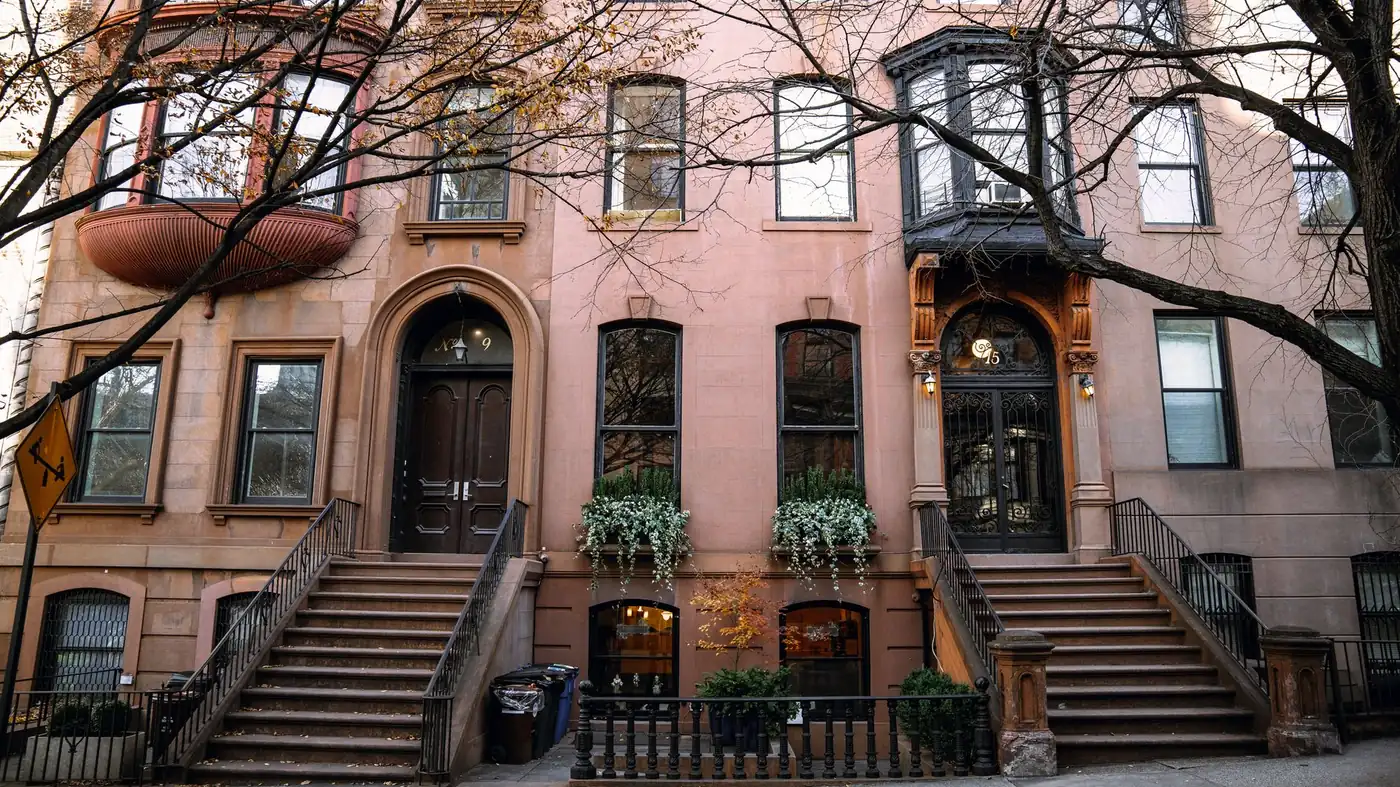
Brownstone houses with stoops on a Brooklyn street in autumn
Much of New York's housing stock predates 1940, and condition is the usual obstacle to a financed sale.

We Buy Houses Across New York

Select a city to learn more

Want to see the number before you decide anything?Tell us the address. The offer is free, there is nothing to sign, and if listing would net you more we will say so.
Get My Cash Offer or call (833) 330-1625

Cash Home Buyers Across New York City, Long Island, Buffalo, Rochester and Every New York Metro

New York contains two almost unrelated housing markets. Downstate runs on some of the highest prices and property taxes in the country. Upstate contains some of the most affordable cities in the north east, with dense pre-1940 housing where condition decides everything. We operate across both.

Brooklyn Bridge and the New York City skyline at sunset
Downstate and upstate New York behave like different countries, and a statewide average tells you very little about either.

New York City

Kings, Queens, New York, Bronx and Richmond

Five boroughs, and a market of its own. Co-ops bring board approval into the timeline, condos bring their own rules, and the city levies transfer taxes separate from the state. Anything in the five boroughs needs its own conversation rather than a statewide answer.

Sell Your House in New York City →

Long Island

Nassau and Suffolk

Among the highest property tax burdens in the country, which changes the arithmetic on holding a house you are trying to leave. A lot of mid-century stock with original systems.

Sell Your House in Long Island →

Westchester and the Hudson Valley

Westchester, Rockland, Orange and Dutchess

Expensive, well served by rail, and carrying a large stock of older houses where oil tanks, septic systems and knob-and-tube wiring are common obstacles to a financed sale.

Sell Your House in Westchester and the Hudson Valley →

Buffalo and Western New York

Erie and Niagara

Among the most affordable markets in the state, with dense pre-1940 housing stock. Condition, not price, is usually what decides whether a house here sells at all.

Sell Your House in Buffalo and Western New York →

Rochester and the Finger Lakes

Monroe and Ontario

A steady market with older city housing and newer suburban stock, and property taxes that are high relative to values.

Sell Your House in Rochester and the Finger Lakes →

Syracuse and Central New York

Onondaga and Oneida

Affordable by state standards, with a lot of century-old housing. Heating systems and roofs take a beating in the lake effect snow belt.

Sell Your House in Syracuse and Central New York →

Albany and the Capital Region

Albany, Schenectady and Rensselaer

Steady state-government employment keeps this market relatively steady, with a large stock of older multifamily property in the cities.

Sell Your House in Albany and the Capital Region →

The Southern Tier and North Country

Broome, Chemung and the Adirondack counties

Binghamton, Elmira and the rural north. Thin markets, long marketing times, and being inside the footprint is not the same as an offer in the most rural parts.

Sell Your House in The Southern Tier and North Country →

New York Counties We Cover

From Chautauqua on the Pennsylvania line to Suffolk at the end of Long Island, our city pages cover 39 of the state's 62 counties, and we evaluate property anywhere in New York. Being inside the footprint is not the same as an offer. Location, property type, condition, marketability, title and our current buying criteria all decide whether we can make one.

Albany County
Bronx County
Broome County
Cattaraugus County
Cayuga County
Chautauqua County
Chemung County
Clinton County
Cortland County
Dutchess County
Erie County
Fulton County
Genesee County
Jefferson County
Kings County
Madison County
Monroe County
Montgomery County
Nassau County
New York County
Niagara County
Oneida County
Onondaga County
Ontario County
Orange County
Oswego County
Otsego County
Queens County
Rensselaer County
Richmond County
Rockland County
Saratoga County
Schenectady County
Steuben County
Suffolk County
Tompkins County
Ulster County
Warren County
Westchester County
Do not see your town on the list?We evaluate property in all 62 New York counties, not only the cities with their own page.
Get My Cash Offer or call (833) 330-1625
Asked in New York

If You Need to Sell Immediately in New York

This is one of the most searched New York selling questions, and the honest answer has two halves. The first is that you probably have more time than you think. The second is that what controls the speed is almost never us.

First, check how much time you actually have

If the pressure is a mortgage default, New York takes time to take a house. Your lender generally has to send you a notice well before it can file anything, and that notice has to list free government-approved housing counseling agencies and give the Attorney General's Homeowner Protection Program hotline. If a case is filed, the court generally must hold a settlement conference. The laws section on this page sets out the detail.

So before deciding anything in a hurry, find out where in that sequence you are. A letter is not an auction. People sell in a panic on week one of a process that had months left in it, and in a market selling above asking in 36 days, that can be an expensive mistake.

Then, what actually sets the pace

Our normal range is 21 to 42 days from agreement to closing. What decides where you land is rarely the buyer:

  • The attorneys. New York closings run through counsel on both sides. That is normal here and it is built into the range.
  • Title. Old liens, water and sewer arrears, a mis-recorded deed or an unreleased mortgage from decades ago all take time to clear.
  • Surrogate's Court. If the owner has died, the executor needs letters before signing anything. This is usually the longest item.
  • A co-op board. If it is a co-op, the board approves on its own schedule and nobody can promise a date around it.
  • Everyone on the deed. Every owner signs, and co-owners in different states take longer to coordinate.

What we can give you quickly is the number. Send the address and we will usually come back the same day, sometimes within a few hours, occasionally longer where the property needs real research. That part is free and there is nothing to sign.

New York Cities We Serve

Communities from Long Island to Lake Erie. Our busiest New York markets are Brooklyn, Queens, the Bronx, Buffalo, Rochester, Syracuse, Albany, Yonkers, Poughkeepsie and Binghamton. Select your city for local detail.

New York Area
Buffalo Area
Rochester Area
Albany Area
Syracuse Area
Poughkeepsie Area
Binghamton Area
Utica Area
Central Islip Area
Upstate and downstate are different markets entirely.Send the address and we will look at what has actually sold near you.
Get My Cash Offer or call (833) 330-1625

What a cash sale in New York actually costs you

A cash offer comes in below what a prepared house would fetch on the open market. You are trading price for speed, an as-is sale and a much shorter list of things that can go wrong. Whether that trade makes sense depends on the condition of the house and what waiting is costing you.

Below is the honest comparison. Read the last two rows as carefully as the first ones.

 Listing with an agentEagle Cash OfferEagle Retail Max
Typical timelineAbout 36 days on market, then 30 to 45 days to closeRoughly 21 to 42 daysLonger than a cash offer, and driven by the end buyer
Agent commission 5% to 6% of $547,719About $27,400 to $32,900 from your proceedsNone from youNone from you. Eagle covers applicable commissions
Closing costs other than transfer taxSeller pays a shareEagle pays themEagle pays them
Mortgage payoff, prorated property taxes, state transfer taxYoursYoursEagle pays the state transfer tax. The rest is yours
Repairs before saleOptional, but selling as-is usually narrows the buyer pool and the priceNone. Sold as-isNone from you. Eagle covers approved repair and concession costs
ShowingsOngoing, on the buyer's scheduleProperty review and inspection onlyRequired. Normally scheduled 24 hours ahead when occupied
Financing riskA buyer’s loan can fail on underwriting, appraisal or property conditionNo lender on our sideDepends on the end buyer
Likely proceedsHighest, if the house is market ready and you can waitLowest of the threeBetween the two

Commission figure uses the New York median sale price of $547,719 as of August 2026 and a typical 5% to 6% rate (it varies by market), for illustration only. Your numbers will differ. New York City levies transfer taxes of its own on top of the state rate, so figures for the five boroughs are not covered here. Which structure fits depends on the property, your equity and your timing, and the written agreement controls in every case.

Two things decide this, and they are worth separating: whether you have the time to wait a sale out, and whether you have the money to put the house right before it goes on. Where you have both, list it with a good local agent. We would rather say that up front than spend three weeks getting to the same answer. Where one of them is missing, a cash sale is not the consolation prize. It is often the better outcome and sometimes the only one that closes: a house that needs work you cannot fund, a tangled title, a real deadline, or a situation that takes the listing route off the table.

New York Seller Situations: Foreclosure, Probate, Rentals, Co-ops and Vacant Property

These are the situations we run into most often in New York, and what we can and cannot do about each one.

⚠ Facing Foreclosure in New YorkYou almost certainly have more time than you think

Start with the good news, because most pages like this one skip it. New York generally requires your lender to send you a notice well before any case can be filed, and that notice must include a list of free government-approved housing counseling agencies and the Attorney General's Homeowner Protection Program hotline. If a case is filed, the court generally must hold a settlement conference. The laws section on this page sets out the detail.

Call the free counseling first. It costs nothing, it is independent of us, and it exists for exactly this. We would rather you did that and then talked to us, than the other way round.

After a sale there is generally no right to redeem, so the time before it is what matters, and in New York there is usually a lot of it. A closing that pays off the mortgage before the sale ends the process. We cannot promise to stop a foreclosure or protect your credit, because that depends on your lender, the timing and whether a closing actually happens.

See selling before foreclosure, selling during foreclosure and how foreclosure auctions work.

🏠 Inherited Property and New York ProbateSurrogate's Court, and the paperwork that comes first

New York probate runs through the Surrogate's Court in the county where the person lived. Property held in a deceased owner's sole name generally has to pass through it before it can be sold, unless it was held jointly with survivorship, in a trust, or under another non-probate arrangement. The executor or administrator normally needs letters from the court before signing a deed.

This is usually the longest single item in an inherited sale, and New York is not fast about it. Start early. We work alongside your attorney rather than around them, and we buy inherited property in the condition it is in, including houses that have sat empty through several upstate winters.

We are not attorneys and this is not legal advice. See selling an inherited house.

🔑 Tired Landlords and Tenant-Occupied BuildingsRent regulation, and why the lease matters more here

New York tenancies are strongly protected, and parts of the state operate rent stabilization and rent control regimes that materially affect what a building is worth and what a buyer can do with it. A lease generally survives a sale.

None of that stops us buying. What it does mean is that the details matter a great deal here: which units are regulated, what the registered rents are, what leases are in place and whether anyone is behind. Tell us early. A number quoted without that information is not a number either of us should rely on.

See selling a rental with tenants.

🔨 Old Housing Stock and What Stops a Financed BuyerPre-1940 construction, oil tanks and knob-and-tube

New York has a great deal of very old housing, particularly in Buffalo, Rochester, Syracuse and the older parts of the Hudson Valley. The recurring obstacles are knob-and-tube wiring, failing slate roofs, buried or abandoned oil tanks, asbestos, lead paint in pre-1978 property, and septic systems that will not pass.

Any of those can make a house effectively unfinanceable, because a buyer's lender and insurer have to be satisfied. That is the gap a cash purchase fills. We buy houses with all of it, and we still inspect, so tell us what you know rather than letting the property review find it.

Related guide: How to Sell a House As Is

🏢 Co-ops, Condos and Board ApprovalThe part of a New York sale nobody else controls

A co-op is not real property in the ordinary sense. You own shares in a corporation and a proprietary lease, and almost every sale needs board approval, which the board grants on its own timetable and generally without having to explain itself. Flip taxes and transfer fees may apply on top.

That makes a co-op the one New York situation where nobody, including us, can promise a closing date. Condominiums are more straightforward, though a right of first refusal and common charge arrears can still come into it.

We look at both. What we need early is the building, the managing agent and whatever financial documentation you have.

🚫 Vacant Property and Upstate WintersWhere an empty house goes wrong fastest

An empty house in New York has a specific enemy, which is the winter. A heating system that fails in an unoccupied upstate property leads to burst pipes and water damage that can run into tens of thousands of dollars. Standard homeowner policies often restrict cover once a property has been vacant for a set period, and some insurers decline vacant property outright.

New York property taxes also keep arriving, and on Long Island and in Westchester they are among the highest in the country. On a vacant house that is a substantial monthly cost for nothing.

We buy vacant property, including houses that have already had a freeze. Tell us honestly what happened.

See selling a vacant house.

💵 Liens, Back Taxes and an Underwater LoanWhat comes out before you see anything

Unpaid property taxes, water and sewer charges, judgment liens, mechanic's liens and association arrears all attach to the property and come out of the proceeds at closing. In New York, water and sewer arrears in particular have a habit of surfacing late. None of them stop a sale. They reduce what reaches you, and they need to be on the table early.

If you owe more than the house is worth, a straightforward sale cannot close, because the lender has to be paid in full to release its lien. The honest options are bringing the difference, asking your lender to approve a short sale, which is their decision and takes time, or listing if that nets more. Given how strong the New York market currently is, listing is often the right answer here, and we will say so if it is.

Related guide: Selling a Home With Liens or Back Taxes

Recognize your situation above?Most of what we do is untangling the awkward ones. Send the address and we will tell you what is possible.
Get My Cash Offer or call (833) 330-1625

What Actually Happens on the First Call

People put off calling a company like ours because they do not know what they are walking into. Here is a real call, with the details that could identify anyone removed. We are not saying it was a New York seller, because we do not attach cases to states they did not come from.

From our own call records

A man called about his wife’s house. She had sent the inquiry, he was out running errands, and he thought he would get things started. Our acquisition manager noticed the inquiry was in her name, asked whether she was unable to take part, and when the answer was no, she simply asked me to call, he stopped the conversation there. Not for a signature. We talk to the owner. They booked a three-way call for once he was home, around his drive rather than our calendar.

What that first call is for, in his words: it is pretty basic, really more for us to find out about the property and the condition it is in. No offer on the spot, no paperwork, no pressure.

Anonymised from a recorded call. No names, no location, no property details, because the record holds none and we do not invent them. This account ends where the record ends, with a follow-up scheduled.

Asked in New York

Will You Owe Capital Gains Tax on a New York Sale?

New York sellers ask this a lot, which makes sense when the statewide median is $547,719 and prices are up nearly 6% on the year. Here is the shape of it. It is also the one section on this page where you should take professional advice rather than a web page.

For most people selling their own home, the answer is no

The federal principal-residence exclusion removes a substantial amount of gain for someone who has owned and lived in the property long enough. New York personal income tax starts from your federal figures, so that exclusion generally flows through rather than needing to be claimed twice.

What actually reduces the gain

  • Your original purchase price plus capital improvements. A new roof, a kitchen, an addition, a converted attic. On a house held for thirty years in Brooklyn or Buffalo this is often a large number that people have never totalled up. Receipts matter.
  • Selling costs, including commissions and the transfer tax where you pay it.
  • The principal-residence exclusion, where you qualify on ownership and use.

Two New York situations that change the answer

  • Inherited property. The basis is normally stepped up to the value at the date of death, which often leaves very little gain on a prompt sale. This is one reason an inherited New York house is frequently less painful to sell than people expect.
  • A long-held rental. Depreciation taken over the years is generally recaptured on sale, and the principal-residence exclusion may not apply if you have not lived there. This is where the bills get large and where advice is worth most.
What we are not going to do Quote you a New York rate. State and city income tax treatment depends on where you live, what else you earned and which year you sell in, and a number from a marketing page is exactly the wrong basis for a decision of that size. Gather your purchase price, your improvement receipts and roughly when you moved in, and put them in front of an accountant before you agree a sale. We will give you a firm number for the house so they have something concrete to work with.
Those are statewide averages, and New York averages hide a lot.We price against sales in your own county and put the number in writing.
Get My Cash Offer or call (833) 330-1625

New York Real Estate Laws Every Seller Should Know

New York gives homeowners a good deal of warning and process, including a 90-day notice before a case can be filed and a court-ordered settlement conference afterwards. Here is what generally applies before you sell, in plain language.

Generally not until more than 120 days delinquent

Before Any State Clock Starts: the Federal 120-Day Rule

Every state timeline on this page sits behind a federal one, and it is the single most useful thing to know if you have missed payments. Under Regulation X, 12 CFR 1024.41(f)(1), a mortgage servicer generally “shall not make the first notice or filing” required for a judicial or non-judicial foreclosure unless the borrower's mortgage loan obligation is more than 120 days delinquent.

That is roughly four months of missed payments before the state process is even allowed to begin. It is why a state sequence that looks alarmingly short on paper is usually longer in practice than the statute alone suggests.

The exceptions, because they are real. The rule does not apply where the foreclosure is based on a violation of a due-on-sale clause, or where the servicer is joining the action of a superior or subordinate lienholder. Small servicers are not exempt from this particular prohibition. Loan types and servicing arrangements vary, and some loans are outside Regulation X altogether.

So treat 120 days as the general floor rather than a guarantee, and work from the dates on your own paperwork. If a notice has arrived and you do not believe you are past that point, that is a question worth putting to a HUD-approved housing counselor or an attorney before you do anything else.

At least 90 days before anything is filed

Ninety Days of Notice, Then a Court-Ordered Settlement Conference

New York gives a homeowner real procedural protection, and it is worth knowing because it changes how much time you actually have.

Before anything can be filed, the lender generally must send a 90-day pre-foreclosure notice. That sits on top of the federal 120-day rule described above, so the runway before a case even begins is usually longer than people assume.

Once a residential foreclosure is filed, the court generally must hold a mandatory settlement conference within a set period after proof of service is filed. Its purpose is to determine whether the parties can reach a resolution, including a loan modification. Attend it. It is a real opportunity and it is free, and not appearing is one of the few genuinely damaging things a homeowner can do to their own position.

New York foreclosures are judicial and frequently take a long time. Free HUD-approved housing counseling is available first, and a New York attorney is the right person to read your papers.

Official source: RPAPL §1304, pre-foreclosure notice

Within 60 days of proof of service being filed

After the Sale, and the Property Condition Disclosure Statement

After a mortgage foreclosure sale in New York there is generally no statutory right to redeem. The window is before the sale, not after it. Where a sale produces more than the debt, a surplus is what remains after the judgment, costs and other valid liens are satisfied, with junior lienholders generally paid ahead of the former owner, and claiming it is a separate court process.

The disclosure statement changed, and most pages have not caught up. New York sellers of residential property generally must deliver a Property Condition Disclosure Statement. The old practice of declining to complete it and giving the buyer a $500 credit instead is no longer the alternative it used to be, so any page still describing that option is out of date. Exemptions exist, including for estates and certain court-ordered transfers.

Selling as-is remains entirely compatible with disclosure. As-is governs who pays for repairs, not what you may leave unsaid.

Official source: Real Property Law §462, property condition disclosure

The Transfer Tax, and Why New York Closings Run on Attorneys

New York charges a state real estate transfer tax on conveyances, and New York City adds its own on top. It is customarily the seller's, though it is negotiable and the contract controls.

One qualification that materially changes the number. For a one, two or three-family house or an individual residential condominium unit, where the consideration is less than $500,000, the statute excludes the value of a qualifying lien or encumbrance remaining at the time of conveyance from the taxable consideration. Both conditions have to hold. Above that threshold the exclusion does not apply, which surprises people selling in the downstate market where a great many houses sit above $500,000.

Closing. New York runs on attorneys. Both sides are normally represented and the attorneys drive the contract and the closing, which is why a New York transaction has a different rhythm from a title-company state and generally sits at the longer end of our range. Co-ops add a further layer, because a board can decline a purchaser and that is outside anyone's control, which is why a co-op is a different conversation from a house or a condo.

Official source: Tax Law §1402, real estate transfer tax

General information, not advice. This section describes New York practice in general terms and was checked against the sources cited in September 2026. Laws, timelines and local procedures change, New York City operates its own rules on several points, and how any of it applies to your property depends on facts we have not seen. It is not legal, tax or financial advice, and it is no substitute for talking to a New York attorney, accountant or HUD-approved housing counselor about your own situation.

Ready to See What a New York Cash Sale Looks Like?

Sold as-is. No agent commission. Most transactions close in roughly 21 to 42 days.

Get My Free Cash Offer

Or call us: (833) 330-1625

New York Home Selling Questions, Answered Straight

Real answers about New York law, timelines and how the process actually works here.

How fast can you close on a New York home?

Most Eagle transactions close in roughly 21 to 42 days. New York closings are customarily conducted by attorneys with both sides represented, which is normal here and is built into that range. The timeline depends on title readiness, liens, water and sewer arrears, mortgage payoffs and the property review. If the property is a co-op, board approval sits outside anyone's control and no honest buyer can promise a date around it. If you have a hard deadline, tell us early and we will say whether it is realistic.

How quickly can I get an offer?

During business hours an initial no-obligation offer is often possible within minutes to a few hours once we have enough information about the property. Some houses need research, photographs or a walkthrough before we can put a number in writing. We would rather take an extra day and give you a figure we can actually perform on.

I am behind on my mortgage in New York. How much time do I have?

Probably more than you think. On a home loan your lender generally must send you a notice at least ninety days before starting a foreclosure action, listing free housing counseling agencies and the Attorney General's Homeowner Protection Program hotline, and if a case is then filed the court generally must hold a settlement conference. Call the free counseling first; it is independent of us and it exists for exactly this. The laws section on this page has the detail.

Is there a redemption period after a New York foreclosure sale?

Generally not on a mortgage foreclosure. The right to redeem is normally cut off by the sale itself, which is why everything useful happens before it. In New York a foreclosure has to go through the court, so there is usually considerable time before the sale.

The foreclosure sale raised more than I owed. Can I claim the difference?

A surplus generally belongs to the former owner, after junior lienholders are paid. In New York it is dealt with through a surplus money proceeding in the court rather than by a clerk paying it out on request. We are deliberately not setting out the procedure or a deadline here, because it varies and getting it wrong would cost you money. If you think a New York foreclosure sale of your property produced a surplus, ask an attorney and ask promptly.

Do I have to complete a Property Condition Disclosure Statement?

Generally yes. A seller of residential property generally must complete and sign a property condition disclosure statement and deliver it before the buyer signs a binding contract. A lot of published guidance still describes skipping the form and giving the buyer a $500 credit instead, and that is no longer the alternative it used to be, so check it with your own attorney rather than an article. Selling as-is does not change any of this: as-is governs who pays for repairs, not what you may leave unsaid. There are statutory exemptions which we have not set out here, because a half-remembered exemption is worse than none.

What is the New York transfer tax and who pays it?

The state rate is two dollars for each five hundred dollars of consideration or fractional part of it, which is $4.00 per $1,000 or 0.40%. On a house at the New York median of $547,719 that is roughly $2,190, and the amount rounds up rather than prorating. There is a point in an ordinary seller's favor: for a one, two or three family house or an individual residential condominium unit, and only where the consideration is less than $500,000, the statute excludes the value of a qualifying lien or encumbrance remaining at the time of conveyance, so a remaining mortgage generally comes out of the taxable amount. Both conditions have to hold, and above $500,000 the exclusion does not apply, which catches a lot of downstate sellers. By New York custom the seller pays it, though the contract controls. New York City levies transfer taxes of its own on top of the state rate and we are not going to quote figures for the five boroughs here. Get those from your attorney.

Do I have to pay capital gains when I sell my house in New York?

Often not, if it is the home you live in, but this is one to take to an accountant rather than a web page. The federal principal-residence exclusion removes a substantial amount of gain for someone who has owned and lived in the property long enough, and New York starts from your federal figures so that generally flows through. What reduces the gain is your original purchase price plus capital improvements over the years, which people routinely undercount, together with selling costs. Two situations change the answer: an inherited property normally gets a basis stepped up to the value at the date of death, which often leaves very little gain, and a long-held rental generally faces depreciation recapture and may not qualify for the exclusion at all. We are not tax advisers and we are not going to quote you a New York rate, because it depends on where you live and what else you earned.

Do I need an attorney to sell my house in New York?

In practice yes, and it is normal here rather than a sign of complication. New York closings are customarily conducted by attorneys with both sides represented. We would strongly encourage you to have your own attorney before signing anything, including with us.

Can you buy a co-op?

We look at them, with one honest caveat. A co-op is not real property in the ordinary sense: you own shares in a corporation and a proprietary lease, and almost every sale requires board approval, which the board grants on its own timetable and generally without explaining itself. Flip taxes and transfer fees may also apply. That makes a co-op the one New York situation where nobody, including us, can promise a closing date. Condominiums are more straightforward, though a right of first refusal and common charge arrears can still come into it.

Can I sell a tenant-occupied building in New York?

Yes, and this is familiar ground. New York tenancies are strongly protected, and parts of the state operate rent stabilization and rent control regimes that materially affect what a building is worth and what any buyer can do with it. A lease generally survives a sale. What we need early is which units are regulated, the registered rents, the leases in place and whether anyone is behind. A number quoted without that is not one either of us should rely on.

My house needs a lot of work. Will you still make an offer?

In most cases yes. New York has a great deal of very old housing stock, particularly in Buffalo, Rochester, Syracuse and the older Hudson Valley towns. Knob-and-tube wiring, failing slate roofs, buried or abandoned oil tanks, asbestos, lead paint in pre-1978 property and failing septic systems are all things we buy around. Any of them can stop a financed buyer, because a lender and an insurer have to be satisfied. We do still inspect, so tell us what you know rather than letting the property review find it.

Who pays closing costs, and is there anything left for me to pay?

Eagle pays the closing costs, except your share of any transfer tax, and there is no agent commission on a direct sale to us. You do not pay us a fee. What still comes from your side of the settlement is your mortgage payoff and prorated property taxes, along with anything else attached to the title such as water and sewer arrears, judgment liens, mechanic's liens, common charges or probate expenses, and the state transfer tax where custom or the contract leaves it with you. Those are seller obligations rather than closing costs, and they are not interchangeable. The title report and the written agreement set out exactly what applies.

Should I just list it instead?

It turns on two things: whether you have the time to wait a sale out, and whether you have the money to put the house right before it goes on. Where both are true, a listing almost always nets more, and in New York right now that case is strong. In August 2026 the statewide median was $547,719, up 5.9% on the year, homes sold in a median of 36 days, 40.8% went above asking and the sale-to-list ratio was 100.9%. New York also gives you a long runway before a foreclosure, so more people have that time than realize it. Where one of the two is missing, a cash sale becomes the better answer and sometimes the only one that closes: a house that cannot be financed or insured, a tenanted or rent-regulated building, an estate that needs settling, repairs you cannot fund, a co-op board problem, or a title defect that has to be cleared before anyone can buy at any price.

Oren Sofrin

Reviewed by Oren Sofrin, Founder and CEO of Eagle Cash Buyers

Oren has more than ten years in real estate, and he and the Eagle team have completed over 1,000 transactions. His market commentary has been quoted by MSN, Yahoo Finance, GOBankingRates and BiggerPockets. Last reviewed October 2026.

New York Housing Market Snapshot

New York is one of the strongest markets in the country right now, with prices up almost 6% on the year. Figures below are Redfin statewide data for August 2026.

New York statewide figures, Redfin, August 2026. Recheck before relying on them.
MeasureLatestSource
Median sale price$547,719Redfin, August 2026
Median days on market36 daysRedfin, August 2026
Year-over-year price change+5.9%Redfin, August 2026
Homes for sale, up 1.3%51,229Redfin, August 2026
Homes selling above list price40.8%Redfin, August 2026
Sale-to-list price ratio100.9%Redfin, August 2026
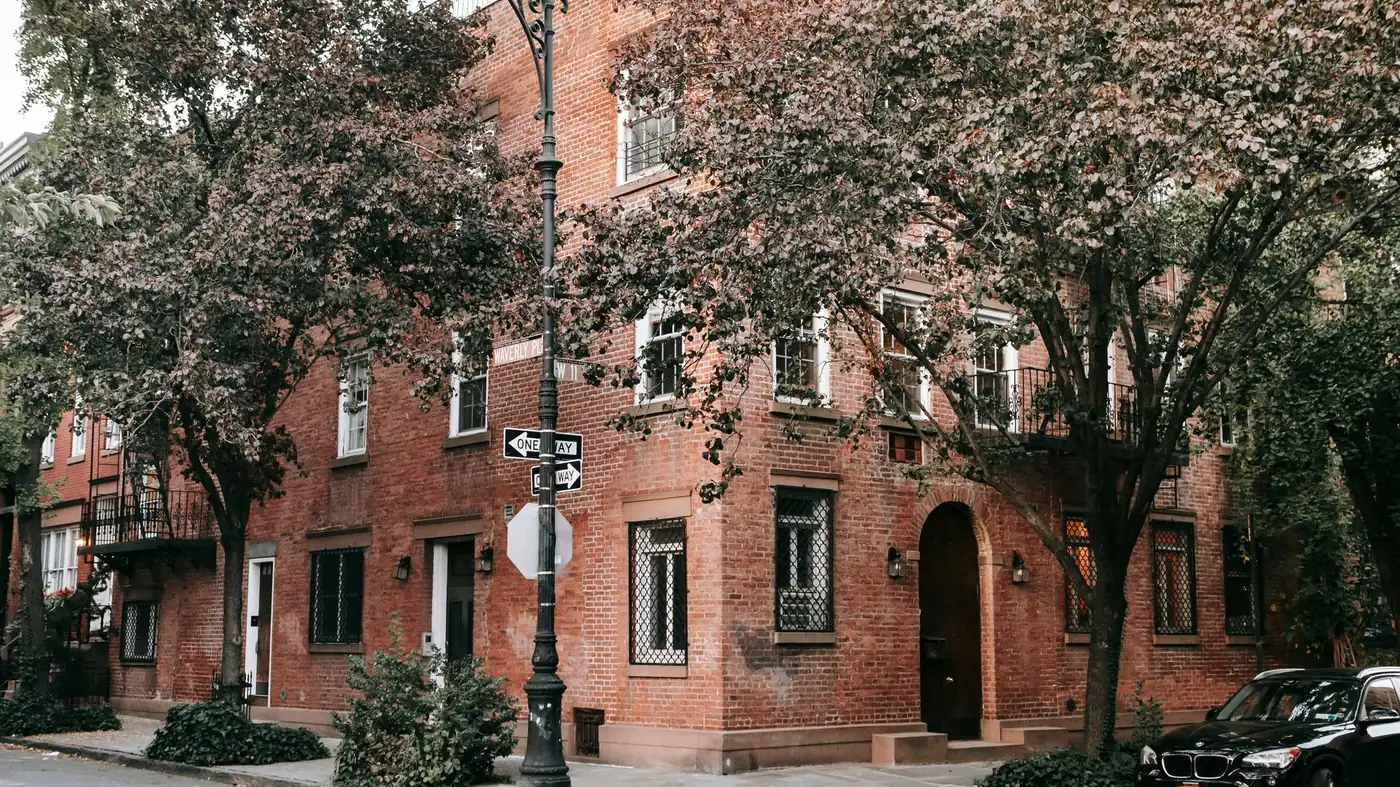
Older brick houses on a corner of Waverly Place in New York City
New York homes sold in a median of 36 days in August 2026, and four in ten went above the asking price.

A strong market, and more equity than the panic suggests

Prices were up 5.9% on the year in August 2026, with a median of 36 days to sell, four homes in ten going above asking and a sale-to-list ratio above 100%. If a foreclosure letter has arrived, the laws section on this page explains why there is usually more time than it suggests.

That means a New York homeowner who feels cornered often is not, because there is usually more equity in the house than the panic suggests. So the question is not whether a listing pays more. It usually does. The question is whether you have the two things a listing needs: time to wait it out, and money to put the house right before it goes on. Where you have both, list it, and we will say so plainly rather than take advantage of somebody who has not done the arithmetic.

Where we are genuinely useful in New York is narrower and more specific: a house that cannot be financed, a tenanted building, an estate that needs settling, a title problem, or a seller whose constraint is not price. Statewide, the median sale price was $547,719 in August 2026 with 51,229 homes on the market and about four months of supply. Figures are as of the date shown and worth rechecking before you rely on them.

Selling Just Over the New York Line?

Plenty of New York sellers own a second property, an inherited house or a former rental across a border, and the rules change the moment you cross it. New York requires advance notice and a settlement conference before a home can be taken. Its neighbors do not all work that way. We evaluate property in all of these.

New Jersey

Across the Hudson, and a judicial foreclosure state with its own long timetable. See Newark or Jersey City.

Connecticut

East along the Sound, where foreclosure can transfer title by court decree rather than by auction. See Stamford or Bridgeport.

Pennsylvania

South and west, with a different closing custom. See Scranton or Erie.

Vermont

North east of the Adirondacks, rural and thinly traded. See Burlington.

What Sellers Say About Working With Us

Michelle TaylorRated 5 out of 5
I had an excellent experience selling my home with Eagle Cash Buyers. From the very beginning, the process was smooth, transparent, and stress-free. They took the time to ask what I was comfortable with, whether it was putting a For Sale sign out front or setting specific times for showings, which made me feel respected and in control throughout the process. Their communication was outstanding. I was kept informed every step of the way, and they were always quick to respond to any questions I had. Everything was clearly explained upfront, so there were no surprises.
Kadeshia WhitleyRated 5 out of 5
Kelly and the remainder of the team worked as swiftly as possible to assist me in my property. Would recommend.

4.5 from 40 reviews on Google · read them all

2019

Founded, and headquartered in Columbus, Ohio.

1,000+

Transactions since 2019 across a 43-state footprint. Coverage does not mean every property qualifies.

A+

Eagle Cash Buyers, LLC is BBB Accredited with an A+ rating. Accreditation is not an endorsement. See the profile.

See How We Calculate Your New York Cash Offer

Get My Cash Offer →