Residential street in Holland, Michigan, with parked cars and trees in low evening light
Questions? Call us: (833) 330-1625

Sell My House Fast in Michigan: We Buy Houses for Cash, As-Is, Any Condition

Any condition, from Detroit to the Grand Rapids side of the state. Tell us the address and we will put a real number in writing, free, with nothing to sign.

Sold as-is, no repairs to fund Free, no-obligation offer No agent commission to pay All 83 Michigan counties

Homeowners in 43 states can request a written cash offer from Eagle. In Michigan that includes homeowners from Wayne, Oakland and Macomb out to Grand Rapids, Lansing, Flint, Kalamazoo, Saginaw and the Port Huron side. Michigan forecloses by advertisement rather than through a court, which means it happens quietly and people often find out late. It then gives a long redemption period afterwards. Both facts change what your options are, and we will walk through them with you before anything else.

Question 1 of a few

What is the Michigan address?

We price against sales in your own county, and Oakland prices nothing like Wexford, so this is where we have to start. The next few questions cover condition, ownership and your timing.

Free, and nothing to sign. If a traditional listing would leave you with more, we will tell you.

Next: condition of the house, who is on the title, and the date you would like to close by.
Google Reviews BBB Accredited
  • A+BBB rating
  • 4.5from 40 Google reviews
  • 1,000+transactions completed
  • 43states we buy in

Oren Sofrin, as quoted inMSNYahoo FinanceGOBankingRatesBiggerPockets

Finding your cash offer...

Recently updated Michigan city pages

What a cash sale in Michigan actually costs you

A cash offer comes in below what a prepared house would fetch on the open market. You are trading price for speed, an as-is sale and a much shorter list of things that can go wrong. Whether that trade makes sense depends on the condition of the house and what waiting is costing you.

Below is the honest comparison. Read the last two rows as carefully as the first ones.

 Listing with an agentEagle Cash OfferEagle Retail Max
Typical timelineAbout 33 days on market, then 30 to 45 days to closeRoughly 21 to 42 daysLonger than a cash offer, and driven by the end buyer
Agent commission 5% to 6% of $297,760About $14,900 to $17,900 from your proceedsNone from youNone from you. Eagle covers applicable commissions
Closing costs other than transfer taxSeller pays a shareEagle pays themEagle pays them
Mortgage payoff, prorated property taxes, transfer taxYoursYoursEagle pays the transfer tax. The rest is yours
Repairs before saleOptional, but selling as-is usually narrows the buyer pool and the priceNone. Sold as-isNone from you. Eagle covers approved repair and concession costs
ShowingsOngoing, on the buyer's scheduleProperty review and inspection onlyRequired. Normally scheduled 24 hours ahead when occupied
Financing riskA buyer’s loan can fail on underwriting, appraisal or property conditionNo lender on our sideDepends on the end buyer
Likely proceedsHighest, if the house is market ready and you can waitLowest of the threeBetween the two

Commission figure uses the Michigan median sale price of $297,760 as of August 2026 and a typical 5% to 6% rate (it varies by market), for illustration only. Your numbers will differ. Michigan charges a state transfer tax of $3.75 per $500 of value and a county tax of $0.55 per $500, about $4.30 per $500 or part of $500 combined, and it is customarily the seller's unless the contract says otherwise. Which structure fits depends on the property, your equity and your timing, and the written agreement controls in every case.

Two things decide this, and they are worth separating: whether you have the time to wait a sale out, and whether you have the money to put the house right before it goes on. Where you have both, list it with a good local agent. We would rather say that up front than spend three weeks getting to the same answer. Where one of them is missing, a cash sale is not the consolation prize. It is often the better outcome and sometimes the only one that closes: a house that needs work you cannot fund, a tangled title, a real deadline, or a situation that takes the listing route off the table.

How to Sell Your House Fast in Michigan for Cash

Send us the address and enough detail about the property to work with. During business hours an initial no-obligation offer is often possible within minutes to a few hours, though plenty of houses need research, photographs or a walkthrough first. If you accept, the transaction goes through a title company, which is ordinary Michigan practice and does not require an attorney. Most Eagle transactions close in roughly 21 to 42 days, depending on title readiness, liens, payoffs, the transfer tax and the property review. See how our sell my house process works, from your first call to closing.

1

Tell us about the house

The address on this page, or a call to (833) 330-1625. We ask about condition, who is on the title, what is owed and when you want to be out. Not your credit.

2

We underwrite, then put it in writing

Comparable sales in your county, what the repairs will cost us, and the resale risk. The written agreement states the price, the closing target and the contingencies.

3

Property review, title, closing

We inspect the house and open title. Payoffs, liens and ownership get verified. The title agency records the deed and disburses your proceeds.

Older wood-frame house on a snow-covered Michigan street after a winter storm
Much of Michigan's housing stock predates 1960, and condition is the usual obstacle to a financed sale.
Want to see the number before you decide anything?Tell us the address. The offer is free, there is nothing to sign, and if listing would net you more we can usually say so.
Get My Cash Offer or call (833) 330-1625

We Buy Houses Across Michigan

Select a city to learn more

Cash Home Buyers Across Detroit, Grand Rapids, Lansing, Flint and Every Michigan Metro

Michigan is really two economies with a lot of smaller markets between them: metro Detroit on one side of the state and the Grand Rapids corridor on the other, with Lansing, Flint, Kalamazoo, Saginaw and the Bay City area running on their own numbers. We operate across all of them.

Detroit skyline seen across the Detroit River
Metro Detroit and West Michigan behave like different markets, and a statewide average tells you little about either.

Metro Detroit

Wayne, Oakland and Macomb Counties

The largest market in the state and by far the most varied. Prices and condition change street to street here in a way they do not anywhere else in Michigan, and a Wayne County bungalow and an Oakland County colonial are not the same transaction. Dense pre-1960 stock, a lot of it needing work a lender will not finance.

Sell Your House in Metro Detroit →

Grand Rapids and West Michigan

Kent, Ottawa and Muskegon Counties

The other end of the state and the other economy. Tighter supply than metro Detroit, a strong lakeshore pull through Holland and Grand Haven, and older housing stock in the city core. Sells faster than the statewide figures suggest.

Sell Your House in Grand Rapids and West Michigan →

Lansing and Mid-Michigan

Ingham, Eaton and Clinton Counties

A steady state-government and university market at a modest price point. East Lansing runs on the academic calendar and carries a lot of rental property, which is a different kind of sale from an owner-occupied house in Holt or Okemos.

Sell Your House in Lansing and Mid-Michigan →

Ann Arbor and Washtenaw

Washtenaw County

The highest prices in the state outside parts of Oakland County, driven by the university. Ypsilanti next door is a different market again, with older stock and more investor activity.

Sell Your House in Ann Arbor and Washtenaw →

Flint and the Tri-Cities

Genesee, Saginaw and Bay Counties

Among the most affordable markets in the Midwest, with a large share of pre-1960 housing and a correspondingly large share of properties that cannot be financed in current condition. This is where condition, rather than price, most often decides whether a sale happens at all.

Sell Your House in Flint and the Tri-Cities →

Kalamazoo and Battle Creek

Kalamazoo and Calhoun Counties

Two smaller southern Michigan markets on the I-94 corridor, with a mix of university rental stock in Kalamazoo and older single-family housing through Battle Creek and Portage.

Sell Your House in Kalamazoo and Battle Creek →

Port Huron and the Thumb

St. Clair County

A border market on the St. Clair River with waterfront property alongside ordinary residential stock. Seasonal and second-home ownership is more common here, which changes who is available to sign and when.

Sell Your House in Port Huron and the Thumb →

Northern Michigan and the Upper Peninsula

Grand Traverse, Wexford, Marquette, Delta, Chippewa and Alpena Counties

Long distances, thin comparable sales and a hard winter. Vacant property up here is exposed to freeze damage in a way it is not downstate, and an inherited house nobody can get to is the situation we see most often.

Sell Your House in Northern Michigan and the Upper Peninsula →
Do not see your town on the list?We evaluate property in all 83 Michigan counties, not only the cities with their own page.
Get My Cash Offer or call (833) 330-1625
Asked in Michigan

If You Need to Sell Immediately in Michigan

Two things are worth knowing before you decide anything quickly, and they pull in opposite directions.

The process here is quiet, so you may be later than you think

Michigan forecloses by advertisement. There is no lawsuit, no summons and no hearing, so none of the usual signals that something is underway ever reach you. The warning is a notice published in a county newspaper and a copy posted on the property, and the laws section on this page gives the timing of each. People find out by reading their own front door.

So the first move is not to call anybody. It is to establish the scheduled sale date, because every option you have is measured against it.

And the redemption period means it is rarely as final as it looks

If the sale has already happened, you are probably not out of time. Michigan's redemption period runs for months after the sale, and during it you may generally stay in the home without making mortgage payments. The exact end date is on the certificate of sale at the county Register of Deeds.

That combination, easy to miss going in and generous coming out, means a Michigan homeowner who feels out of options often is not. More time usually exists than the notice implies, and more equity usually exists than the panic implies.

What we can and cannot say

A sale that closes and pays off the mortgage ends the matter. We cannot promise to stop a foreclosure or protect your credit, because that turns on your lender, the timing and whether a closing actually happens. Send us the dates and we will tell you straight whether a sale is realistic in the window you have. Free HUD-approved housing counseling is available first, and we would rather you used it.

Michigan Counties We Cover

From Chippewa and Marquette in the Upper Peninsula down to Monroe on the Ohio line, our city pages span the state, and we evaluate property anywhere in Michigan. Being inside the footprint is not the same as an offer. Location, property type, condition, marketability, title and our current buying criteria all decide whether we can make one.

Alpena County
Bay County
Berrien County
Branch County
Calhoun County
Chippewa County
Delta County
Eaton County
Genesee County
Grand Traverse County
Ingham County
Ionia County
Isabella County
Jackson County
Kalamazoo County
Kent County
Lenawee County
Livingston County
Macomb County
Marquette County
Midland County
Monroe County
Muskegon County
Oakland County
Ottawa County
Saginaw County
Shiawassee County
St. Clair County
St. Joseph County
Washtenaw County
Wayne County
Wexford County
Metro Detroit and West Michigan are different markets entirely.We price against sales in your own county, because a statewide average tells you almost nothing about your street.
Get My Cash Offer or call (833) 330-1625

Michigan Seller Situations: Foreclosure, Probate, Rentals, Vacant Property and Land Contracts

These are the situations we run into most often in Michigan, and what we can and cannot do about each one.

⚠ Facing a Sheriff's SaleNo lawsuit, so the notice is the whole of your warning

The thing to establish first is where in the sequence you are, because Michigan gives you no lawsuit to mark the milestones. Has publication started? Is a sale date set? Has the sale already happened, which would put you in the redemption period rather than before it?

Those three answers lead to genuinely different options, and people regularly misjudge which one they are in. A notice on the door usually means publication is already running. A sale that has taken place does not mean it is over, because redemption may still have months to run.

A sale that closes and pays off the mortgage ends the matter. We cannot promise to stop a foreclosure or protect your credit, because that depends on your lender, the timing and whether a closing actually happens. Send us the dates and we will tell you honestly whether a sale is realistic in the time available, including when the honest answer is that you have more room than you think and would do better listing it. Free HUD-approved housing counseling is available before you commit to anything, including to us.

Related guide: How to Sell Your House Fast Before Foreclosure

🏠 Inherited Property and ProbateMost executors are exempt from the disclosure form

Michigan probate takes as long as it takes, and an estate cannot convey clear title until the personal representative has authority to sell. We work with executors and administrators regularly, and the usual constraint is the court's timetable rather than the house.

Two Michigan specifics are worth knowing. A transfer ordered by a probate court in the administration of an estate is generally outside the seller disclosure requirement, as is a transfer by a nonoccupant fiduciary, which is what most executors are. And an inherited house sitting empty through a Michigan winter is exposed to freeze damage in a way an occupied one is not, which is a maintenance problem before it is ever a price problem.

Tell us where probate stands and we will work to that, rather than asking you to have it finished first.

Related guide: How to Sell an Inherited House

🔑 Rentals, Tenants and Small MultifamilyWe buy occupied, and leases generally survive the sale

We buy occupied property. A tenant in place is not an obstacle and you do not need to remove anyone before talking to us. Existing leases generally survive a sale, and we would rather take the building with its tenancies intact than ask you to create a vacancy.

What we need is honest paperwork: the leases, the rent roll, the deposits and any arrears or disputes. Security deposits are the item most often overlooked, and they have to be accounted for at closing rather than discovered afterwards.

Where a small multifamily has deferred maintenance that a lender will not finance, that is squarely the case for a cash sale rather than a listing, because the pool of financed buyers for that building is close to empty regardless of the asking price.

Related guide: Selling a Rental Property With Tenants

🚫 Vacant Houses and Winter DamageA Michigan winter turns needs-work into unfinanceable

A vacant house in Michigan is on a clock that a vacant house in a warm state is not. An unheated property risks burst pipes, and the damage that follows is usually discovered months later by somebody walking in. It is the single most common reason a Michigan house moves from “needs some work” to “no lender will touch it”.

Insurance is the other half of the problem. Most standard policies treat a property left vacant beyond a stated period differently, and a claim can be affected by that. Check your own policy wording rather than assuming, because the terms vary between insurers.

If you are carrying a vacant house you cannot get to, tell us its condition honestly. We price water damage and mechanical failure every week and we would far rather know about it up front than find it at the walkthrough.

Related guide: Selling a Vacant House for Cash

📄 Land ContractsCommon in Michigan, and title is different

Land contracts are common in Michigan, and they complicate a sale in ways worth raising early rather than at closing. If you are the seller on a land contract, or the buyer under one, what you own is not the same as outright title and the route to a clean transfer is different.

We are not going to set out Michigan's forfeiture procedure here, because we have not read the governing sections closely enough to state them accurately and an approximation would be worse than saying nothing. What we can tell you is operational: bring the contract itself to the first conversation, along with the payment history and anything recorded. A title company will need all three, and whether a transaction is workable usually turns on what those documents actually say.

💵 Divorce and Co-Owned PropertyBoth signatures, or we cannot proceed

A house is often the last asset to be settled and the one that keeps two people tied together after everything else is done. A transfer between spouses under a divorce judgment, or an incidental property settlement, is generally outside the seller disclosure requirement.

The practical constraint is authority: both owners on title normally have to agree to a sale, and we cannot proceed on one signature where two are required. Where attorneys are involved we are happy to work through them, and where a judgment already specifies what happens to the house, send it across and we will work to what it says.

We are not a party to the dispute and will not take a side in it. Our job is to give both of you the same number in writing so you can decide what to do with it.

Related guide: Selling a House During Divorce

Is there a sale date on the calendar?Send us the notice and the dates. We will tell you straight whether a sale can close in the time you have.
Get My Cash Offer or call (833) 330-1625

What Actually Happens on the First Call

People put off calling a company like ours because they do not know what they are walking into. Here is a real call, with the details that could identify anyone removed. We are not saying it was a Michigan seller, because we do not attach cases to states they did not come from.

From our own call records

A man called about his wife’s house. She had sent the inquiry, he was out running errands, and he thought he would get things started. Our acquisition manager noticed the inquiry was in her name, asked whether she was unable to take part, and when the answer was no, she simply asked me to call, he stopped the conversation there. Not for a signature. We talk to the owner. They booked a three-way call for once he was home, around his drive rather than our calendar.

What that first call is for, in his words: it is pretty basic, really more for us to find out about the property and the condition it is in. No offer on the spot, no paperwork, no pressure.

Anonymised from a recorded call. No names, no location, no property details, because the record holds none and we do not invent them. This account ends where the record ends, with a follow-up scheduled.

Asked in Michigan

What "As-Is" Actually Means, and How Much a Cash Sale Costs You

“How much do you lose when you sell your house for cash” is one of the things Michigan sellers search alongside this page. It deserves a straight answer rather than a brochure, so here is one.

You lose the difference between a prepared house and an unprepared one

A cash offer sits below what a repaired, staged, photographed house would fetch after a full marketing period. That gap is not a trick. It is the cost of the work not being done, the time not being waited out and the risk not being carried by you. Anyone in this industry telling you the two numbers are close is selling you something.

What "as-is" genuinely covers

  • No repairs from you. Roof, furnace, foundation, the pipes that froze last winter, all priced in rather than billed to you afterwards.
  • No cleaning out. Take what you want and leave the rest.
  • No lender on our side, so there is no appraisal to come in low and no underwriter to decide the property is uninhabitable a week before closing.
  • An inspection still happens. We look at the house. Any company promising to buy sight-unseen is either not going to complete or is planning to renegotiate later.

What it does not cover

Your mortgage payoff, your prorated property taxes and the transfer tax are still yours. Eagle pays the other closing costs, and there is no agent commission on a direct sale to us. It does not make your debts disappear. Any page suggesting you walk away owing nothing regardless of what is secured against the house is describing something that does not exist.

When the arithmetic favors us, and when it does not

Two things decide it: whether you have the time to wait a sale out, and whether you have the money to put the house right before it goes on. Where you have both, a listing will normally beat us in a market selling at 98.3% of asking in a median of 33 days, and we can usually say so on the call rather than after you have signed something.

Where one of them is missing, and in Michigan that often means a furnace or a burst pipe in a house that has stood empty through a winter, the comparison is no longer list price against cash price. It is a cash price now against months of taxes, insurance and heating on a house a financed buyer may never be able to take. In that situation we are not the fallback. We are the option that works.

Already past the sheriff's sale?You may still be inside the redemption period. Send us the certificate of sale and we will work out whether the numbers allow a sale.
Get My Cash Offer or call (833) 330-1625

Michigan Real Estate Laws Every Seller Should Know

Michigan forecloses by advertisement rather than through a court, so there is no lawsuit to answer and the first real notice is a newspaper advertisement and a copy posted on the house. What the state gives back is a long redemption period after the sale. Here is what generally applies before you sell, in plain language.

Before Any State Clock Starts: the Federal 120-Day Rule

Every state timeline on this page sits behind a federal one, and it is the single most useful thing to know if you have missed payments. Under Regulation X, 12 CFR 1024.41(f)(1), a mortgage servicer generally “shall not make the first notice or filing” required for a judicial or non-judicial foreclosure unless the borrower's mortgage loan obligation is more than 120 days delinquent.

That is roughly four months of missed payments before the state process is even allowed to begin. It is why a state sequence that looks alarmingly short on paper is usually longer in practice than the statute alone suggests.

The exceptions, because they are real. The rule does not apply where the foreclosure is based on a violation of a due-on-sale clause, or where the servicer is joining the action of a superior or subordinate lienholder. Small servicers are not exempt from this particular prohibition. Loan types and servicing arrangements vary, and some loans are outside Regulation X altogether.

So treat 120 days as the general floor rather than a guarantee, and work from the dates on your own paperwork. If a notice has arrived and you do not believe you are past that point, that is a question worth putting to a HUD-approved housing counselor or an attorney before you do anything else.

Michigan Forecloses by Advertisement, Not Through a Court

This is the fact that changes everything else. In Michigan, most residential foreclosures happen without anyone filing a lawsuit. No summons arrives, there is no complaint to answer and no hearing to attend. The lender advertises a sheriff's sale and holds it.

Because nothing is served on you, the notice requirements are the whole of your warning. Notice must be published for four successive weeks, at least once each week, in a county newspaper, and a copy must be posted on the property within fifteen days of the first publication. Those are two separate requirements on two separate clocks, and they are routinely described as one. A notice taped to your door usually means publication has already started, not that the process is beginning.

If you have found a posted notice, establish the scheduled sale date rather than guessing at it, because everything still open to you is measured against it.

Official source: MCL 600.3208, notice of foreclosure

Redemption: Commonly Six Months, and Sometimes a Full Year

Michigan takes the foreclosure quietly and then gives a good deal of time back. After the sheriff's sale there is a redemption period, and during it the former owner may generally remain in the home and is not required to make mortgage payments.

The length runs the opposite way to how it is usually summarized. One year is the baseline for residential property of four units or fewer, shortened to six months where more than 66-2/3% of the original indebtedness was still owed at the date of the notice of foreclosure, and substantially shorter where the property is determined abandoned. Six months is the common outcome because a homeowner in default usually does still owe more than two-thirds, but it is not a flat rule.

Do not take the date from a website, including this one. The operative date is recorded on the certificate of sale at the county Register of Deeds. That is what a title company will work from and what you should work from.

Official source: MCL 600.3240, redemption periods

Surplus, Transfer Tax, Disclosure and Closing

If the sale brings in more than the debt, the surplus is what remains after satisfying the mortgage. Where a junior lienholder files a written sworn claim, the money goes to the circuit court clerk and the court decides priority. Second mortgages, judgment liens and unpaid assessments are generally paid before anything reaches the former owner, so a surplus is not simply yours until those are accounted for. Where no claim is filed it is paid to the mortgagor on demand, and Michigan sets no deadline in that section for making it.

Transfer tax. Michigan charges a state tax of $3.75 per $500 of value and a county tax of $0.55 per $500, about $4.30 per $500 or part of $500 combined. It is customarily the seller's, though it is negotiable and the contract controls. There is no general municipal transfer tax on top of those two.

Disclosure, and the exemptions that matter. Michigan generally requires a Seller Disclosure Statement, but the exemptions cover much of this page's audience: transfers ordered by a probate court in administration of an estate, foreclosure sales and deeds in lieu, transfers by a nonoccupant fiduciary, transfers between certain family members, and transfers between spouses under a divorce judgment. An executor selling a parent's house they never lived in is very often exempt. Exempt is not permission to conceal a known problem.

Closing. No attorney is required. A title company handles it as ordinary practice. Delinquent property taxes run on their own separate timetable through the county treasurer, unaffected by anything happening with your lender, so call them for the real dates.

Official source: MCL 565.953, disclosure exemptions

General information, not advice. This section describes Michigan practice in general terms and was checked against the sources cited in September 2026. Laws, timelines and local procedures change, and how any of it applies to your property depends on facts we have not seen. It is not legal, tax or financial advice, and it is no substitute for talking to a Michigan attorney, accountant or HUD-approved housing counselor about your own situation.

Michigan Housing Market Snapshot

Michigan is a moderately paced market at one of the lower price points in the Midwest, with a meaningful share of sellers cutting price. Figures below are Redfin statewide data for August 2026.

$297,760Median sale priceRedfin, August 2026
33 daysMedian days on marketRedfin, August 2026
+6.3%Year-over-year price changeRedfin, August 2026
40,164Homes for sale, up 7.2%Redfin, August 2026
20.1%Listings taking a price cutRedfin, August 2026
98.3%Sale-to-list price ratioRedfin, August 2026
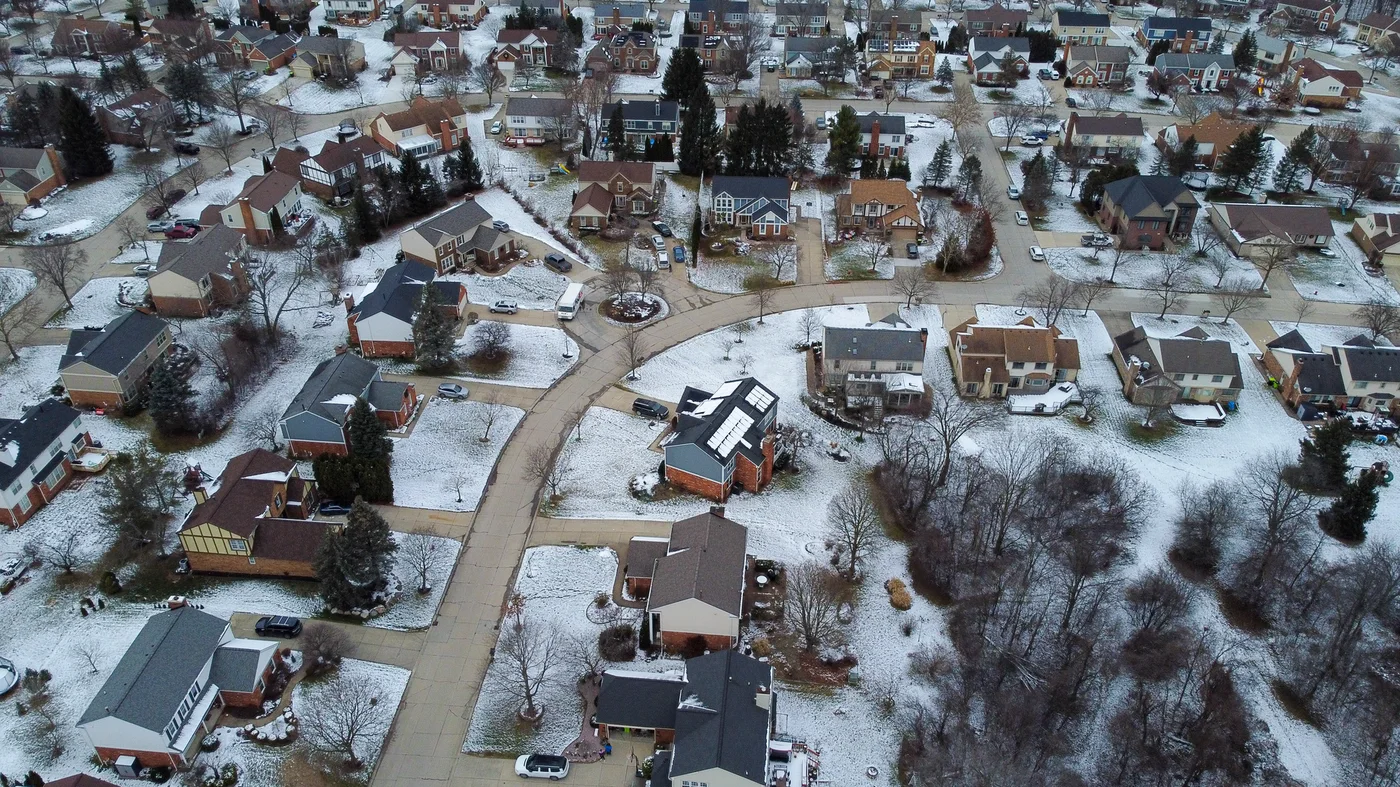
Aerial view of a snow-dusted suburban neighborhood of colonial houses in Novi, Michigan
Michigan homes sold in a median of 33 days in August 2026, with about one listing in five taking a price cut.

A moderate pace at a lower price point

The median sale price was $297,760 in August 2026, up 6.3% on the year, homes sold in a median of 33 days, about one listing in five took a price cut and the sale-to-list ratio was 98.3%. Two things decide whether listing is the better route for you: the time to wait a sale out, and the money to put the house right before it goes on. Where you have both, list it, and we can usually say so. Where one of them is missing, a cash sale is usually the stronger option rather than the weaker one. Figures are as of the date shown and worth rechecking before you rely on them.

The exception is a house with a sheriff's sale set, or one already sold at a sheriff's sale. There, the dates on your notice and on the certificate of sale matter more than any market figure, and the laws section on this page explains why.

Selling Just Over the Michigan Line?

Plenty of Michigan sellers own a second property, an inherited house or a former rental across a border, and the rules change the moment you cross it. Michigan forecloses by advertisement and gives a long redemption period afterwards. Its neighbors do not all work that way. We evaluate property in all of these.

Ohio

South across the line, and a different process entirely. Ohio forecloses through a court, so there is a lawsuit to answer and a confirmation hearing afterwards. See Toledo or Cleveland or Akron.

Indiana

South west of the state line, judicial like Ohio rather than by advertisement like Michigan. See South Bend or Elkhart or Fort Wayne.

Wisconsin

Across Lake Michigan, and closer to parts of the Upper Peninsula by road than downstate Michigan is. See Milwaukee or Green Bay or Madison.

Illinois

Across the lake and around the bottom of it, judicial like the rest of Michigan's neighbors. See Chicago or Rockford or Joliet.

What Sellers Say About Working With Us

Mende LewisRated 5 out of 5
I don't think I've ever been so happy to leave a review in all my life. For my family, the sale of my dad's home was a medical event. In many ways, because of the speed at which JP and Eagle Cash Buyers worked, it saved my dad's life. Not only did they work quickly and fairly, but at the end of the day they were willing to take a lesser commission to make sure my dad was treated fairly. I am so unbelievably grateful for this company and JP. I highly HIGHLY recommend working with this company.
Christina SouderRated 5 out of 5
My husband and I called Eagle Cash Buyers because our house was on the market for almost a year with no bites. We had moved out of our home and to a different state. We called them, it was very simple. We gave them the information on our home and they made an offer that we could not refuse. They took all my calls and questions, and I had a lot. They answered every call the first time I called. They were knowledgeable and helpful and it was such a pleasure and a blessing that we had a great experience. All the other cash home buyers we had called, one low balled us and they were not straight forward. Also our home was very nice, it had a brand new roof and water heater and heater and the attic was freshly insulated. So your home does not need to be trash for you to sell to them.

4.5 from 40 reviews on Google · read them all

2019

Founded, and headquartered in Columbus, Ohio.

1,000+

Transactions since 2019 across a 43-state footprint. Coverage does not mean every property qualifies.

A+

Eagle Cash Buyers, LLC is BBB Accredited with an A+ rating. Accreditation is not an endorsement. See the profile.

Ready to See What a Michigan Cash Sale Looks Like?

Sold as-is. No agent commission. Most transactions close in roughly 21 to 42 days.

Get My Free Cash Offer

Or call us: (833) 330-1625

Michigan Home Selling Questions, Answered Straight

Real answers about Michigan law, timelines and how the process actually works here.

How fast can you close on a Michigan home?

Most Eagle transactions close in roughly 21 to 42 days. Michigan closings run through a title company and do not require an attorney, which is one reason a clean Michigan file can sit at the shorter end of that range. The timeline depends on title readiness, liens, mortgage payoffs, the property review and the transfer tax. Faster is sometimes possible when the title is clean, but it is an exception rather than something to plan around. If you have a hard date, such as a scheduled sheriff's sale, tell us early and we will say honestly whether it is realistic.

How quickly can I get an offer?

During business hours an initial no-obligation offer is often possible within minutes to a few hours once we have enough information about the property. Some houses need research, photographs or a walkthrough before we can put a number in writing. We would rather take an extra day and give you a figure we can actually perform on.

Does Michigan foreclose through a court?

Usually not. Most Michigan residential foreclosures are done by advertisement rather than by a lawsuit, which means there is no summons, no complaint to answer and no hearing date. The lender publishes notice of a sheriff's sale in a newspaper, posts a copy on the property and holds the sale. That is why people here often discover how far along the process is from a notice on their own door. The laws section on this page gives the timing.

How long is the redemption period in Michigan?

Commonly six months from the sheriff's sale, and up to a year, depending on how much of the original loan was still owed. During it you may generally stay in the home and are not required to make mortgage payments. The operative date is on the certificate of sale at the county Register of Deeds, and that is the document to rely on rather than any general figure. The laws section on this page explains how the length is set.

Can I still sell after the sheriff's sale?

Often, yes, if you are inside the redemption period and the numbers work. A sale during redemption generally has to produce enough to cover the redemption amount, which is the bid plus accrued interest and the sheriff's fee, together with any taxes, senior-lien costs, assessments or insurance the purchaser has paid on your behalf. Whether that is achievable depends entirely on your figures. Send us the certificate of sale and we will tell you plainly whether it works.

Who pays the transfer tax in Michigan?

Customarily the seller, unless the contract says otherwise. Michigan charges a state transfer tax of $3.75 per $500 of value or part of $500, and a county transfer tax of $0.55 per $500 in counties under two million population, so about $4.30 per $500 combined, roughly 0.86%. On the August 2026 statewide median of $297,760 that is about $2,563. There is no general municipal transfer tax in Michigan on top of those two.

Do I have to fill out a seller disclosure statement?

Often, but not always, and the exemptions are worth checking. The requirement does not apply to, among others, transfers under court order including probate administration, foreclosure sales and deeds in lieu, transfers by a nonoccupant fiduciary, transfers between certain family members, and transfers between spouses under a divorce judgment. An executor selling a parent's house they never lived in is very often exempt. Exempt is not permission to conceal a known problem, and whether a particular transfer qualifies is a question for a Michigan attorney looking at your paperwork.

Do I need an attorney to close in Michigan?

No. A licensed title company or settlement agent handles residential closings here as ordinary practice. Plenty of sellers still choose to have their own attorney and that is a sensible thing to do, particularly where probate, a divorce judgment or a land contract is involved. It is a choice rather than a requirement.

Do you buy houses with tenants in them?

Yes. A tenant in place is not an obstacle and you do not need to remove anyone before talking to us. Existing leases generally survive a sale. What we need is the paperwork: leases, rent roll, deposits and any arrears or disputes. Security deposits are the item most often overlooked and they have to be accounted for at closing.

What about delinquent property taxes?

Delinquent taxes run on their own timetable through the county treasurer and are not paused or affected by anything happening with your mortgage. We have deliberately not published that timetable here, because we have not read the governing sections closely enough to state them and an approximate tax deadline is worse than none at all. Call the county treasurer for the real dates and tell us what they say, and we will work to them.

Should I just list it instead?

It turns on two things: whether you have the time to wait a sale out, and whether you have the money to put the house right before it goes on. Where both are true, list it, and we can usually say so. In August 2026 the Michigan median sale price was $297,760, up 6.3% on the year, homes sold in a median of 33 days and the sale-to-list ratio was 98.3%, so a prepared house does perfectly well on the open market here. Where one of those is missing, a cash sale becomes the better answer and often the only one that closes: a house no lender will finance, freeze damage in a property that has stood empty, an estate that needs settling, a redemption clock already running, repairs you cannot fund, or a title problem that has to be cleared before anyone can buy at any price.

What will you actually pay?

Less than a prepared house would fetch on the open market, and we will not pretend otherwise. You are trading price for speed, an as-is sale and a much shorter list of things that can go wrong. What we will not do is give you a headline number on the phone and then reduce it after an inspection. The figure goes in writing, the offer is free and there is nothing to sign to get one.

Oren Sofrin

Reviewed by Oren Sofrin, Founder and CEO of Eagle Cash Buyers

Oren has more than ten years in real estate, and he and the Eagle team have completed over 1,000 transactions. His market commentary has been quoted by MSN, Yahoo Finance, GOBankingRates and BiggerPockets. Last reviewed October 2026.

See How We Calculate Your Michigan Cash Offer

Get My Cash Offer →